
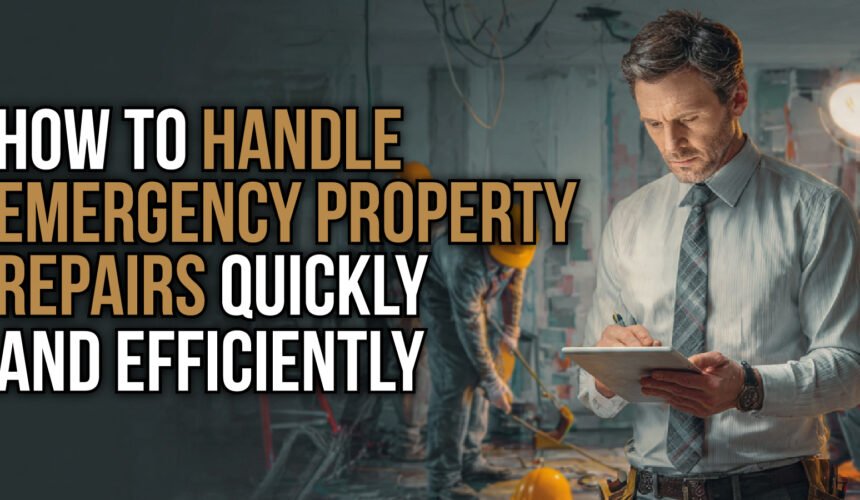
When an emergency repair hits a residential or commercial property, every minute matters.
A burst pipe, electrical failure, roof leak or security breach doesn’t just cause inconvenience — it can shut down operations, damage tenant relationships, trigger insurance claims and expose owners to legal risk.
This guide explains, step-by-step, how to handle emergency property repairs quickly, safely and efficiently — and how to build a response system that prevents small incidents becoming major losses.
If you already manage multiple properties or need a rapid-response maintenance partner, you can explore full support at:
- 👉 https://gohaychservices.co.uk/
- 👉 https://gohaychservices.co.uk/services/
- 👉 https://gohaychservices.co.uk/get-a-quote/
What counts as an emergency property repair?
Not every repair is an emergency.
An emergency is any defect that creates:
- immediate risk to people
- immediate risk to the structure
- immediate risk to security or operations
Typical emergency categories include:
- electrical faults and power loss
- water leaks and burst pipes
- gas and heating failures
- structural damage
- fire or smoke incidents
- access or security breaches
Understanding this distinction is critical — because emergency response should follow a very different process to routine maintenance.
The true cost of slow response
Property owners often underestimate the real financial impact of delayed action.
Slow emergency handling typically causes:
- secondary damage (floors, ceilings, finishes, stock)
- extended business interruption
- higher reinstatement costs
- reputational damage with occupiers
- increased insurance complexity
Fast response protects asset value, not just the building fabric.
The first 60 minutes – what must happen immediately
The first hour determines whether an incident stays small or becomes expensive.
1. Protect people first
Your immediate priorities are:
- isolate the hazard
- evacuate affected areas if required
- isolate utilities (water, power, gas)
Safety always overrides cost.
2. Secure the site
Before any technical repair:
- restrict access
- isolate damaged areas
- protect adjacent spaces
In commercial and multi-occupancy buildings this step is essential to prevent secondary incidents.
3. Capture evidence immediately
Always record:
- photographs
- videos
- time and date of discovery
- who attended and when
This information is critical for:
- insurers
- landlords and managing agents
- compliance reporting
4. Stop the cause — not just the symptoms
Temporary measures only work if the underlying fault is identified.
For example:
- isolating water supply without finding the failed joint
- restoring power without identifying the defective circuit
This leads to repeat call-outs and escalating costs.
The most common emergency repair situations
The vast majority of emergency call-outs fall into five operational groups:
1. Water and plumbing failures
These include:
- burst pipes
- leaking tanks
- failed valves
- blocked drainage
Water spreads rapidly and damages multiple building elements simultaneously.
Fast isolation and extraction are crucial.
2. Electrical faults
Emergency electrical incidents include:
- complete power loss
- exposed wiring
- burning smells
- tripping systems that cannot be reset
These must always be handled by qualified professionals.
3. Roof and building envelope failures
High winds and storms regularly cause:
- membrane failures
- tile loss
- gutter collapses
Temporary weatherproofing is often required before permanent repairs can be arranged.
4. Heating and hot water failure
In residential properties and managed blocks, loss of heating can quickly become a legal compliance issue — especially in colder months.
5. Security and access failures
Broken doors, shutters, windows and access control failures leave properties exposed.
Immediate securing is essential before full replacement.
Why emergency repairs fail in most portfolios
The biggest problem is not contractor availability.
It is lack of a structured response system.
Most property portfolios suffer from:
- unclear reporting channels
- no approved emergency contractors
- no decision authority out of hours
- no defined escalation path
- no cost approval thresholds
This leads to delays while responsibility is being clarified.
The professional emergency response workflow
A well-run emergency response follows a predictable structure:
- report received
- severity classified
- risk isolated
- contractor dispatched
- temporary make-safe completed
- permanent repair scheduled
- compliance and documentation completed
This structure allows multiple incidents to be managed simultaneously without confusion.
How to classify repair severity properly
Correct triage avoids wasting emergency resources on routine defects.
| Severity | Description | Example |
|---|---|---|
| Critical | Immediate danger or operational shutdown | exposed live wiring, major flood |
| Urgent | Serious disruption, but controlled risk | boiler failure, leaking roof |
| Routine | No immediate risk | cracked tiles, damaged paint |
Only the first two categories should trigger emergency mobilisation.
Emergency repairs in residential properties
Residential emergencies often carry additional legal responsibilities.
Landlords and managing agents must ensure:
- habitable conditions
- safe access and egress
- essential services remain operational
Heating, hot water, sanitation and electrical safety failures can quickly become formal complaints if not resolved promptly.
Emergency repairs in commercial buildings
Commercial incidents bring added complexity:
- business interruption exposure
- shared landlord / tenant responsibilities
- access coordination
- operational continuity requirements
A delayed repair may impact:
- retail trading
- office productivity
- logistics operations
- public access compliance
Legal and professional expectations in the UK
Emergency works are expected to be reasonable, proportionate and properly documented.
Many property professionals use guidance and technical standards promoted by the
Royal Institution of Chartered Surveyors
when assessing maintenance strategy, response frameworks and contractor performance.
This helps demonstrate duty of care and structured management.
The importance of approved emergency contractors
Trying to find contractors after an incident has already occurred is one of the most common causes of delay.
Approved emergency contractors should be:
- vetted
- insured
- pre-agreed on call-out terms
- familiar with your buildings
This allows immediate dispatch without commercial negotiation during the incident.
Temporary make-safe vs permanent repair
One of the most misunderstood parts of emergency maintenance is the difference between:
make-safe work
and
permanent remedial work
Make-safe work includes:
- isolating services
- weatherproofing
- securing openings
- removing immediate hazards
Its purpose is risk control.
Permanent repair includes:
- component replacement
- reinstatement
- testing and certification
- finishing works
Separating these two phases allows fast mobilisation without delaying permanent planning.
How to communicate effectively during emergencies
Good communication prevents escalation and complaints.
Always keep three parties informed:
- occupants
- decision makers
- maintenance contractors
Key updates should include:
- what has happened
- what action has been taken
- what remains outstanding
- expected timelines
Silence creates frustration even when progress is being made.
Managing emergency repairs efficiently across multiple properties
If you manage more than a few properties, reactive handling becomes unmanageable without structure.
You should maintain:
- centralised reporting channel
- live incident register
- contractor availability rota
- response time benchmarks
- escalation matrix
This ensures consistency regardless of which site is affected.
The role of planned maintenance in reducing emergencies
The fastest emergency repair is the one that never happens.
The majority of emergency incidents are directly linked to:
- deferred servicing
- ignored warning signs
- expired components
Common preventable failures include:
- pumps and valves
- electrical boards
- roofing membranes
- access control hardware
A structured maintenance programme dramatically reduces emergency call-outs.
You can review comprehensive property maintenance and repair services here:
👉 https://gohaychservices.co.uk/services/
How to control emergency repair costs
Emergency work does not have to mean uncontrolled spending.
Cost control is achieved by:
- agreed emergency rates
- defined authorisation limits
- post-incident cost review
- separating make-safe and permanent works
This allows financial oversight without slowing down response.
Emergency repairs and insurance
Always notify insurers promptly when:
- flooding occurs
- fire or smoke damage is present
- major structural elements are affected
However, do not delay safety works while waiting for approval.
Insurers expect immediate mitigation action to reduce loss.
Documentation checklist after every emergency
Your incident file should contain:
- incident report
- time of notification
- site photographs
- contractor attendance records
- temporary works details
- permanent repair scope
- certification where applicable
This protects both property owners and managing agents.
The biggest operational mistake
The most damaging mistake is treating emergency repairs as an isolated task rather than part of an operational system.
Without a defined framework:
- staff improvise under pressure
- decisions are delayed
- contractors work without scope clarity
- compliance gaps appear
Structure removes chaos from emergencies.
Creating your emergency response plan
Every property portfolio should have a simple written plan covering:
- emergency contact details
- utility isolation locations
- contractor lists
- authority levels
- communication templates
- incident escalation route
This plan should be available digitally and onsite.
Why professional support improves emergency response
A professional property maintenance partner brings:
- 24/7 response coordination
- multi-trade coverage
- rapid make-safe capability
- compliance oversight
- structured reporting
This removes the burden from site teams and property managers during critical situations.
Real-world example
A multi-unit commercial property experiences a weekend water leak.
Without structured response:
- reporting is delayed
- contractor availability is uncertain
- damage spreads into neighbouring units
- tenants escalate complaints
With structured response:
- isolation is completed within minutes
- emergency contractor attends immediately
- temporary drying and protection begins
- permanent repairs are scheduled early
The difference is operational discipline, not luck.
When should you upgrade your emergency maintenance arrangements?
You should review your emergency response setup if:
- response times are inconsistent
- different sites use different contractors
- documentation is fragmented
- costs are unpredictable
- tenants frequently complain about delays
How Gohaych Services supports emergency property repairs
Gohaych Services provides structured property maintenance and emergency repair support across residential and commercial buildings.
Support includes:
- rapid multi-trade response
- make-safe and reinstatement works
- coordinated repair management
- compliance and reporting support
You can view full services here:
👉 https://gohaychservices.co.uk/
Final thoughts – speed is only part of the solution
Handling emergency property repairs quickly is essential — but handling them correctly is what protects your asset.
The most effective emergency response combines:
- trained decision makers
- clear procedures
- approved contractors
- professional coordination
This ensures every incident is resolved safely, efficiently and with minimal disruption.
Get a tailored emergency repair plan for your properties
If you manage residential blocks, commercial premises or mixed-use buildings and want a reliable emergency maintenance partner, you can request a tailored assessment and response proposal here:
👉 https://gohaychservices.co.uk/get-a-quote/
A structured emergency response plan today will prevent costly disruption tomorrow.