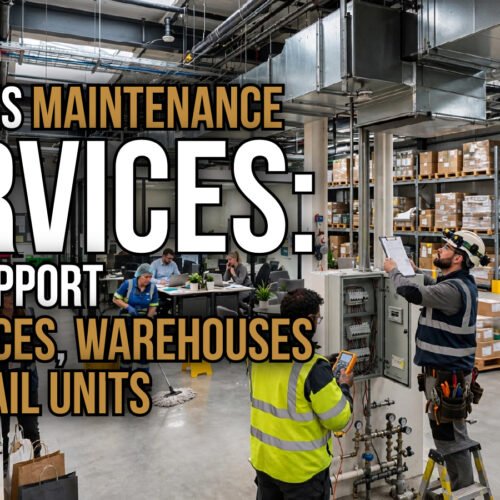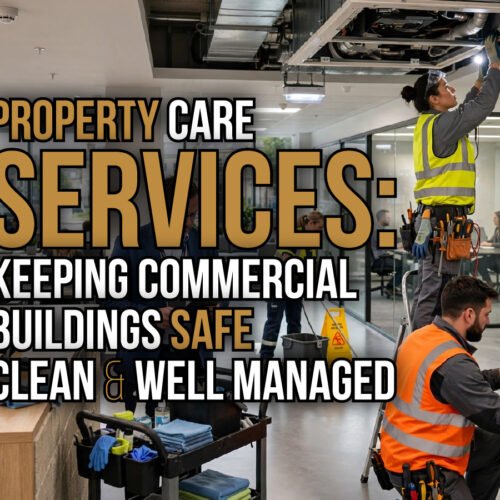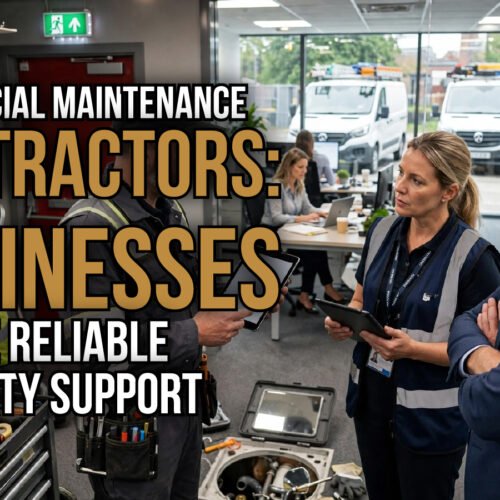

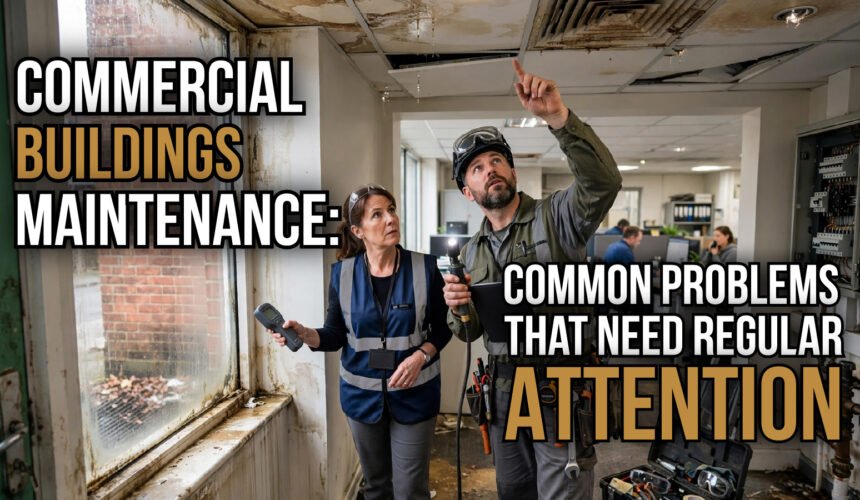
A small roof leak, slow drain, flickering light or loose door closer can be easy to postpone. Commercial buildings maintenance helps facilities teams inspect recurring problem areas, prioritise repairs and decide when repeated faults should move into planned maintenance.
At Gohaych Services, we help businesses, landlords and property managers organise commercial buildings maintenance around property condition and repair priorities. Current services include planned and reactive maintenance, inspections, electrical and plumbing support and wider property care.
What Does Commercial Buildings Maintenance Include?
Commercial buildings maintenance covers regular inspection, repair and upkeep of roofs, gutters, drainage, plumbing, electrics, heating, ventilation, doors, windows, flooring, washrooms, shared areas and external elements. It combines routine checks, reactive repairs and planned work according to building use, condition, repair history and specialist requirements.
Why Commercial Buildings Need Regular Attention
Commercial buildings maintenance matters because condition changes through footfall, deliveries, weather, heating demand, occupancy and previous repairs.
Maintenance should reflect actual use rather than a generic checklist. A busy entrance, washroom or loading area may need more attention than a low-use space.
Building Upkeep: Start with a Condition Review
Good building upkeep starts with a visual review of roofs, gutters, walls, windows, doors, floors, ceilings, lighting, washrooms, common spaces and external routes.
A commercial property risk assessment can help document visible defects, access concerns and maintenance priorities without replacing specialist statutory assessments. Gohaych Services also recommends linking observations with photographs, repair logs and follow-up actions.
Commercial Buildings Maintenance Condition Review
| Building Area | Common Problem | Warning Sign | Maintenance Action |
| Roof | Water ingress | Staining or repeat leaks | Record and arrange assessment |
| Gutters/drainage | Blockage | Overflow or standing water | Investigate and clear appropriately |
| Plumbing | Leak or blockage | Damp or repeat call-outs | Repair and track recurrence |
| Electrics | Lighting/fitting fault | Flicker or visible damage | Escalate to competent support |
| Doors/windows | Wear or misalignment | Sticking or loose hardware | Repair or adjust |
| Flooring | Damage or lifting | Uneven or worn areas | Prioritise by use |
| Washrooms | Fixture/plumbing fault | Leak or poor operation | Increase checks where heavily used |
Property-Area Inspection Priorities
| Property Area | Practical Check | Why It Matters |
| Entrances | Doors, flooring, lighting | High use |
| Washrooms | Fixtures, leaks, ventilation | Frequent occupancy |
| Shared areas | Floors, walls, ceilings | Repeated footfall |
| External routes | Drainage, paving, lighting | Weather exposure |
| Service areas | Visible faults and access | Supports repair planning |
Roof Problems
Roof issues deserve attention because water can travel beyond the point of entry. Commercial buildings maintenance should record leak locations, affected areas and previous repairs.
Common concerns include damaged coverings, flashing, penetrations and ceiling staining. Use appropriate professionals for roof access or repair.
Gutters, Downpipes and Drainage
Gutters and drainage form an important part of commercial buildings maintenance because blockages can redirect water towards walls, entrances and internal areas.
Warning signs include overflowing gutters, damaged downpipes, standing water and repeated backups. Document observations before arranging the appropriate investigation.
Plumbing Problems
Recurring plumbing faults can make commercial buildings maintenance permanently reactive. Leaking pipes, taps, toilets, sinks, water-pressure issues and repeated blockages should be logged by location and recurrence.
If the same area generates repeated call-outs, compare the repair history. Gohaych Services includes electrical and plumbing repairs within its current property support.
Heating and Ventilation
Heating and ventilation need ongoing attention because their condition affects how commercial spaces operate. Commercial buildings maintenance should track temperature complaints, heating failures, airflow concerns and contractor recommendations.
Maintenance depends on equipment type, operating hours and manufacturer guidance. Boiler, gas and specialist mechanical work should go to appropriately competent professionals.
Electrical and Lighting Problems
Electrical faults need clear escalation. Commercial buildings maintenance may identify failed lights, flickering fittings, damaged sockets or repeated circuit problems, but technical diagnosis belongs with competent electrical professionals.
HSE states that electrical equipment must be maintained to prevent danger and that check frequency depends on equipment, environment and previous results. Specialist electrical work should be carried out by trained and competent people.
Doors, Windows and Access Points
High-use doors can deteriorate faster than low-traffic areas, so commercial buildings maintenance should include entrances, internal doors, windows and related hardware.
Look for loose handles, worn hinges, closer faults, misalignment, damaged seals, lock problems, broken glazing and draughts. Repeated adjustments may indicate that a more permanent repair or replacement needs consideration.
Flooring Problems
Flooring deteriorates through footfall, trolleys, deliveries, moisture and cleaning. Commercial buildings maintenance should record loose tiles, lifted edges, torn carpet, damaged vinyl, cracking, uneven areas and water damage.
High-traffic corridors, entrances and loading routes deserve attention. Recurring deterioration should be compared with previous repairs.
Walls and Ceilings
Walls and ceilings provide useful warning signs during commercial buildings maintenance inspections. Record water staining, recurring cracks, flaking paint, impact damage, plaster defects and damaged ceiling tiles.
Do not diagnose structural movement or hidden moisture without evidence. Instead, use recurring staining or cracking as a reason to consider further professional assessment.
Washrooms and Staff Facilities
Washrooms often need frequent practical attention because they receive daily use. Commercial buildings maintenance can cover toilets, taps, sinks, lighting, flooring, doors, ventilation and visible plumbing concerns.
Clear reporting helps small faults reach the maintenance team earlier.
Office Building Maintenance
Office building maintenance should focus on reception, meeting rooms, kitchens, washrooms, lighting, heating, doors, flooring, corridors and shared areas.
Within wider commercial buildings maintenance, offices often produce many small repeat issues. Gohaych Services’ current office guidance covers repairs, planned checks, cleaning coordination, plumbing, lighting, washrooms and contractor coordination.
Warehouse and Industrial Building Maintenance
Warehouse commercial buildings maintenance often places greater emphasis on roofs, drainage, loading-area doors, lighting, washrooms, flooring, external routes and building fabric.
Equipment servicing should remain within the appropriate specialist maintenance programme.
Retail and Hospitality Building Maintenance
Retail and hospitality commercial buildings maintenance may prioritise floors, washrooms, plumbing, lighting, entrance doors, heating, external appearance and kitchen-related building services where relevant.
Opening hours can affect scheduling, so managers should identify when planned access is needed.
External Building Maintenance
External commercial buildings maintenance should review walls, roof edges, gutters, windows, doors, paving, entrances, drainage and external lighting where these fall within scope.
Any work at height or specialist façade investigation needs appropriate planning and competent professionals.
Planned Preventative Maintenance for Recurring Problems
Recurring defects should not remain reactive forever. Commercial buildings maintenance improves when predictable checks and known remedial work move into a planned programme.
Gohaych Services’ guide to planned preventative maintenance explains how asset records, scheduled inspections, servicing, defect logging and follow-up work fit together. It also makes clear that planned maintenance cannot guarantee every failure will be prevented.
Commercial Buildings Maintenance: Planned vs Reactive
| Maintenance Type | Trigger | Example | Planning Approach |
| Planned | Schedule or known condition | Seasonal gutter review | Arrange access and record findings |
| Reactive | Unexpected fault | New plumbing leak | Assess, repair and document |
| Urgent | Significant disruption or risk | Major water ingress | Escalate promptly |
| Specialist | Technical requirement | Electrical inspection | Use competent specialist support |
How Gohaych Services Supports Commercial Buildings
At Gohaych Services, we help businesses, landlords and property managers organise commercial buildings maintenance alongside reactive repairs, planned maintenance, inspections, electrical and plumbing work and wider property improvements.
Our team can review building type, current condition, recurring repairs and maintenance priorities before discussing support. Current services also include inspections, cleaning coordination and wider building work.
Commercial Property Risk Assessment and Maintenance Planning
Repair records strengthen commercial buildings maintenance planning by revealing recurring leaks, damaged flooring, lighting problems, drainage concerns or access faults.
A structured review of wider property risks can turn those observations into documented priorities. Gohaych Services also states that general property reviews do not replace specialist fire, electrical, gas, asbestos or structural assessments where required.
When Repeated Repairs Need Planned Maintenance
When the same fault keeps returning, commercial buildings maintenance should move from repeated call-outs towards investigation and scheduling. Warning signs include recurring leaks, blocked drains, lighting faults, door adjustments, heating failures and repeated washroom problems.
Property teams can move recurring issues into a planned maintenance programme when scheduled review is more suitable. Existing Gohaych guidance specifically recommends reviewing previous defects and repeat faults when updating PPM.
What Should a Commercial Maintenance Schedule Include?
A commercial buildings maintenance schedule should reflect property use, condition, system requirements and specialist advice rather than one universal frequency.
| Area | Frequent Practical Check | Seasonal Review | Specialist Input May Be Needed? |
| Washrooms | Leaks and fixtures | Usage trends | Plumbing/ventilation |
| Doors/floors | Damage and operation | Entrance wear | Glazing/access |
| Roof/gutters | Reported defects | Wet-weather readiness | Roofing |
| Drainage | Slow flow or standing water | Heavy-rain readiness | Drainage contractor |
| Lighting | Reported faults | External lighting | Electrical |
| Heating/ventilation | Performance complaints | Seasonal readiness | Mechanical/heating |
| Building fabric | Visible deterioration | Weather exposure | Surveyor/specialist |
Frequent, monthly or seasonal walk-throughs can be useful operational tools, but they are not universal statutory intervals. Technical systems may have separate legal, manufacturer or competent-person requirements.
What Information Should Maintenance Records Include?
Good records support commercial buildings maintenance decisions. Record the date, location, defect, contractor, repair, cost, follow-up, recurrence and photographs.
After a repair, mark the item as closed, under observation or moving into planned work.
Discuss Your Commercial Property Maintenance Needs
Businesses, landlords and property managers can share property type, location, repair concerns, recurring faults, planned maintenance needs, inspection requirements and access details with Gohaych Services.
Use the request a commercial property maintenance quote route to discuss commercial buildings maintenance around the actual premises. The current form accepts commercial, industrial and mixed-use enquiries.
Property Maintenance Contractor: What Should Businesses Compare?
A property maintenance contractor should be compared on practical capability, not price alone. For commercial buildings maintenance, assess property experience, trade coverage, planned and reactive capability, inspections, reporting, follow-up, quote clarity and relevant specialist competence.
| Factor | Why It Matters | What to Confirm |
| Property experience | Priorities vary by building | Relevant commercial sites |
| Trade coordination | Problems can cross trades | Scope of coordination |
| Planned maintenance | Repeat faults need scheduling | PPM approach |
| Reactive repairs | Unexpected faults occur | Reporting process |
| Inspections | Build condition information | Scope and reporting |
| Commercial terms | Quotes can differ in scope | Labour, materials, VAT, exclusions |
Quotes may differ because access, materials or follow-up work differ. Compare like for like.
Questions to Ask Before Appointing a Maintenance Provider
Before appointing support for commercial buildings maintenance, ask:
- Which commercial property types do you support?
- Which trades do you coordinate?
- Do you support planned and reactive repairs?
- How do you record maintenance visits?
- Can you help identify recurring faults?
- Do you provide property inspections?
- What information do you need from us?
- How are quotations structured?
- Are materials and VAT clear?
- How are follow-up works handled?
- What qualifications are needed for specialist work?
- How do you coordinate access?
- How are repeat issues reviewed?
- What services sit outside scope?
Common Commercial Building Maintenance Mistakes
Avoid these commercial buildings maintenance mistakes:
- Waiting for complete failure: log developing defects earlier.
- Ignoring small leaks: repeated staining deserves review.
- Leaving drainage concerns unresolved: track overflow and standing water.
- Failing to record repeat faults: history reveals patterns.
- Treating everything as reactive: predictable tasks belong in schedules.
- Skipping seasonal reviews: weather changes building priorities.
- Ignoring door and window wear: busy access points deteriorate.
- Overlooking high-traffic flooring: recurring damage should be logged.
- Neglecting washrooms: daily use creates frequent faults.
- Comparing providers only on price: scope and follow-up matter.
- Leaving temporary repairs untracked: record the next action.
Commercial Buildings Maintenance Checklist
Use this commercial buildings maintenance checklist when reviewing premises:
- Review roof condition.
- Check gutter concerns.
- Review drainage.
- Look for water ingress.
- Check plumbing faults.
- Review washrooms.
- Review heating.
- Note ventilation concerns.
- Check lighting.
- Escalate electrical faults.
- Inspect doors.
- Inspect windows.
- Review flooring.
- Review walls and ceilings.
- Inspect common areas.
- Check external areas.
- Review recurring faults.
- Update maintenance records.
- Schedule planned maintenance.
- Review wider property risks.
- Compare contractor reports.
Where repeat defects affect several areas, a property condition and risk review can help organise priorities without replacing specialist assessment.
Frequently Asked Questions
What does commercial buildings maintenance include?
Commercial buildings maintenance can include inspections, roofs, gutters, drainage, plumbing, electrics, heating, ventilation, doors, windows, flooring, washrooms, shared areas, external repairs, planned maintenance and reactive repairs. The exact scope depends on property age, use and condition. Specialist electrical, gas, fire or structural matters may require separate competent professionals.
Why do commercial buildings need regular maintenance?
Commercial premises face daily use, weather, footfall, deliveries and seasonal changes. Commercial buildings maintenance helps teams identify visible defects, arrange repairs and monitor recurring issues before every problem becomes an urgent call-out. The appropriate level of attention depends on how the particular property operates and its previous repair history.
How often should commercial buildings be inspected?
There is no single interval for every commercial building. Commercial buildings maintenance schedules should reflect age, condition, use, risk, previous faults, manufacturer guidance and specialist requirements. Operational walk-throughs and seasonal reviews may help, while technical systems can require separate competent inspection.
What are the most common commercial property maintenance problems?
Common problems include roof leaks, blocked gutters, drainage issues, plumbing leaks, faulty lighting, heating concerns, damaged doors, window defects, worn flooring, water staining and washroom faults. Commercial buildings maintenance should track recurrence so managers can distinguish isolated repairs from issues needing wider investigation or planned work.
What does building upkeep include?
Building upkeep can include routine condition checks, minor repairs, cleaning coordination, planned work, reactive repairs and maintenance records. It may cover roofs, drainage, plumbing, lighting, heating, doors, windows, floors, washrooms and shared areas.
What should office building maintenance cover?
Office building maintenance can cover reception areas, meeting rooms, kitchens, washrooms, lighting, heating, internal doors, flooring, corridors and shared areas. Within broader commercial buildings maintenance, office teams should pay particular attention to high-use areas and record repeat faults instead of relying on informal reporting alone.
What commercial repair services are commonly required?
Common commercial repair services include plumbing repairs, electrical and lighting support, door repairs, drainage work, roof and gutter repairs, flooring repairs, washroom work and building-fabric repairs. Scope varies by provider. Technical work should use appropriately competent specialists, with materials and follow-up scope confirmed.
Why should roofs and gutters be checked regularly?
Roofs and gutters face weather exposure and can develop defects, blockages or drainage problems. Within commercial buildings maintenance, teams should record leaks, overflow and water staining and compare them with repair history. Roof inspection or work at height should use appropriately planned specialist support rather than unsafe access by unqualified staff.
What plumbing problems commonly affect commercial buildings?
Leaking pipes, taps, toilets, sinks, water-pressure concerns and recurring blockages commonly generate repair requests. Commercial buildings maintenance records should identify the location, repair and whether the problem returns. Repeated plumbing call-outs may justify a broader review rather than treating every visit as an isolated fault.
When should repeat repairs move into planned preventative maintenance?
Repeated repairs should be reviewed when the same defect, area or asset generates continuing call-outs. Commercial buildings maintenance teams can use repair history to identify patterns and decide whether inspections, servicing or scheduled remedial work belong in a planned programme. Planned maintenance improves organisation without guaranteeing future failures will never occur.
Can a commercial property risk assessment help maintenance planning?
Yes. A commercial property risk assessment can document visible defects, access concerns, recurring repair areas and maintenance priorities. Within commercial buildings maintenance, it can help teams decide what needs routine repair, monitoring or specialist referral. It does not replace statutory fire, electrical, gas, asbestos or structural assessments where those are required.
What should a commercial maintenance schedule include?
A maintenance schedule can include roofs, drainage, plumbing, lighting, heating, ventilation, doors, windows, flooring, washrooms, shared areas, external elements and repeat-fault reviews. Commercial buildings maintenance intervals should follow building use, condition, manufacturer guidance, applicable requirements and specialist advice rather than one universal timetable.
How should businesses choose a property maintenance contractor?
Compare commercial-property experience, trade coverage, planned maintenance, reactive support, inspections, communication, reporting, follow-up and quotation clarity. A property maintenance contractor should explain exclusions as well as inclusions. For commercial buildings maintenance, specialist competence and access planning can matter as much as the initial quoted price.
How can Gohaych Services support commercial building maintenance?
Gohaych Services supports planned and reactive property maintenance, inspections, electrical and plumbing work, building and renovation services, cleaning coordination and wider commercial property care. For commercial buildings maintenance, clients can share property condition, recurring repairs and access requirements so an appropriate scope can be discussed.
Keep Common Building Problems Under Review
Effective commercial buildings maintenance starts with regular observation, useful records and clear repair priorities. Review roofs, drainage, plumbing, electrics, heating, ventilation, doors, floors, washrooms and external areas according to the way the property is used.
Most importantly, track recurrence. Commercial repair services can address individual faults, while scheduled maintenance is more suitable when problems become predictable. Good building upkeep connects inspections, repairs and maintenance history instead of treating every call-out separately.
Plan the Right Maintenance Support for Your Building
Businesses, landlords and property managers can share the property type, location, maintenance concerns, recurring repairs, planned work, inspection needs and access details with Gohaych Services.
Use the share your maintenance requirements with Gohaych Services route to discuss commercial buildings maintenance support around your premises’ condition and use.