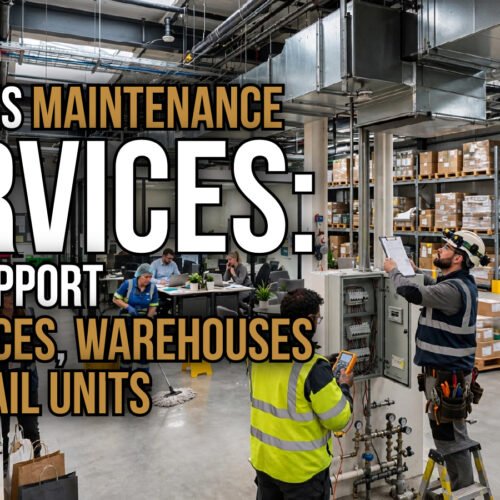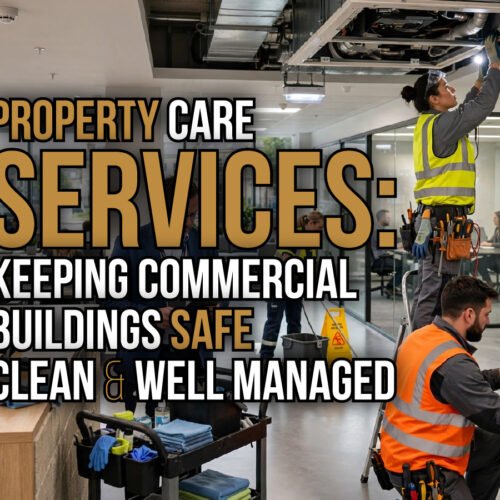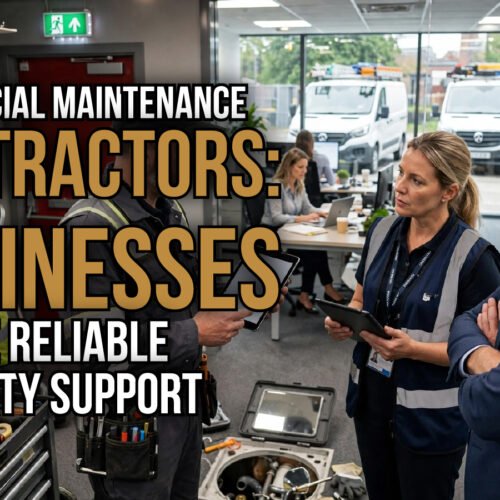

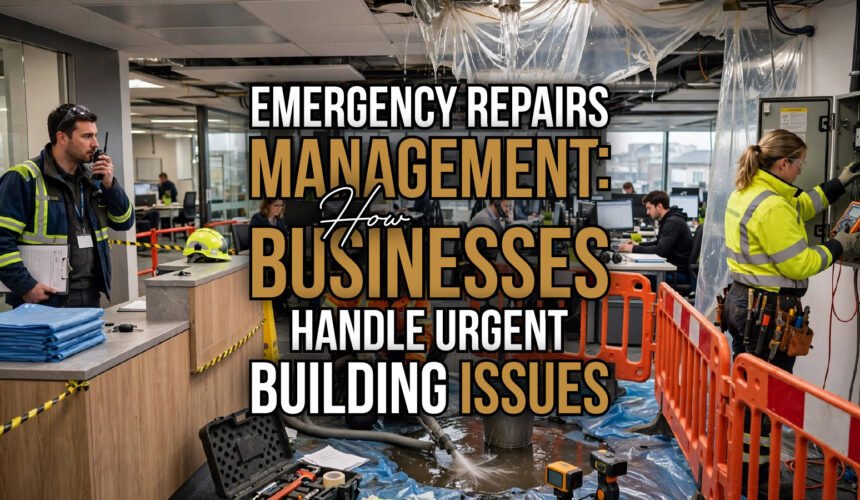
A major water leak, failed lighting, blocked commercial washroom or damaged entrance door can disrupt a site quickly. Emergency repairs management gives facilities teams a structured way to assess what has happened, decide what needs escalation and coordinate the right maintenance response without treating every fault as a crisis.
At Gohaych Services, we support businesses, landlords and property managers with urgent repairs alongside planned commercial property maintenance. Effective emergency repairs management starts with a clear fault report, safe access, suitable contractor coordination and documented follow-up rather than an unstructured call-out.
What Is Emergency Repairs Management?
Emergency repairs management is the process of identifying, prioritising, reporting and coordinating urgent property faults that cannot reasonably wait for routine maintenance. It covers immediate risk, escalation, provider contact, site access, attendance, temporary work and permanent follow-up.
Exact steps depend on the fault and premises. However, every urgent repair should end with a clear status and record.
What Counts as an Urgent Building Repair?
An urgent building repair materially affects safe use, essential services, access, property condition or operations. Emergency repairs management should prioritise the real site impact rather than the word “emergency”.
Examples include active leaks, major drainage faults, essential washroom failures, relevant heating failures, significant water ingress, access-door faults and important electrical problems. Cosmetic defects may usually wait for routine maintenance.
Emergency Maintenance vs Immediate Danger
ss=”isSelectedEnd”>Emergency maintenance covers urgent property faults, while immediate life-safety incidents take priority over normal contractor attendance. Emergency repairs management must identify that difference before arranging work.
=”isSelectedEnd”>Fire, smoke, suspected gas escape, exposed dangerous electrical conductors or apparent serious structural instability can require emergency or specialist escalation. Follow site procedures and contact the relevant emergency or utility service where immediate danger exists. GOV.UK requires responsible persons in non-domestic premises to plan for emergencies.
Staff should not touch exposed electrical components. HSE guidance requires competent, controlled work around electrical hazards.
Reactive Call Outs: What Happens First?
Reactive call outs work best when the maintenance provider receives accurate information immediately. A strong emergency repairs management process should explain the likely trade, urgency, site impact and access constraints.
Report the property address, exact fault location, what happened, affected services, photographs where useful, site contact, access instructions, operating hours and relevant repair history. Gohaych Services’ current reactive service covers electrical, plumbing, heating, drainage, access and general urgent repairs, including temporary stabilisation with planned follow-up.
Emergency Repairs Management Priority Matrix
A priority matrix makes emergency repairs management more consistent. It should guide escalation without replacing site-specific judgement or emergency procedures.
| Priority | Example | Immediate Management Step | Repair Route |
| 1: Immediate danger | Fire, suspected gas escape, exposed dangerous electrics | Follow emergency procedures and keep people away where safe | Emergency or specialist service first |
| 2: Major operational fault | Significant leak, major drainage issue, essential access failure | Report promptly and coordinate access | Urgent maintenance |
| 3: Urgent but containable | Local leak, local lighting failure, single washroom fault | Record and arrange repair | Reactive repair |
| 4: Routine | Cosmetic damage, minor wear | Add to maintenance schedule | Planned work |
Actual priority depends on people affected, building use, damage, available alternatives and site conditions.
Emergency Repairs Management for Containable Faults
Priority 3 faults still need ownership, reporting and a clear repair route, even when the affected area remains usable.
Urgent Building Repairs: Managing Water Leaks
Urgent building repairs involving water need accurate location and impact information. For emergency repairs management, report the source area if known, visible spread, affected rooms, nearby electrical equipment and site access.
Do not ask untrained staff to investigate concealed pipework, unsafe ceilings or electrical equipment. The repair provider can decide whether immediate work, temporary stabilisation or specialist follow-up is appropriate.
Electrical Faults
Electrical faults need careful escalation because the visible symptom may not show the full hazard. Emergency repairs management should record power loss, repeated tripping, damaged sockets or exposed components and route technical work to competent professionals.
HSE guidance requires electrical equipment to be maintained to prevent danger. Staff should report hazardous faults and avoid exposed electrical parts.
Heating and Ventilation Failures
Heating and ventilation faults vary in urgency according to weather, occupants, building use and available alternatives. The repair process should assess operational impact rather than treating every temperature complaint alike.
Boilers, gas systems and specialist mechanical equipment should go to appropriately competent professionals.
Drainage and Washroom Problems
Drainage and washroom faults can disrupt offices, retail units, warehouses and hospitality premises. The response should record the exact drain, toilet, sink or area affected and whether alternative facilities remain available.
Repeated backups should be tracked rather than treated as unrelated call-outs.
Roof Leaks and Water Ingress
Roof leaks and water ingress may need immediate control followed by further inspection. The repair record should capture internal damage, leak location, affected areas and previous repairs nearby.
Gohaych Services supports reactive property repairs and wider building work; roof access or specialist inspection should use appropriate controls and competent professionals.
Commercial Property Repairs: Temporary vs Permanent Work
Commercial property repairs do not always reach permanent resolution on the first visit. Emergency repairs management should state clearly whether work is temporary, investigatory or complete.
| Repair Type | Purpose | Typical Situation | Follow-Up? |
| Temporary stabilisation | Control the immediate issue | Parts unavailable or specialist access needed | Usually |
| Permanent repair | Address the identified defect | Correct access and materials available | Record completion |
| Investigation | Establish cause or wider scope | Repeat leak or recurring fault | Often |
| Planned remedial work | Complete non-urgent follow-up | Work can be scheduled | Until closed |
Temporary stabilisation can be appropriate when weather, parts, access or specialist input prevents full completion. The follow-up action should stay open until resolved.
How Gohaych Services Supports Urgent Property Repairs
At Gohaych Services, we support businesses, landlords and property managers with reactive maintenance, emergency call-outs, electrical and plumbing faults, building repairs, inspections and planned maintenance. Current service information also covers temporary stabilisation with planned follow-up.
Our team reviews the fault, urgency, access and wider property needs before discussing next steps. Attendance expectations should still be confirmed for the individual site and fault.
Commercial Property Risk Assessment After Serious or Repeat Faults
Recurring faults can reveal wider building-condition issues. Emergency repairs management should therefore feed leaks, drainage problems, electrical concerns, access faults and repair history into broader review.
A commercial property risk assessment can help document visible defects and maintenance priorities without replacing specialist statutory assessment.
Emergency Repairs Management Records
Good records make emergency repairs management repeatable. Record the date, location, fault, reporter, priority, provider, work completed, temporary action, follow-up, photographs and recurrence.
For larger portfolios, use consistent fields across sites to identify repeat problems and review maintenance spending.
Discuss an Urgent Commercial Property Repair
Businesses, landlords and property managers can share the property type, location, fault, urgency, affected areas and access details with Gohaych Services. The current quote form accepts commercial, industrial and mixed-use enquiries.
Use the request an urgent property repair quote route to discuss emergency repairs management support. Attendance, scope and pricing depend on the individual fault and site.
When Emergency Repairs Become a Pattern
Repeated emergencies usually mean the maintenance history needs review. Emergency repairs management should flag the same leak, blocked drain, heating breakdown, roof fault, electrical problem, access failure or washroom issue when it returns.
A repeat call-out may still be necessary, but facilities teams should ask whether investigation or planned maintenance is now more suitable.
Move Repeat Faults into Planned Preventative Maintenance
Planned maintenance can organise predictable checks, contractor visits and repeat tasks before another urgent call-out. Within the repair process, this creates a route from reactive response to longer-term control.
Gohaych Services’ guide to planned preventative maintenance recommends reviewing previous faults, access and outstanding remedial work when building a PPM programme.
Use Repair History to Review Wider Property Risks
Repair logs can reveal patterns that individual call-outs hide. Emergency repairs management should compare frequency, location and building area before deciding whether another reactive repair is enough.
Where several related issues appear, use a wider review of recurring commercial property risks to organise visible defects and follow-up priorities.
Emergency vs Planned Maintenance
Reactive and planned approaches perform different jobs. Emergency repairs management addresses urgent faults, while planned maintenance organises known checks, servicing and remedial work in advance.
| Factor | Emergency/Reactive Maintenance | Planned Maintenance |
| Trigger | Unexpected fault | Schedule, condition or known requirement |
| Access | May need short-notice coordination | Usually arranged ahead |
| Records | Fault and repair report | Inspection and servicing history |
| Budgeting | Less predictable | Easier to plan |
| Best use | Urgent failures | Recurring or predictable work |
| Follow-up | Can create planned actions | Tracks outstanding remedial work |
Gohaych Services’ PPM guidance recommends keeping both reactive and planned records, reviewing repeat faults and updating the programme when conditions change.
What Affects Emergency Repair Cost?
Emergency repair cost can depend on fault type, trade, location, access, labour, parts, materials, specialist equipment and follow-up work. Out-of-hours attendance or working-at-height requirements may also affect scope where relevant.
Ask whether attendance, diagnosis, labour, materials, VAT and follow-up are included before comparing quotations.
Emergency Repair Provider: What Should Businesses Compare?
When choosing a provider, emergency repairs management needs more than a call-out number. Compare commercial experience, trade coverage, access coordination, reporting, follow-up and planned-maintenance capability.
| Factor | Why It Matters | What to Confirm |
| Commercial experience | Sites have operational constraints | Relevant property types |
| Trade coverage | Faults cross different systems | Available repair disciplines |
| Reporting | Triage needs accurate information | Required fault details |
| Access | Attendance depends on entry | Contacts and restrictions |
| Follow-up | Temporary work must stay visible | Status and closure records |
| Commercial terms | Scope varies | Labour, materials, VAT, exclusions |
Questions to Ask an Emergency Maintenance Provider
Before appointing support for emergency repairs management, ask:
- Which commercial properties do you support?
- Which trades can you coordinate?
- What information do you need before attendance?
- How do you prioritise urgent repairs?
- What happens if full repair is not immediately possible?
- Do you provide repair and status reports?
- How are materials and out-of-hours arrangements charged?
- Is VAT included?
- How are follow-up repairs quoted?
- Can you review recurring faults?
- Do you support planned maintenance and inspections?
- What access information do you need?
- What works sit outside your scope?
Common Emergency Repairs Management Mistakes
Avoid these emergency repairs management mistakes:
- Confusing maintenance with emergency services.
- Delaying important fault reports.
- Giving vague fault descriptions.
- Omitting access information.
- Treating every defect as an emergency.
- Losing temporary-repair follow-up.
- Keeping no repair history.
- Comparing providers only by call-out price.
- Ignoring VAT, materials or out-of-hours terms.
- Leaving site responsibility unclear.
- Keeping recurring faults permanently reactive.
- Ignoring wider building condition.
Emergency Repairs Management Checklist
Use this emergency repairs management checklist when an urgent fault appears:
- Identify the fault and exact location.
- Assess immediate danger.
- Follow site emergency procedures where required.
- Contact emergency or utility services where necessary.
- Keep people away from unsafe areas where this can be done safely.
- Record affected services and useful photographs.
- Confirm site access and name a contact.
- Report the issue clearly and confirm priority.
- Record contractor attendance.
- Document temporary work.
- Schedule permanent follow-up.
- Record materials and completed repairs.
- Update maintenance records.
- Monitor the fault and review repeat issues.
- Consider planned preventative maintenance.
- Review wider property risks.
Where repeat faults become predictable, consider moving recurring repairs into scheduled maintenance rather than leaving every issue to another urgent call-out.
Frequently Asked Questions
What is emergency repairs management?
Emergency repairs management is the process of identifying, prioritising, reporting and coordinating urgent building faults that cannot reasonably wait for routine maintenance. It covers immediate risk assessment, internal escalation, site access, contractor coordination, temporary work where necessary, permanent follow-up and repair records. Immediate danger may require emergency or specialist services before normal maintenance support.
What counts as an urgent building repair?
An urgent repair is a building fault that materially affects essential services, access, property condition or normal use. Examples include significant leaks, major drainage problems, important access failures and some heating or electrical faults. Emergency repairs management should prioritise each case according to danger, people affected, operational disruption, property damage and available alternatives.
What is emergency maintenance?
Emergency maintenance is urgent property-maintenance activity triggered by a fault that needs prompt attention rather than routine scheduling. It may cover leaks, drainage, electrical problems, heating faults or access issues. Emergency repairs management should still separate maintenance emergencies from fire, suspected gas escapes or other immediate hazards that require official emergency or specialist escalation.
How do reactive call outs work?
Reactive call outs begin when the property team reports an unplanned fault. The provider normally needs the site, exact location, symptoms, affected services, access information and contact details. Under emergency repairs management, the issue is then prioritised, appropriate repair support is coordinated and any temporary or follow-up work should be recorded.
When should businesses call emergency services instead of a maintenance contractor?
Businesses should use the relevant emergency or utility route when there is immediate danger, such as fire, suspected gas escape or another serious life-safety hazard. Emergency repairs management should follow the building’s emergency procedures first. A maintenance contractor can then support property repair work where appropriate once the immediate emergency has been handled.
How should a commercial water leak be managed?
Report the exact location, visible spread, affected rooms, nearby services and access details. Emergency repairs management should also record whether electrical systems may be affected and keep people away from areas that appear unsafe. The repair provider can assess whether immediate plumbing work, temporary stabilisation or further investigation is required.
What should businesses do about an electrical fault?
Staff should report failed power, repeated tripping, damaged fittings or exposed electrical components and avoid touching hazardous electrical parts. Emergency repairs management should route relevant technical work to competent electrical professionals. Where there is immediate danger, follow site emergency procedures and restrict access where this can be done safely and promptly.
What information should a maintenance provider receive?
Provide the property address, property type, exact fault location, clear description, when the problem started, affected services, photographs where useful, site contact, operating hours, access instructions and previous repair history. Better information makes emergency repairs management more precise because the provider can understand likely trade, urgency and access needs before attendance.
What is the difference between a temporary and permanent repair?
A temporary repair or stabilisation controls the immediate problem until permanent work can be completed. A permanent repair addresses the identified defect with the required access, materials and specialist input. Emergency repairs management should record temporary status clearly and set a follow-up action so temporary work is not mistakenly treated as complete.
What is the difference between emergency and planned maintenance?
Emergency maintenance responds after an urgent fault appears, while planned maintenance schedules known inspections, servicing and remedial work in advance. Emergency repairs management therefore focuses on triage, access and immediate repair coordination. Planned preventative maintenance becomes particularly useful when repair history shows predictable or recurring building issues that can be scheduled.
When should repeated emergency repairs move into planned preventative maintenance?
Review the maintenance approach when the same leak, drain, heating system, door, roof area or other component keeps generating urgent call-outs. Emergency repairs management records can expose these patterns. A planned programme may then organise inspection, servicing or remedial work more systematically, although planned maintenance cannot guarantee that future breakdowns will never occur.
Can a commercial property risk assessment help identify repeat problems?
Yes. A commercial property risk assessment can record visible defects, access concerns, maintenance priorities and recurring repair areas. Within emergency repairs management, this wider review can help property teams connect separate call-outs and identify areas that need monitoring or specialist assessment. It does not replace statutory or technical assessments where those are required.
What affects the cost of emergency commercial property repairs?
Commercial property repairs can vary in cost according to the fault, trade, location, access, labour, parts, materials, specialist equipment and follow-up requirements. Emergency repairs management should also clarify whether attendance, diagnosis, VAT and any applicable out-of-hours charges are included. Compare quotations on the same repair scope rather than a headline figure alone.
How can Gohaych Services support urgent property repairs?
Gohaych Services supports reactive maintenance, emergency call-outs, electrical and plumbing repairs, general building repairs, property inspections and planned maintenance. For emergency repairs management, businesses can share the property, fault, urgency and access requirements so the maintenance need can be reviewed. Response arrangements depend on the specific issue, location, access and current availability.
Keep Urgent Repairs Connected to the Wider Maintenance Plan
Effective emergency repairs management begins with immediate-risk assessment, clear reporting and appropriate escalation. After attendance, record what was repaired, what was temporary and what still needs action.
Most importantly, track recurrence. Emergency maintenance and commercial property repairs should feed a wider maintenance history so repeated problems can move into inspection, planned work or condition review instead of returning as isolated emergencies.
Discuss Your Commercial Property Repair
Businesses, landlords, facilities managers and property managers can share the property type, location, repair issue, urgency, areas affected and access information with Gohaych Services.
To discuss suitable emergency repairs management and wider maintenance support, share your urgent repair requirements with Gohaych Services.