
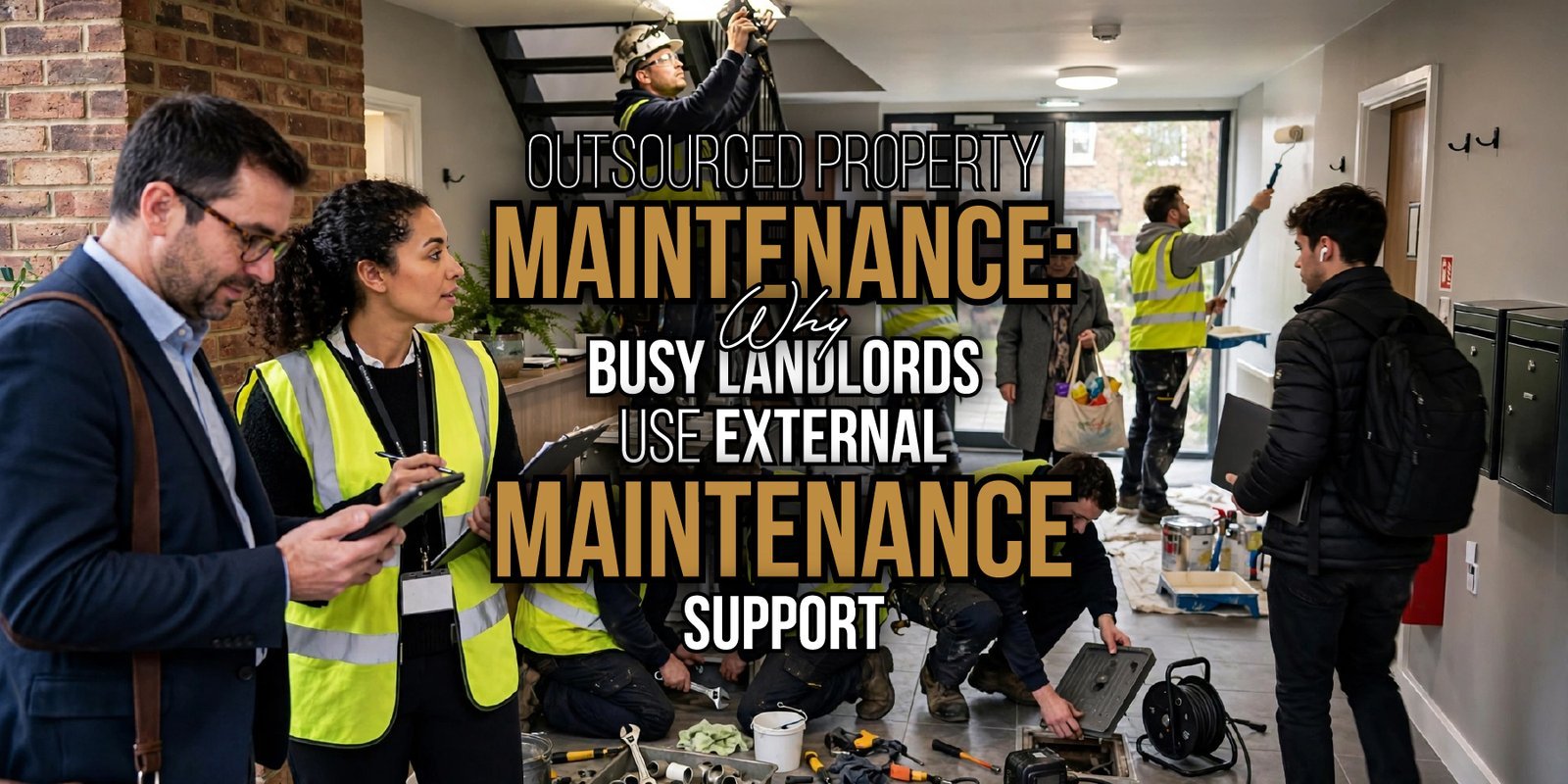
A landlord can face several maintenance demands in the same week: a plumbing fault, routine electrical work, a communal-area issue, an inspection and a specialist building-fabric problem. Coordinating each trade separately can become an operational burden, especially across several properties. This is where outsourced property maintenance can create a clearer working structure.
Instead of managing every repair independently, landlords can use one external maintenance arrangement for agreed tasks while keeping control of budgets, priorities and approvals.
What Is Outsourced Property Maintenance?
Outsourced property maintenance means using an external provider to coordinate or carry out agreed maintenance tasks instead of managing every repair and contractor internally. Depending on the service agreement, it can include reactive repairs, routine maintenance, planned works, inspections, cleaning, specialist trades and reporting.
Outsourced property maintenance is not necessarily the same as full property management. A landlord may outsource maintenance delivery while retaining tenancy decisions, budgets, strategic planning and other management responsibilities.
Why Do Busy Landlords Outsource Property Maintenance?
Landlords often use outsourced property maintenance to reduce day-to-day contractor coordination, improve repair reporting, access several maintenance disciplines and create a more structured approach to planned and reactive work. It can also make records easier to review across a growing portfolio without removing landlord oversight.
What Property Maintenance Can Landlords Outsource?
The scope of outsourced property maintenance depends on the provider and service agreement. Common categories can include plumbing, electrical work, general repairs, building-fabric work, inspections, cleaning, scheduled maintenance and specialist projects.
| Maintenance Area | Example Work | Reactive / Planned / Both |
|---|---|---|
| Plumbing | Leaks, faults, repairs | Both |
| Electrical | Faults, maintenance, upgrades | Both |
| General repairs | Fixtures, finishes, minor building work | Both |
| Building fabric | Walls, roofs, external or internal fabric | Both |
| Inspections | Property-condition reviews | Planned |
| Cleaning | Residential or commercial cleaning | Both |
| Planned maintenance | Scheduled upkeep and servicing | Planned |
| Specialist works | Waterproofing, larger repairs, refurbishment | Both |
Gohaych Services currently supports day-to-day maintenance, reactive work, planned preventative maintenance, inspections, cleaning, electrical/plumbing work and broader building and renovation services.
Property Maintenance Support vs Full Property Management
Property maintenance support focuses on keeping agreed parts of a building or portfolio maintained. Full property management may extend into wider tenancy, administration or management responsibilities, depending on the provider.
| Property Maintenance Support | Full Property Management |
|---|---|
| Repairs and maintenance | May include wider property operations |
| Contractor coordination | May include broader supplier management |
| Property inspections | May include additional management inspections |
| Maintenance reporting | May include wider owner reporting |
| Planned works | May sit within broader property strategy |
| Limited agreed scope | Usually broader management scope |
Reactive Maintenance vs Planned Maintenance
Reactive and planned maintenance solve different problems, and landlords often need both.
| Factor | Reactive Maintenance | Planned Maintenance |
|---|---|---|
| Trigger | Fault or reported issue | Schedule or identified future need |
| Timing | When action is needed | Agreed in advance |
| Purpose | Restore normal use or address a fault | Maintain condition and organise future work |
| Budget planning | Less predictable | Easier to schedule |
| Records | Repair history | Maintenance history |
| Portfolio impact | Handles immediate issues | Supports longer-term planning |
A good external maintenance model should connect the two. Recurring reactive repairs can inform future planned work, while planned inspections can reveal issues that deserve earlier attention.
Why Outsourced Property Maintenance Needs a Planned Component
Outsourced property maintenance should not only respond when something fails. Inspections, recurring defects, servicing needs and scheduled repairs can all feed into a planned maintenance programme.
Landlords who want a structured schedule can use a planned maintenance programme to organise recurring and future work around the property.
Planned Maintenance Programme for Landlords
A useful planned model follows a simple sequence:
PROPERTY → ASSET / AREA → CONDITION → PRIORITY → SCHEDULE → WORK → RECORD → REVIEW
This gives the maintenance arrangement a forward-looking element. Instead of treating every job as isolated, landlords can structure planned property maintenance around condition, priority and timing.
Reactive Repairs Within an Outsourced Maintenance Model
Reactive work usually begins with an issue report. The provider can then assess the requirement, identify the appropriate trade, arrange the work within the agreed authority and record the outcome.
A useful outsourced property maintenance workflow is:
REPORT ISSUE → ASSESS PRIORITY → AUTHORISE WORK → ASSIGN TRADE → COMPLETE WORK → RECORD OUTCOME → REVIEW RECURRING ISSUES
How Should a Landlord Report a Maintenance Issue?
Consistent reporting improves coordination. Every request should identify the property, issue, urgency, access information and any approval requirement.
Use:
REPORT → PROPERTY → ISSUE → URGENCY → ACCESS → AUTHORISATION → ASSIGNMENT
Across several properties, one standard reporting route can make repair tracking easier.
Who Decides What Work Gets Authorised?
Landlords and property managers should establish who can approve work, when approval is needed and how urgent exceptions are handled. Specific monetary thresholds should reflect the service agreement rather than a universal figure.
The arrangement works best when the provider knows what can proceed immediately and what needs landlord approval first.
Outsourced Property Maintenance for Multiple Properties
Across a portfolio, outsourced property maintenance can create one reporting format, a consistent maintenance-history structure, coordinated scheduling and clearer property-by-property priorities.
Outsourced Property Maintenance for a Single Rental Property
A single-property landlord may also find outsourced property maintenance useful, particularly when they live far away, have limited time or prefer not to coordinate several trades.
Landlord Maintenance Services: What Should Be Included?
Landlord maintenance services can include reactive repairs, routine maintenance, planned maintenance, inspections, electrical work, plumbing, general repairs, cleaning and specialist works. The exact scope should be written clearly into the agreement.
Facilities Maintenance and Outsourced Property Care
Facilities maintenance is the coordination of practical building services that keep a property operating. It can include maintenance planning, repairs, contractor coordination, inspections, cleaning and building-support services.
Gohaych Services currently describes facilities-management support around maintenance planning, repairs, contractor coordination, inspections, cleaning coordination and building management.
For larger managed buildings, outsourced property maintenance can therefore overlap with facilities maintenance without becoming identical to full property management.
Outsourced Property Maintenance for Commercial Properties
Outsourced property maintenance can support offices, retail units, managed buildings and other commercial premises where the business wants structured reactive, routine and planned property care. The most useful model combines repair coordination, scheduled works, reporting and property-condition oversight.
Gohaych Services currently positions its maintenance offering for residential and commercial properties and publishes dedicated commercial-property-maintenance guidance.
Commercial Property Care: What Should Be Coordinated?
Commercial property care can involve routine maintenance, inspections, reactive repairs, planned maintenance, cleaning, electrical or plumbing support and building-fabric work.
What Should Stay Under the Landlord’s Control?
Outsourcing execution should not mean outsourcing governance.
OUTSOURCE DELIVERY — KEEP GOVERNANCE CLEAR.
Landlords or property managers should retain clarity over:
- budgets;
- priorities;
- approvals;
- standards;
- tenant or occupier responsibilities;
- legal duties;
- provider performance; and
- longer-term property strategy.
What Should the Maintenance Provider Manage?
Depending on the agreement, the provider may receive maintenance requests, assess work requirements, assign appropriate trades, schedule works, complete agreed tasks, report progress, maintain service records and escalate specialist issues.
The exact provider responsibilities should be defined before the relationship starts.
Landlord vs Provider Responsibilities
ILLUSTRATIVE RESPONSIBILITY MODEL — FINAL RESPONSIBILITIES DEPEND ON THE SERVICE AGREEMENT.
| Area | Landlord / Property Manager | Maintenance Provider |
|---|---|---|
| Priorities | Sets business priorities | Works to agreed priorities |
| Budget | Controls overall budget | Reports expected work |
| Work approval | Defines authority | Seeks approval where required |
| Issue assessment | Provides context | Assesses maintenance requirement |
| Scheduling | Sets constraints | Coordinates agreed works |
| Trade assignment | Approves model | Assigns appropriate trade |
| Work completion | Reviews outcome | Delivers or coordinates work |
| Reporting | Defines required information | Provides updates |
| Maintenance records | Retains oversight | Maintains agreed service records |
| Planned schedule | Approves priorities | Builds and updates schedule |
| Specialist escalation | Approves major scope | Identifies specialist need |
| Performance review | Reviews provider | Supplies performance information |
How Should Property Maintenance Be Reported?
A useful maintenance report can record the property, date reported, issue category, priority, action taken, trade, status, completion date, follow-up requirement and recurring-issue flag.
This is not a universal legal format. However, consistent records make outsourced property maintenance easier to review across both single properties and portfolios.
Why Maintenance History Matters
Maintenance history can show recurring repairs, repeatedly affected properties, assets needing attention and work that may belong in the planned schedule.
Across a portfolio, outsourced property maintenance records can also help landlords decide which issues deserve further investigation rather than repeated one-off repairs.
Specialist Work Within Outsourced Property Maintenance
An external provider should recognise when routine maintenance becomes specialist work. Electrical, plumbing, building-fabric issues, water ingress, waterproofing and specialist inspections may require different expertise.
For example, landlords dealing with below-ground water issues can review basement waterproofing in Hounslow as a specialist building-fabric service.
When a Maintenance Issue Becomes a Specialist Project
Some issues move beyond routine outsourced property maintenance. Recurring water ingress, substantial fabric work, refurbishment, major electrical work or specialist upgrades may need a separately scoped project.
In practice, the provider should flag that change, define the new requirement and obtain the appropriate authorisation before the scope expands.
How to Choose an Outsourced Property Maintenance Provider
Choose a provider by comparing operational fit rather than headline price alone. Outsourced property maintenance should give the landlord a clear route for reporting, approvals, scheduling, completion and review.
| Selection Criterion | What to Check |
|---|---|
| Services covered | Are the required maintenance categories included? |
| Reactive capability | Can reported issues be coordinated? |
| Planned capability | Can future work be scheduled? |
| Trade range | Are relevant disciplines available? |
| Reporting | What updates and records are provided? |
| Communication | Who receives and manages requests? |
| Property types | Does the provider support relevant buildings? |
| Specialist escalation | How are larger issues identified? |
| Quote structure | How is work priced or approved? |
| Planning | Can recurring work be scheduled? |
| Service scope | What sits inside or outside the agreement? |
| Geography | Does coverage suit the portfolio? |
Questions to Ask Before Outsourcing Property Maintenance
Ask potential providers:
- Which repair categories do you handle?
- Do you provide planned and reactive maintenance?
- How are maintenance requests reported?
- Who authorises work?
- How are urgent issues handled?
- How are completed works recorded?
- Can you support multiple properties?
- How do you coordinate specialist trades?
- What reporting will the landlord receive?
- How is planned work scheduled?
- What is included in the service agreement?
- How are recurring issues reviewed?
These questions make providers easier to compare on operational value rather than marketing language.
How Gohaych Services Supports Landlords
At Gohaych Services, we support landlords, homeowners and businesses with day-to-day maintenance, reactive repairs, planned preventative maintenance, inspections, cleaning, electrical/plumbing work, general building services and wider property projects.
For outsourced property maintenance, that range can help create a clearer route from reported issue to assessment, scheduling, completion and ongoing maintenance planning.
Need a Clearer Maintenance Structure for Your Properties?
If separate repairs, planned tasks and several trades are becoming difficult to coordinate, discuss the number and types of properties, current issues, routine work, reporting preferences and future maintenance priorities.
You can discuss your property maintenance requirements with Gohaych Services to scope an appropriate maintenance arrangement.
Common Outsourced Property Maintenance Mistakes
| Mistake | Better Approach |
|---|---|
| Outsourcing without defining scope | List included maintenance categories |
| No named landlord contact | Assign a decision-maker |
| No approval process | Define authorisation |
| Treating every repair as urgent | Use clear priority categories |
| No planned/reactive distinction | Track both work types |
| No maintenance records | Maintain a repair history |
| No reporting format | Agree required fields |
| Multiple contractors without coordination | Use a clear coordination route |
| No specialist escalation | Define when scope changes |
| Ignoring recurring issues | Flag repeat repairs |
| Not reviewing history | Use records in planning |
| No planned schedule | Build recurring tasks |
| Unclear occupier reporting | Create one reporting route |
| No completion confirmation | Close each work order |
| No portfolio priorities | Rank properties and needs |
| Choosing only by headline price | Compare service scope |
| Not reviewing agreement | Recheck responsibilities |
| Losing landlord oversight | Keep governance clear |
Outsourced Property Maintenance Checklist
Use this outsourced property maintenance checklist:
- List every property.
- Define property types.
- List maintenance categories.
- Identify recurring issues.
- Identify urgent requirements.
- Separate reactive and planned work.
- Define electrical requirements.
- Define plumbing requirements.
- Identify building-fabric needs.
- Identify cleaning requirements.
- Identify specialist works.
- Review property condition.
- Create maintenance priorities.
- Set the reporting process.
- Set the tenant or occupier reporting route.
- Name the landlord contact.
- Set the authorisation process.
- Define emergency authorisation.
- Agree provider responsibilities.
- Define completion reporting.
- Maintain maintenance history.
- Track recurring repairs.
- Build a planned schedule.
- Review inspections.
- Review specialist-contractor needs.
- Define portfolio priorities.
- Review budgets.
- Review service scope.
- Review provider performance.
- Update planned maintenance.
- Review outstanding repairs.
- Review completed works.
- Update property records.
- Review the arrangement periodically.
For portfolios with recurring scheduled needs, landlords can also build a maintenance schedule.
Frequently Asked Questions
What is outsourced property maintenance?
Outsourced property maintenance means using an external provider to coordinate or deliver agreed maintenance tasks instead of managing every repair internally. It may include reactive repairs, planned maintenance, inspections, specialist trades, cleaning and reporting. The exact scope depends on the service agreement, while the landlord can retain control of budgets, approvals and property strategy.
Why do landlords outsource property maintenance?
Landlords use outsourced property maintenance to reduce day-to-day contractor coordination, create clearer reporting, access several maintenance disciplines and structure planned and reactive work. It can also help maintain more consistent records across several properties. However, outsourcing delivery should not remove landlord oversight of priorities, approvals, budgets or standards.
What maintenance tasks can landlords outsource?
Landlords can outsource plumbing, electrical work, general repairs, building-fabric work, inspections, cleaning, planned maintenance and specialist works where the provider offers them. Outsourced property maintenance should clearly state which categories are included, which need separate approval and when a routine maintenance task becomes a separately scoped specialist project.
What does property maintenance support include?
Property maintenance support can include repair coordination, routine work, inspections, planned tasks, contractor scheduling, progress reporting and maintenance records. The scope can be narrower than full property management. Therefore, landlords should define exactly what the provider handles and what remains with the landlord or property manager.
Is outsourced property maintenance suitable for one rental property?
Yes, outsourced property maintenance can suit a single rental property where the landlord lacks time, lives at a distance or prefers not to coordinate several trades. However, the arrangement should reflect the real maintenance demand. Some owners may need a light-touch service rather than a broad ongoing maintenance programme.
Is outsourced property maintenance useful for property portfolios?
It can be particularly useful across a portfolio because reporting, records, planned scheduling and contractor coordination can follow one operating structure. Outsourced property maintenance can help landlords compare recurring issues across properties while retaining control of budgets, priorities and strategic decisions.
What is the difference between reactive and planned maintenance?
Reactive maintenance responds to a reported fault or issue, while planned maintenance schedules work in advance based on inspections, servicing needs or identified priorities. Landlords usually need both. In outsourced property maintenance, reactive repair history should inform future planned work so repeated problems do not remain isolated jobs.
What is facilities maintenance?
Facilities maintenance coordinates practical services that keep larger or commercial properties operating. It can include repairs, planned maintenance, inspections, contractor coordination, cleaning, electrical and plumbing work and building-support services. The actual scope depends on the property and agreement.
What do landlord maintenance services include?
Landlord maintenance services can include reactive repairs, routine maintenance, planned works, inspections, electrical work, plumbing, general repairs, cleaning and specialist projects. Outsourced property maintenance should define which services are standard, which require authorisation and what reporting the landlord will receive.
What is commercial property care?
Commercial property care is the coordinated maintenance of offices, retail units, managed buildings and other business premises. It can include inspections, reactive repairs, scheduled works, cleaning, electrical or plumbing support and building-fabric maintenance. The objective is organised property upkeep rather than a single isolated repair.
Should landlords outsource emergency repairs?
They can include urgent or reactive work within an outsourced property maintenance arrangement if the provider offers that service. Landlords should define the reporting route, decision-maker, authorisation process and any exceptions in advance. Do not assume every provider follows the same response model or service scope.
How should outsourced maintenance be reported?
A useful report can record the property, issue, date reported, priority, action, trade, status, completion date, follow-up and whether the issue has occurred before. Outsourced property maintenance reporting should give the landlord enough information to review work, identify recurring issues and maintain oversight without prescribing one universal format.
What should stay under the landlord’s control?
Landlords should retain clarity over budgets, priorities, approvals, standards, legal responsibilities, provider performance and longer-term property strategy. Outsourced property maintenance should delegate agreed delivery and coordination tasks, not remove governance. Final responsibilities should be written into the service agreement.
How do I choose a property maintenance provider?
Compare the services covered, reactive and planned capabilities, trade range, reporting, communication, specialist escalation, property types supported, service scope and geographical coverage. For outsourced property maintenance, also check how issues are authorised, how completed work is recorded and how recurring repairs feed into future planning.
How can Gohaych Services support outsourced property maintenance?
Gohaych Services currently supports landlords, homeowners and businesses with reactive maintenance, planned preventative maintenance, inspections, cleaning, electrical/plumbing work, general repairs, building and renovation services. An outsourced property maintenance arrangement can therefore be discussed around the property’s actual reactive, routine, planned and specialist requirements.
Conclusion
Outsourced property maintenance works best when the provider handles agreed delivery while the landlord keeps clear oversight of priorities, budgets, approvals, standards and property strategy.
Use the operating sequence:
PROPERTY → REQUIREMENTS → REACTIVE → PLANNED → PROVIDER → AUTHORISATION → WORK → REPORTING → RECORDS → REVIEW
The objective is not to remove landlord involvement. Instead, outsourced property maintenance should make coordination, reporting and maintenance planning easier to manage.
Discuss Your Property Maintenance Requirements With Gohaych Services
Gohaych Services currently supports landlords, homeowners and businesses with reactive repairs, planned maintenance, inspections, cleaning, electrical/plumbing work, general maintenance and wider property projects.
If you are considering outsourced property maintenance for one property or a wider portfolio, request an outsourced property maintenance quote.