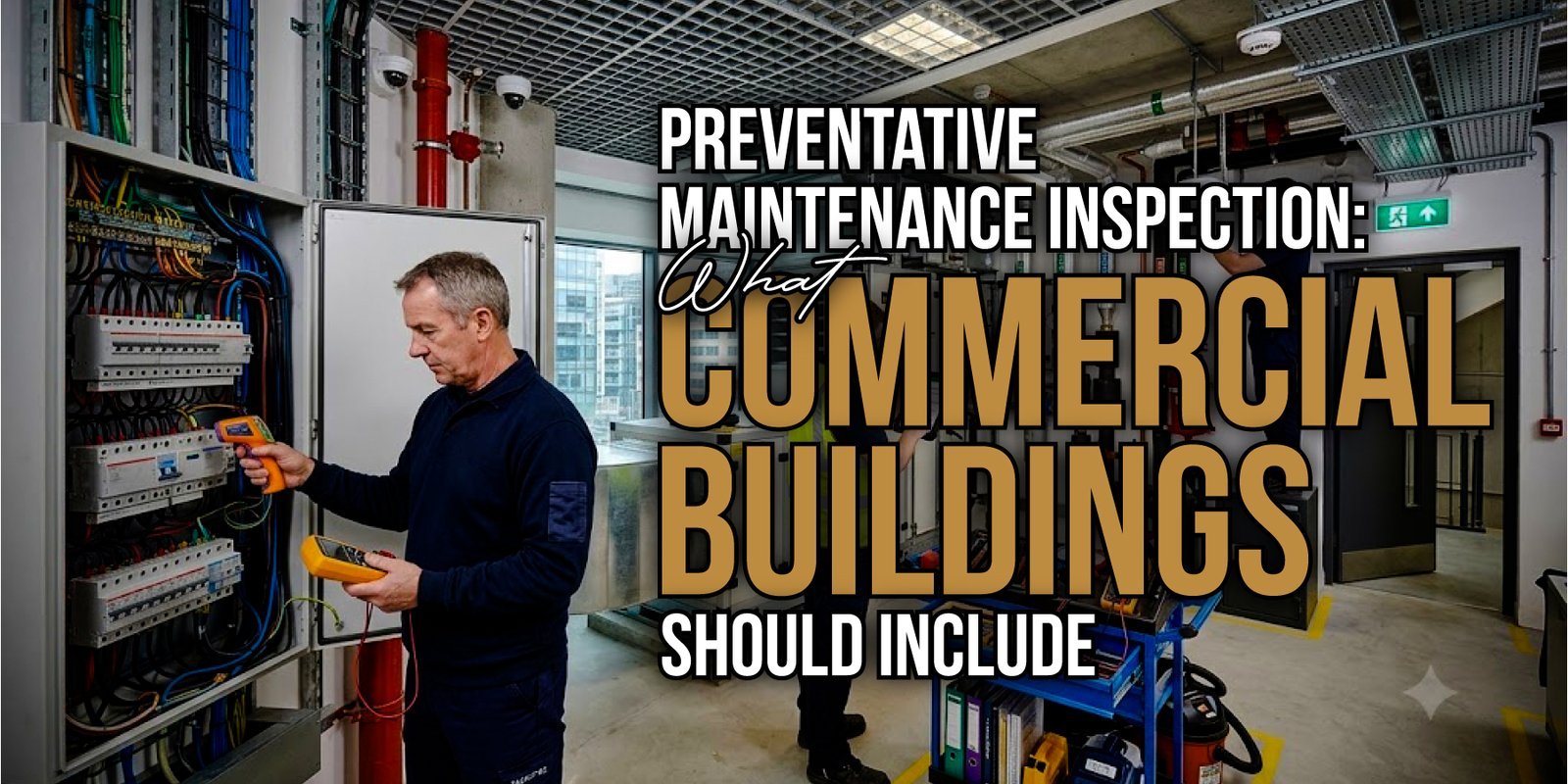
A preventative maintenance inspection helps commercial becomes reactive. In commercial buildings, the inspection may cover building fabric, services, shared areas, access points, plant rooms and reported faults.
However, the inspection scope should match the property. An office, retail unit, warehouse, hotel, industrial site or mixed-use building will not need the same checklist. Additionally, a general inspection does not replace every specialist test, statutory examination or formal survey.
At Gohaych Services, commercial property teams can discuss planned preventative maintenance, professional inspections, reactive maintenance, electrical and plumbing support, fire-safety support and wider property-management requirements. The Get service type, property type and project description, which helps scope commercial, industrial and mixed-use enquiries. citeturn818749view2turn818749view3 Property managers can request a preventative maintenance inspection quotation with building details and required reporting needs.
What Is a Preventative Maintenance Inspection?
A preventative maintenance inspection is a planned review of accessible building areas and agreed assets. It may involve reviewing visible building condition, checking selected assets, recording reported faults, identifying deterioration, reviewing maintenance history, taking photographs, assigning defect priorities, recommending maintenance actions and setting follow-up dates.
The aim is practical maintenance planning. However, a preventative maintenance inspection does not guarantee discovery of every hidden defect, and it should not be described as a specialist survey unless the agreed scope genuinely qualifies.
How Does a Preventative Maintenance Inspection Fit Into PPM?
A preventative maintenance inspection is one part of a wider planned maintenance process. A full PPM programme may include asset registers, inspection schedules, servicing, routine maintenance, minor repairs, specialist testing, work orders, completion records, follow-up visits and programme reviews.
The supplied planned preventative maintenance guide URL is not currently returning a live page, so it should be published and verified before this article links to it. Once live, it should support sections on asset registers, inspection schedules and wider PPM planning.
What Is the Difference Between an Inspection and Servicing?
An inspection reviews condition, operation, deterioration and visible defects. For example, the inspector may note damaged seals, water staining, faulty lighting, worn door closers, drainage concerns or access issues.
Servicing completes defined maintenance tasks, adjustments, cleaning, lubrication, replacement or testing according to relevant instructions. Therefore, one visit may include both inspection and servicing, but the quotation should clearly state what is included.
What Is the Difference Between PPM Inspections and Building Condition Checks?
PPM inspections and building condition checks can overlap, but the scope may differ. Building condition checks often focus on overall building fabric, visible deterioration, internal and external condition and repair priorities.
By comparison, PPM inspections may also consider scheduled assets, service intervals, repeat faults, planned maintenance records and follow-up work. Before arranging a preventative maintenance inspection, facilities managers should confirm the expected report, checklist, evidence standard and exclusions.
What Is the Difference Between a Preventative Inspection and a Condition Survey?
A preventative inspection is usually a maintenance-focused review of visible condition and agreed building areas. A condition survey may involve a deeper professional assessment, more detailed technical commentary, broader building elements, specific surveyor input and different professional liability.
Routine inspections are normally non-intrusive unless the agreement says otherwise. Therefore, a general preventative maintenance inspection should not be presented as a structural survey, specialist roofing survey or intrusive building investigation.
What Is the Difference Between an Inspection and a Compliance Check?
Routine maintenance inspections review condition and maintenance needs. Compliance checks may relate to legal duties, formal testing, documentation, specialist certification or competent-person assessment.
Some compliance findings create maintenance actions. However, completing a repair does not automatically provide certification. Gohaych Services’ building compliance guide ex and maintenance overlap but are not identical, and that a completed repair does not automatically prove every legal duty has been met. citeturn400862view2
What Commercial Building Areas Should Be Included?
A commercial preventative maintenance inspection should start with the agreed scope. The following categories commonly help facilities managers build a practical inspection checklist.
External Building Fabric
External checks may include roof coverings visible from accessible areas, gutters, downpipes, drainage outlets, external walls, cladding condition, sealants, windows, external doors, steps, handrails, paths, visible water ingress and external damage.
However, unqualified people should not access roofs or work at height. Where specialist access, roof diagnosis or intrusive assessment is needed, a suitable specialist should be appointed.
Internal Building Fabric
Internal checks may include walls, ceilings, floors, internal doors, door closers, windows, sealants, decoration condition, visible damp, water staining, cracks, loose finishes, trip concerns and damaged fixtures.
However, an inspector should not diagnose hidden structural causes without specialist assessment. Instead, the report should record the visible finding and recommend referral where suitable.
Roofs, Gutters and Drainage
A preventative maintenance inspection may record visible roof defects, blocked gutters, damaged downpipes, overflow evidence, standing water, drainage concerns, water staining and reported leaks.
Where roof access, drainage investigation or leak tracing needs technical tools, a roofing or drainage specialist may be required. Therefore, the inspection report should separate observation from diagnosis.
Electrical Assets
Electrical observations may include visible damage, lighting faults, damaged switches, damaged sockets, distribution-equipment condition, exposed or loose components, emergency-lighting condition, reported faults, maintenance labels and existing records.
However, general observations do not replace competent electrical inspection, testing or certification. HSE states that inspection frequency fough risk assessment, taking account of the equipment, use, conditions, manufacturer recommendations and experience.
Plumbing and Water Systems
Plumbing checks may include leaks, pipework condition, taps, toilets, washrooms, drainage, water-pressure concerns, visible corrosion, water staining, plant-room observations and reported faults.
However, a visual inspection is not a water-hygiene assessment. Where water-hygiene duties, sampling or technical risk assessment apply, businesses should use competent advice.
Heating, Ventilation and Mechanical Systems
Heating and mechanical observations may include boilers, pumps, valves, controls, heating output concerns, ventilation, air-conditioning equipment, filters where within scope, service labels, occupant-reported unusual noise, leaks and maintenance records.
Specialist servicing may require appropriately qualified contractors. Therefore, the inspection should identify visible issues and records, then refer technical servicing requirements where needed.
Fire-Related Assets
Fire-related observations may include fire-door condition, door closers, emergency lighting, escape-route signs, alarm fault indicators, extinguisher locations, escape routes, damaged visible fire-stopping, maintenance labels and reported faults.
However, general inspection support does not replace a fire risk assessment, formal testing or speible person for business or other non-domestic premises must carry out and regularly review a fire risk assessment.
Doors, Gates and Access Systems
Door and access checks may include external doors, internal controlled doors, locks, door closers, gates, barriers, intercoms, access readers, roller shutters, delivery entrances, reported access faults and lighting.
Gohaych Services’ business-premises security guide covers damaged doord lighting, obstructed cameras, faulty intercoms, unreliable access readers and damaged roller shutters as practical property concerns.
Shared and Common Areas
Shared-area checks may include entrances, reception areas, corridors, staircases, lifts from a general user-observation perspective, washrooms, kitchens, refuse areas, storage rooms, plant rooms, loading areas, car parks and external routes.
However, lift examinations require specialist arrangements. A general user observation should not be described as a LOLER thorough examination.
Tenant and Occupied Areas
Occupied-area checks require access permission, operating-hour planning, tenant-reported faults, furniture or stock considerations, workstation awareness, customer-facing area planning, restricted-room controls, confidentiality awareness and possible reinspection.
Therefore, the preventative maintenance inspection quotation should explain how inaccessible or restricted areas will be recorded.
Commercial Inspection Scope Table
| Building Area or Asset | Example Inspection Points | Possible Evidence | When Specialist Input May Be Needed |
|---|---|---|---|
| External fabric | Walls, doors, sealants, visible damage | Photos, condition notes | Structural concern or high-access issue |
| Internal fabric | Walls, ceilings, floors, damp marks | Photos, location notes | Suspected structural movement |
| Roofs and gutters | Visible defects, overflow, staining | Photos, leak reports | Roof access or specialist survey |
| Drainage | Blockage signs, smells, overflow | Photos, occupant reports | CCTV drain survey or excavation |
| Electrical assets | Lighting, damaged fittings, records | Fault notes, photos | EICR, testing or live electrical work |
| Plumbing | Leaks, toilets, taps, pipework | Photos, defect notes | Water hygiene or technical repair |
| Heating and ventilation | Service labels, reported performance | Records, occupant notes | Qualified mechanical servicing |
| Fire-related assets | Fire doors, signs, emergency lighting | Photos, visible defects | Fire risk assessment or formal testing |
| Doors and access systems | Locks, readers, shutters, closers | Photos, access-fault logs | Specialist access-control repair |
| Lighting | Failed lights, dark areas, controls | Photos, reports | Electrical diagnosis or rewiring |
| Common areas | Corridors, stairs, washrooms, routes | Photos, notes | Lift, asbestos or fire specialist |
| Plant rooms | Visible leaks, labels, access issues | Photos, record checks | Mechanical, electrical or gas specialist |
What Should Happen Before the Inspection?
Before a preventative maintenance inspection, facilities managers should prepare the property address, building use, occupancy details, operating hours, site contacts, access instructions, restricted areas, asset register, previous reports, maintenance records, known defects and emergency repair history.
Additionally, the team should gather tenant complaints, manufacturer information, lease responsibilities, specialist reports, photographs, required report format and priority concerns. This preparation helps the inspector focus on the agreed scope rather than guessing.
What Should Happen During the Inspection?
During the visit, the inspector should complete a site induction, confirm access, review restricted areas, check known defects and walk through the agreed route. Next, they should review listed building areas, selected assets, visible deterioration and reported operational faults.
The report should record photographs, urgent referrals, maintenance priorities, inaccessible areas and information gaps. Where appropriate, the inspector may discuss immediate observations with the site contact, but should avoid technical repair instructions outside the agreed role.
What Should Happen After the Inspection?
After the inspection, the process should move from findings to action. This may include report preparation, photographic evidence, defect priorities, recommended actions, specialist referrals, repair quotations where requested, approval steps, work orders and contractor scheduling.
Additionally, facilities managers should store completion evidence, plan follow-up inspections, update the asset register, adjust the maintenance calendar and review repeat faults. A preventative maintenance inspection only adds value when findings lead to tracked decisions.
What Should a Preventative Maintenance Inspection Report Include?
A useful report should include property details, inspection date, inspector details, areas inspected, areas not accessed, inspection limitations, asset references, findings, photographs, condition rating, defect priority, recommended action, specialist referral, responsible party, proposed timeframe, quotation status, work-order status, completion evidence, follow-up date and next inspection date where appropriate.
The level of detail should be agreed before booking. Therefore, facilities managers should ask whether the report will include photographs, condition grades, repair recommendations and clear limitations.
How Should Defects Be Prioritised?
A practical priority system helps turn building condition checks into maintenance actions.
Urgent Referral
A finding requiring prompt review by an appropriate professional because it may significantly affect building use, operations or people at the site.
High Priority
A defect that may worsen, interrupt an important building function or create a larger repair requirement.
Planned Repair
Work suitable for completion within an agreed maintenance period.
Monitor
A lower-priority observation that should be reviewed during a later inspection.
However, technical and statutory risks should be classified by appropriately competent professionals.
Should Inspection Reports Include Photographs?
Yes, photographs are useful where they are permitted and relevant. They can identify the location, record visible condition, compare deterioration over time, support repair quotations, clarify recommendations, confirm completed work, help remote decision-makers and support portfolio reporting.
However, photographs have limits. Facilities managers should consider privacy, confidential areas, occupants, data storage, permission, image quality and whether the image shows scale or context.
How Often Should Preventative Maintenance Checks Take Place?
Preventative maintenance checks should not follow one universal timetable. Frequency may depend on building use, asset type, occupancy, operating hours, existing condition, previous faults, environmental exposure, manufacturer guidance, risk assessment, statutory duties, lease conditions, insurance requirements, seasonal factors and competent-person advice.
HSE work-equipment guidauipment needs formal inspection and that inspections should be proportionate to significant risks from installation or deterioration. citeturn994582search2 Therefore, a preventative maintenance inspection schedule should explain why each interval was chosen.
Illustrative Inspection Schedule
Illustrative planning example only. Actual inspection frequencies must reflect the property, assets, condition, risks, manufacturer guidance and applicable requirements.
| Possible Frequency | Example Check Type | Why It May Be Considered | Important Limitation |
| Weekly user checks | Occupier observations, obvious defects | High-use areas change quickly | Not a specialist inspection |
| Monthly routine checks | Common areas, lighting, doors | Keeps records current | Depends on building use |
| Quarterly planned reviews | Fabric, drainage, access points | Supports planned maintenance | Access may limit scope |
| Six-monthly checks | Seasonal systems and external areas | Helps weather planning | Manufacturer guidance may differ |
| Annual programme review | Asset list and record review | Supports budget planning | Some assets need different timing |
| Seasonal checks | Gutters, roofs, drainage, heating readiness | Weather can affect buildings | Specialist access may be needed |
| After a reported fault | Follow-up inspection | Confirms next action | Technical issues may need specialists |
| After building alterations | Updated scope review | Asset or risk profile may change | Compliance duties may change |
| After major repair work | Completion review | Confirms work evidence | Not a substitute for certification |
Who Should Carry Out the Inspection?
The right person depends on the scope. Possible participants include a facilities manager, building manager, property manager, maintenance contractor, trade contractor, competent specialist, qualified engineer, surveyor, risk assessor, dutyholder representative or responsible person.
One person may coordinate the inspection while specialists complete technical checks. Therefore, businesses should not assume that a general maintenance contractor can complete every specialist inspection.
Who Is Responsible for Acting on Inspection Findings?
Responsibility may sit with the property owner, commercial landlord, tenant, occupier, employer, facilities manager, property manager, managing agent, building manager, contractor, dutyholder or responsible person.
GOV.UKenants says most responsibilities depend on the lease and that the lease should state who is responsible for repairs and maintenance. citeturn994582search1 Therefore, action ownership may depend on lease wording, area of control, asset ownership, common areas, demised areas, management agreements, service charges and statutory duties.
How Should Facilities Managers Handle Inaccessible Areas?
Facilities managers should record the limitation, explain why access was unavailable, identify the affected asset or area and arrange a return visit if needed.
They may also need permission, suitable access equipment, a specialist contractor or updated reporting. Most importantly, the report should not mark an inaccessible area as satisfactory without inspection.
How Do Inspections Work in Occupied Commercial Buildings?
Occupied buildings need planning around tenant notices, staff communication, customer-facing areas, quiet periods, restricted rooms, confidential information, site inductions, contractor identification, work permits, loading access, parking access, noise, dust, temporary closures and out-of-hours visits.
Access conditions may affect the inspection quotation. Therefore, facilities managers should provide practical details before the visit.
How Do PPM Inspections Work Across Multiple Sites?
PPM inspections across several properties benefit from standardised templates, site-specific asset registers, central reporting, local contacts, common condition ratings, defect priorities, photographic records, repeat-fault analysis, regional contractor coordination, portfolio dashboards and central document storage.
However, each site still needs its own scope. A warehouse, office and mixed-use building should not share one generic checklist without site-specific adaptation.
What Affects Preventative Maintenance Inspection Costs?
The cost of a preventative maintenance inspection depends on property size, property type, number of sites, number of assets, inspection depth, report detail, photographic requirements, existing records, site location, access restrictions, occupancy, operating hours, out-of-hours work, specialist contractors, access equipment, travel, plant rooms, roof access, follow-up visits, repair quotations and multi-site reporting.
Do not rely on average prices withoutych Services’ quotation process asks for service type, property type and project details, which supports a tailored inspection enquiry. citeturn818749view2
What May Be Excluded From a Basic Inspection?
A basic inspection may exclude intrusive investigation, opening enclosed construction, roof access, work at height, scaffolding, specialist access equipment, structural surveys, drain-camera surveys, thermal imaging, electrical testing, gas inspection, lift examination, asbestos surveys, fire risk assessments and water-hygiene assessments.
It may also exclude specialist machinery, repair work, parts, materials, out-of-hours attendance and follow-up visits. Actual exclusions depend on the quotation.
How Should Businesses Compare Inspection Quotations?
Businesses should compare inspection quotations like for like. Review properties included, areas included, assets included, exclusions, inspection depth, functional checks, specialist testing, photographs, condition ratings, defect priorities, report format, repair quotations, follow-up visits, access equipment, out-of-hours work, multi-site reporting, contractor competence, contract terms, VAT treatment and additional-work rates.
The lowest price may cover a narrower inspection scope. Therefore, facilities managers should discuss your commercial inspection requirements before comparing quotations.
Questions to Ask Before Booking PPM Inspections
Before booking PPM inspections, ask:
- Which properties does the inspection cover?
- Which areas will the inspector access?
- Which assets appear in the checklist?
- Which assets remain excluded?
- Is the visit visual only?
- Are functional checks included?
- Is servicing included?
- Are minor repairs included?
- Will the report contain photographs?
- How will defects be prioritised?
- Which limitations will the report state?
- Are specialist inspections included?
- How will urgent findings be escalated?
- Will repair quotations follow?
- Are follow-up inspections included?
- Does the price include access equipment?
- Can the inspection happen outside operating hours?
- Can reports cover several properties?
- How will records be stored?
- What information is needed for an accurate quotation?
Common Preventative Maintenance Inspection Mistakes
Common mistakes include having no agreed scope, no asset register, generic checklists, missing inaccessible areas, no photographs, no condition rating, no priority system and unclear recommendations.
Other mistakes include failing to assign a responsible person, omitting follow-up dates, confusing inspection with servicing, confusing inspection with certification, assuming every defect is visible, ignoring repeat faults, failing to review previous reports, choosing solely by price and closing findings without completion evidence.
Understand the Wider PPM Programme
A preventative maintenance inspection should sit inside a wider maintenance structure. The planned preventative maintenance guide and PPM maintenance meaning guide should support this section once both URLs are live and indexable.
For now, those supplied URLs should remain in the internal-link plan, but they should not be published as clickable links until the pages return successful live responses. Once published, they can explain how a complete PPM programme works and help readers understand PPM before booking inspections.
Define the Inspection Scope Before the Site Visit
Facilities managers should connect asset registers, inspection scope, site access, findings, photographs, defect priorities, repair quotations, work approvals, completion evidence, follow-up dates and maintenance budgets.
At this stage, Gohaych Services can help property teams discuss inspection requirements through a tailored enquiry. To scope the visit, ask for a tailored PPM inspection plan with property type, access details, existing concerns and preferred report format.
Do Not Stop at the Inspection Report
A report should not sit in a folder without action. After a preventative maintenance inspection, the property team should turn recommendations into approved work, quotations, work orders, contractor visits, completion evidence and follow-up checks.
Gohaych Services’ current site confirms support for professional inspections, visible ommended actions, as well as reactive maintenance, planned preventative maintenance and trade support where suitable. citeturn818749view2turn150596search3 Property teams can request a commercial property maintenance quote where findings need maintenance follow-up.
How Gohaych Services Supports Preventative Maintenance Inspections
Gohaych Services can support commercial property teams with planned preventative maintenance, professional property inspections, tailored PPM schedules, visible defect reporting, priority recommendations, scheduled maintenance visits, building-fabric maintenance, electrical and plumbing support, fire-related maintenance support, door, lighting and access-related maintenance, reactive repairs, contractor coordination, repair tracking and maintenance reporting where suitable.
However, the precise scope depends on property type, property location, number of sites, building use, installed assets, existing condition, operating hours, site access, inspection depth, reporting requirements, specialist requirements and agreed quotation. To plan a preventative maintenance inspection, speak with Gohaych Services about building checks.
Preventative Maintenance Inspection Checklist
Before the Visit
☐ Property confirmed
☐ Building use recorded
☐ Operating hours recorded
☐ Site contact confirmed
☐ Access instructions supplied
☐ Restricted areas recorded
☐ Lease responsibilities reviewed
☐ Areas of control identified
☐ Asset register supplied
☐ Previous reports supplied
☐ Known defects listed
☐ Repeat faults listed
☐ Emergency repair history reviewed
☐ Specialist reports supplied
☐ Inspection scope agreed
☐ Exclusions agreed
☐ Report format agreed
☐ Photograph permissions confirmed
Building Areas
☐ External walls reviewed
☐ Roof observations completed where accessible
☐ Gutters reviewed
☐ Downpipes reviewed
☐ Drainage concerns recorded
☐ Windows reviewed
☐ External doors reviewed
☐ Internal walls reviewed
☐ Ceilings reviewed
☐ Floors reviewed
☐ Internal doors reviewed
☐ Shared areas reviewed
☐ Washrooms reviewed
☐ Kitchens reviewed
☐ Storage areas reviewed
☐ Plant rooms reviewed
☐ Loading areas reviewed
☐ External routes reviewed
Building Systems
☐ Lighting observations completed
☐ Electrical defects recorded
☐ Plumbing defects recorded
☐ Heating concerns recorded
☐ Ventilation concerns recorded
☐ Fire-door condition reviewed
☐ Emergency-lighting observations recorded
☐ Access-system faults recorded
☐ Gate and barrier concerns recorded
☐ External-lighting concerns recorded
Reporting and Follow-Up
☐ Inaccessible areas listed
☐ Photographs attached
☐ Findings clearly located
☐ Condition ratings applied
☐ Priorities assigned
☐ Specialist referrals identified
☐ Responsible parties recorded
☐ Recommended actions listed
☐ Repair quotations requested where needed
☐ Approval route confirmed
☐ Work orders created
☐ Follow-up dates set
☐ Completion evidence required
☐ Asset register updated
☐ Maintenance calendar updated
☐ Next review date recorded
Frequently Asked Questions About Preventative Maintenance Inspections
What is a preventative maintenance inspection?
A preventative maintenance inspection is a scheduled review of agreed commercial building areas and assets. It records visible condition, reported faults, maintenance priorities, photographs and recommended follow-up actions. However, it does not guarantee discovery of every concealed defect or replace specialist testing.
What should a commercial maintenance inspection include?
A commercial maintenance inspection should include the agreed building fabric, roofs, gutters, drainage, doors, windows, lighting, plumbing, heating, ventilation, access systems, fire-related assets and shared areas. The exact scope depends on the property, assets, access, lease responsibilities and inspection agreement.
What are preventative maintenance checks?
Preventative maintenance checks are routine reviews that help property teams identify visible defects, recurring faults and maintenance priorities. They may include condition observations, photographs, priority ratings and repair recommendations. However, specialist systems may require separate competent-person inspection, testing or servicing.
What are PPM inspections?
PPM inspections are planned checks within a wider planned preventative maintenance programme. They help facilities managers connect asset registers, maintenance schedules, defect reports, work orders and follow-up actions. The supplied PPM meaning guide should be added as an internal link once the URL is live.
What is the difference between inspection and servicing?
Inspection reviews condition, operation, deterioration and visible defects. Servicing completes defined maintenance tasks, adjustments, cleaning, replacement or testing according to relevant instructions. A visit may include both, but the preventative maintenance inspection quotation should state the scope clearly.
Is a PPM inspection the same as a building condition survey?
No. A PPM inspection is usually a maintenance-focused review of agreed areas and assets. A building condition survey may involve deeper technical assessment, surveyor input, more formal report detail and different professional liability. Businesses should not treat a routine inspection as a formal survey unless agreed.
Does a maintenance inspection replace statutory testing?
No. A maintenance inspection does not replace statutory testing, specialist examination, risk assessment or certification. Electrical testing, lift examinations, asbestos surveys, fire risk assessments and other technical reviews may require competent professionals. A preventative maintenance inspection can support follow-up work, but it does not prove every duty has been met.
Which commercial building areas should be checked?
Commercial building areas may include external fabric, internal fabric, roofs, gutters, drainage, doors, windows, washrooms, corridors, stairs, reception areas, plant rooms, loading areas, external routes, lighting and access points. However, the checklist should reflect building use, access and agreed scope.
How often should preventative inspections take place?
Preventative inspection frequency depends on the property, asset type, condition, usage, operating hours, previous faults, environment, manufacturer guidance, risk assessment, lease conditions and competent advice. No universal frequency suits every building, so each preventative maintenance inspection schedule should be justified.
Who should carry out the inspection?
The right person depends on the inspection scope. A facilities manager, property manager or maintenance contractor may coordinate a general inspection, while competent specialists, qualified engineers, surveyors or risk assessors may handle technical items. One person should not be assumed competent for every specialist area.
What should an inspection report contain?
An inspection report should contain property details, inspection date, scope, limitations, areas inspected, inaccessible areas, findings, photographs, condition ratings, defect priorities, recommended actions, specialist referrals, responsible party, proposed timeframe, follow-up date and next review date where appropriate.
Should inspection reports include photographs?
Yes, photographs are useful where permitted. They help identify the location, record visible condition, support repair quotations, compare deterioration, explain recommendations and help remote decision-makers. However, teams should consider privacy, confidential areas, data storage, permission, image quality and context.
How should defects be prioritised?
Defects should be prioritised by operational impact, potential deterioration, safety relevance, access needs and competent advice. A practical model may use urgent referral, high priority, planned repair and monitor. Technical or statutory risks should be assessed by appropriately competent professionals.
What should happen after the inspection?
After the inspection, the team should review the report, approve repair quotations, create work orders, schedule contractors, store completion evidence, update the asset register and plan follow-up inspections. A preventative maintenance inspection should lead to documented action, not just notes.
How much does a preventative maintenance inspection cost?
The cost depends on property size, number of assets, inspection depth, report detail, photographs, access restrictions, operating hours, specialist needs, out-of-hours work, follow-up visits and multi-site reporting. Because scope varies, businesses should request a tailored quotation rather than rely on a generic price.
How can Gohaych Services support commercial inspections?
Gohaych Services can support commercial property teams with professional inspections, visible defect reporting, planned preventative maintenance, reactive repairs, electrical and plumbing support, building-fabric maintenance and follow-up coordination where suitable. To begin, start your commercial property inspection enquiry with building details and reporting needs.
Conclusion
A preventative maintenance inspection should review the visible condition of agreed commercial building areas, including building fabric, services, shared spaces, access points, defects and maintenance records. The scope should be property-specific and should clearly distinguish general inspection from specialist testing, surveys and certification.
Gohaych Services can help commercial landlords, facilities managers and property managers discuss professional inspections, planned maintenance and follow-up repair support where suitable. To define the correct inspection scope, request a preventative maintenance inspection quotation with your property details and maintenance priorities.
Plan an Inspection Around Your Commercial Property
Gohaych Services works with commercial landlords, facilities managers and property managers who need a preventative maintenance inspection shaped around the building, assets, condition, operating hours, access and reporting needs.
Share your property type, location, number of sites, building use, operating hours, known defects, existing asset register, previous inspection reports, required scope, preferred reporting format and follow-up maintenance needs. Then discuss your commercial building inspection requirements so the team can review the scope and outline the next step.