
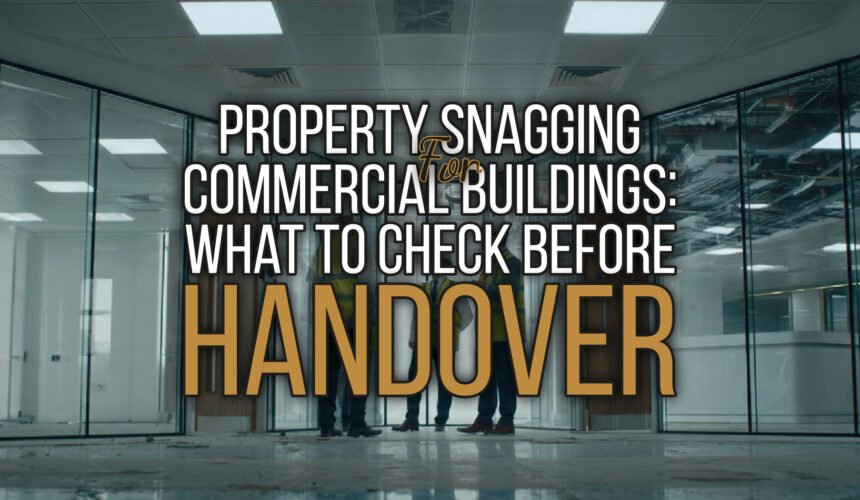
Landlords, tenants, developers and property managers should not rush commercial handover without detailed commercial property snagging. Unfinished works, poor finishes, access faults, washroom issues, damaged surfaces, fit out problems and missing defect records can create delays, disputes and extra repair pressure.
A commercial space may look ready at first glance. However, a proper commercial handover inspection can reveal marks, gaps, faulty doors, poor decoration, lighting issues, plumbing concerns, fit out defects and incomplete areas. Therefore, snagging helps decision-makers check the building before occupation, sale, lease completion or project sign-off.
This guide explains commercial property snagging, building snagging checklist items, property defect checks and fit out snagging for UK commercial buildings.
Quick Answer: What Is Commercial Property Snagging?
Commercial property snagging means checking a commercial building before handover to identify defects, unfinished work, poor finishes, access issues, fit out problems, maintenance concerns and items that need correcting before occupation, sale, lease or project completion.
General Property Guidance Note
This article gives general property guidance only. It does not replace legal, building regulation, lease, planning, insurance, health and safety, fire safety, accessibility, surveyor or compliance advice. Where handover duties, defects, fit out quality, lease terms, inspection records or commercial property standards are mentioned, readers should check current UK guidance and seek professional advice.
Key Takeaways
- Commercial property snagging helps identify defects before handover, occupation or final sign-off.
- A building snagging checklist should cover finishes, access, doors, windows, lighting, washrooms, external areas and fit out quality.
- A commercial handover inspection should record defects with photos, notes, locations and priority levels.
- Property defect checks should prioritise access, water issues, electrical concerns, heating, ventilation and business-use areas.
- Fit out snagging helps businesses review counters, joinery, storage, customer-facing finishes and staff areas before opening.
What Is Commercial Property Snagging?
Commercial property snagging is the process of inspecting a commercial building before handover to find defects, unfinished work or poor-quality finishes. It can apply after refurbishment, construction, commercial fit out, tenant works or landlord improvement projects.
It can support:
- Offices
- Retail units
- Warehouses
- Industrial units
- Restaurants
- Hospitality premises
- Commercial kitchens
- Mixed-use buildings
- Business parks
- Refurbished commercial spaces
- Commercial fit out projects
- Properties before handover
- Units between tenants
- Buildings awaiting occupation
In simple terms, commercial property snagging helps people spot issues before the building becomes fully occupied, signed off or handed over.
Why Commercial Property Snagging Matters Before Handover
Commercial property snagging matters because handover creates a critical point in a project. Once tenants move in, contractors leave or final payments progress, unresolved defects can become harder to manage.
Snagging helps identify:
- Poor finishes
- Incomplete works
- Hidden defects
- Handover problems
- Tenant complaints
- Delayed occupation
- Maintenance issues
- Access problems
- Lighting faults
- Flooring defects
- Door and window issues
- Washroom problems
- Fit out quality concerns
- Repair responsibilities
For example, a new office fit out may look complete, yet staff may later find faulty lighting, uneven flooring or missing door hardware. Likewise, a retail unit may need defects fixed before the tenant starts trading.
Therefore, commercial property snagging gives owners and occupiers a clearer record before final handover decisions.
Commercial Handover Inspection: What Should You Check?
A commercial handover inspection should check each area room by room. It should also cover visible services, access, external areas and presentation.
Check:
- Walls and ceilings
- Flooring
- Doors and frames
- Windows
- Washrooms
- Kitchens or staff areas
- Lighting
- Electrical fittings
- Heating and ventilation
- Plumbing
- Decoration quality
- Signage areas
- External areas
- Access points
- Fire-related items where relevant
- Cleaning and presentation
Commercial Property Snagging for Access Areas
Access points matter because staff, tenants, visitors, customers and contractors use them daily. Check entrances, internal doors, locks, frames, thresholds and emergency access where relevant.
Commercial Property Snagging for Finishes
Finishes affect presentation and handover quality. Check marks, cracks, gaps, uneven paint, poor silicone, damaged trims and incomplete decoration.
A careful commercial handover inspection makes commercial property snagging more useful because every item gets recorded clearly.
Building Snagging Checklist for Commercial Properties
A practical building snagging checklist should help inspectors avoid missing obvious defects.
Use this checklist:
- Check walls for marks, cracks and poor finishes
- Inspect flooring for gaps, lifting or damage
- Test doors, handles and locks
- Review windows and glazing
- Check lighting and switches
- Inspect toilets and sinks
- Review heating and ventilation
- Check visible plumbing issues
- Inspect ceilings for stains or damage
- Review external doors and access points
- Check storage and staff areas
- Record all defects with notes and photos
For example, a warehouse may need extra checks around loading areas, doors and flooring. Meanwhile, a refurbished office may need detailed decoration and lighting checks.
This is why commercial property snagging should use a structured checklist rather than a quick walk-through.
Property Defect Checks: Which Issues Should Come First?
Property defect checks should be prioritised by impact. Some defects affect use immediately, while others mainly affect presentation.
Prioritise issues involving:
- Access
- Safety awareness
- Water issues
- Electrical issues
- Heating and ventilation
- Business use
- Customer-facing areas
- Tenant disruption
- Lease expectations
- Handover deadlines
For example, a door that does not close properly may need urgent correction before handover. Likewise, a leak mark on a ceiling may point to a wider maintenance issue.
However, a small paint mark in a low-use store room may rank lower than a washroom fault, access issue or lighting problem. Strong commercial property snagging helps teams decide what needs correction first.
Fit Out Snagging: What Can Go Wrong?
Fit out snagging focuses on the details of the commercial fit out. This matters for offices, retail spaces, hospitality premises, restaurants, commercial kitchens and customer-facing environments.
Fit out snagging may identify:
- Poor joinery
- Uneven finishes
- Faulty doors
- Damaged counters
- Lighting issues
- Flooring defects
- Poor decoration
- Incorrect fixtures
- Incomplete storage areas
- Staff area issues
- Customer-facing finish problems
- Final cleaning issues
For example, a retail counter may have damaged edging, poor alignment or missing fixtures. Meanwhile, a cafe may need checks around customer areas, staff routes and back-of-house spaces.
Therefore, fit out snagging should form a key part of commercial property snagging before the business opens.
Commercial Property Snagging vs Standard Maintenance Checks
| Check Type | Best For | Main Purpose | Main Thing to Inspect | Planning Tip |
|---|---|---|---|---|
| Commercial property snagging | Handover, refurbishment and fit out completion | Identify defects before sign-off | Finishes, fixtures, access and incomplete work | Record photos and locations |
| Standard maintenance checks | Occupied or managed buildings | Review condition over time | Repairs, wear, services and upkeep | Schedule regular inspections |
| Commercial handover inspection | Before tenant occupation or project close | Confirm readiness | Every room, zone and external area | Use a checklist |
| Fit out snagging | New shop, office or hospitality fit out | Check final fit out quality | Joinery, counters, lighting and flooring | Review against agreed scope |
| Property defect checks | Any building with suspected issues | Prioritise correction work | Access, water, electrical and usable areas | Rank by urgency |
This comparison shows why commercial property snagging differs from routine maintenance.
Commercial Property Snagging for Empty Buildings
Empty buildings need snagging before occupation, viewing or handover because unused premises can hide maintenance and access issues.
Gohaych Services explains this wider approach in its guide to empty commercial property maintenance, including vacant premises checks, empty building maintenance and maintenance for empty commercial buildings.
For empty spaces, check:
- Access points
- External doors
- Windows
- Damp or staining
- Lighting
- Washrooms
- Flooring
- Ceilings
- Cleaning condition
- General presentation
- Maintenance concerns
For example, a vacant office may need vacant commercial property checks before a new tenant arrives. Likewise, a retail unit may need defect checks before viewings start.
In this situation, commercial property snagging helps prepare the space for the next stage.
Commercial Property Snagging After Refurbishment
After refurbishment, buyers, tenants and occupiers often expect a cleaner finish, better presentation and fewer visible defects. Therefore, commercial property snagging should check whether the finished space meets reasonable handover expectations.
Gohaych Services explains this in its guide to refurbished property buyer expectations, including property finish expectations and post-refurbishment property checks.
After refurbishment, review:
- Decoration quality
- Flooring condition
- Door and window finish
- Lighting installation
- Cleanliness
- External presentation
- Washroom condition
- Staff areas
- Customer-facing areas
- Any incomplete works
For example, a refurbished retail unit should look ready for viewing or occupation. However, if walls have marks, floors have gaps or lighting is faulty, those issues may affect confidence at handover.
As a result, refurbished property standards should guide the snagging process.
Commercial Property Snagging for Offices, Retail Units and Warehouses
| Property Type | Common Snagging Issue | Why It Matters | First Check | Planning Tip |
| Offices | Poor decoration, faulty lighting, door issues | Staff and visitors notice finish quality | Reception, meeting rooms and washrooms | Check room by room |
| Retail units | Damaged flooring, shopfront marks, counter defects | Customers see defects quickly | Frontage and sales floor | Check customer journey |
| Warehouses | Loading bay defects, flooring damage, access problems | Operations rely on access and movement | Doors, floor and lighting | Focus on high-use zones |
| Restaurants | Washroom issues, staff areas, fit out defects | Trading needs clean, usable spaces | Customer and back-of-house areas | Review before opening |
| Industrial units | Door, window and external defects | Access and site function matter | External access and internal zones | Include external areas |
| Mixed-use buildings | Shared access and finish inconsistencies | Multiple occupiers may use the space | Common areas and entrances | Record zone-specific issues |
This table helps property owners adapt commercial property snagging to the building type.
When Should Commercial Property Snagging Happen?
Commercial property snagging should happen before final decisions create pressure. Ideally, teams should inspect before the building moves into active use.
Snagging should happen:
- Before handover
- After refurbishment
- After commercial fit out
- Before tenant occupation
- Before sale
- Before lease completion
- Before final payment where relevant
- After contractor works
- Before viewings
- Before business opening
For example, a project manager may schedule snagging after contractor works but before the tenant moves in. Meanwhile, a landlord may snag a refurbished unit before marketing it.
The earlier defects get recorded, the easier it becomes to manage correction work.
How to Record Commercial Property Snagging Issues
Good records make commercial property snagging more useful. A vague note such as “poor finish” creates confusion. However, a clear defect entry helps contractors, landlords and tenants understand the issue.
Record issues by using:
- Clear photos
- Room-by-room notes
- Numbered defects
- Exact locations
- Priority levels
- Responsible contractor where known
- Completion dates
- Before-and-after records
- Shared snagging list
- Follow-up review before sign-off
For example, record “Defect 04: Meeting Room 2, left wall, paint scuff below socket, medium priority” instead of “mark on wall”.
This level of detail helps avoid confusion during repairs and sign-off.
Commercial Property Snagging Costs UK: What Affects the Price?
Commercial property snagging costs in the UK can vary because every building has different size, layout and reporting needs.
Cost factors include:
- Property size
- Property type
- Number of rooms or zones
- Fit out complexity
- Inspection depth
- Defect reporting needs
- Urgency
- Location
- Access arrangements
- External areas
- Follow-up checks
- Repair support requirements
- Project timeline
For example, a small retail unit may need a shorter inspection than a multi-floor office or large warehouse. Likewise, detailed photo reporting and follow-up checks can affect the scope.
The best way to understand cost is to request a quote based on property type, handover deadline and defect-checking needs.
Commercial Property Snagging Checklist
Use this checklist before handover.
- Inspect every room or zone
- Check walls and ceilings
- Review flooring
- Test doors and windows
- Check washrooms
- Review staff areas
- Check lighting and switches
- Inspect visible plumbing
- Review heating and ventilation
- Check external areas
- Record defects with photos
- Request snagging support before handover deadlines
This checklist helps property managers complete commercial property snagging in a structured way.
Common Commercial Property Snagging Mistakes to Avoid
Rushing Handover
A rushed handover can leave defects unrecorded.
Checking Only Visible Areas
Staff rooms, storage spaces and external areas also need review.
Not Taking Photos
Photos help show the defect clearly.
Not Recording Defect Locations
Location details reduce confusion during repair work.
Ignoring Fit Out Details
Counters, joinery, lighting and fixtures can all create snagging issues.
Forgetting Washrooms and Staff Areas
These areas affect daily usability.
Not Checking Doors and Windows
Faulty doors and windows can affect access and comfort.
Ignoring External Access Points
External defects may affect first impressions and site use.
Not Reviewing Completed Fixes
Repairs should be checked before final sign-off.
Choosing Only by Price
Low-cost checks may not include useful reporting depth.
Waiting Until the Tenant Moves In
Defects become more disruptive once people occupy the space.
Not Keeping a Final Snagging Record
A final record helps with handover clarity.
Avoiding these mistakes makes commercial property snagging more effective and easier to manage.
People Also Ask
What is commercial property snagging?
Commercial property snagging means inspecting a commercial building before handover to identify defects, unfinished work, poor finishes, access issues and fit out problems.
What should a building snagging checklist include?
A building snagging checklist should include walls, ceilings, flooring, doors, windows, washrooms, lighting, switches, visible plumbing, staff areas, external areas and defect photos.
What happens during a commercial handover inspection?
A commercial handover inspection checks the building room by room, records defects, reviews finishes, tests visible fixtures and highlights issues that need correction.
Why are property defect checks important?
Property defect checks help owners, tenants and project teams identify access problems, poor finishes, unfinished work, maintenance concerns and handover issues before occupation.
What is fit out snagging?
Fit out snagging checks the quality of commercial fit out work, including joinery, counters, flooring, lighting, fixtures, staff areas and customer-facing finishes.
How do I request commercial property snagging support?
To request commercial property snagging support, share your property type, handover date, fit out scope, defect concerns and inspection requirements with Gohaych Services.
Conclusion
Commercial property snagging can help property owners improve handover quality, reduce avoidable repair disputes, support better presentation, prepare commercial spaces for occupation and create clearer defect records before final sign-off.
Offices, retail units, warehouses, industrial spaces, restaurants, hospitality premises and refurbished commercial buildings all need careful inspection before handover. Therefore, a clear building snagging checklist, commercial handover inspection and property defect checks can help identify what needs correction before occupation or completion.
With the right approach, commercial property snagging gives landlords, tenants, developers and project managers a more organised handover process.
Check Your Commercial Property Before Handover
Need commercial property snagging for an office, retail unit, warehouse, industrial unit, refurbished space, or commercial fit out project? Request a quote from Gohaych Services today and get support built around your building condition, handover timeline, defect checks, repair priorities, and occupation plans.
You can also speak to Gohaych Services about property defect checks, commercial handover inspection support, fit out snagging and post-refurbishment property checks.