
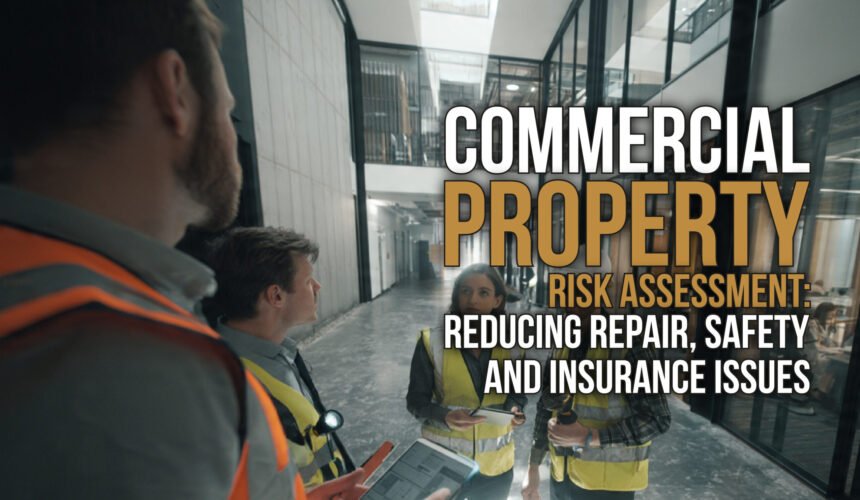
A commercial property risk assessment helps landlords, facilities managers and property teams spot building issues before they become disruptive repairs, occupant safety concerns or insurance documentation problems. A leaking roof, damaged floor, faulty lighting or blocked drain may look minor at first. However, if nobody records and prioritises the issue, it can affect tenants, staff, visitors and day-to-day operations.
In plain terms, a commercial property risk assessment reviews visible property condition, identifies practical risks, records evidence and guides follow-up maintenance. It should support repair planning, premises safety assessment, maintenance risk management and better documentation. It does not replace specialist statutory assessments, legal advice or insurer decisions.
This guide explains what to check, how often to review a property, what records matter and how Gohaych Services can support commercial landlords and property managers with inspections and maintenance planning.
Key Takeaways
- A commercial property risk assessment examines visible building defects, access issues, safety concerns and maintenance priorities.
- Early detection can reduce disruption because small problems are easier to plan than emergency repairs.
- Building risk checks should connect directly with repair logs, photographs and follow-up actions.
- Maintenance records can support responsible property management, although insurance decisions depend on policy terms.
- Professional inspection support helps property teams identify visible issues, prioritise repairs and keep reports organised.
What Is a Commercial Property Risk Assessment?
A commercial property risk assessment is a structured review of a business premises to identify visible defects, maintenance concerns, access issues and potential safety risks. It helps property decision-makers record what needs attention, prioritise repairs and decide when specialist assessments are required.
A good assessment separates practical building observations from technical certification. For example, a visual inspection may record staining near a ceiling, but it cannot confirm the hidden cause without the right specialist. Similarly, it may identify damaged flooring, blocked gutters or lighting defects, but electrical, fire, gas, asbestos or structural issues may need qualified professionals.
The Health and Safety Executive explains that workplace risk management involves identifying what could cause harm, deciding how likely harm is and taking action to eliminate or control risk. Therefore, a commercial property risk assessment should not end with a list. It should lead to action.
Why Commercial Property Risk Assessments Matter
Commercial buildings support rent, trading, staff activity, customer visits and asset value. Therefore, unnoticed defects can create financial and operational pressure.
A commercial property risk assessment matters because it can help with:
- Repair planning
- Occupant and visitor safety
- Tenant satisfaction
- Business continuity
- Budgeting
- Insurance documentation
- Contractor coordination
- Facilities management
- Long-term property condition
For example, a small roof defect can lead to ceiling damage, stock disruption or mould growth. Meanwhile, a damaged entrance mat or loose floor tile can create a trip hazard. Additionally, poor maintenance records can make it harder to prove what was checked, when it was reported and what action followed.
GOV.UK says business tenants have legal responsibilities, although many repair and maintenance duties depend on the lease. It also notes that workplaces must carry out health and safety risk assessments and take action to remove hazards. As a result, landlords, tenants and managing agents should understand who controls each part of the premises.
Gohaych Services’ service information includes professional property inspections, detailed reporting, planned preventative maintenance, reactive maintenance, electrical and plumbing, cleaning and safety support. Therefore, property inspection services can help property teams identify developing building issues before they become harder to manage.
Commercial Property Risk Assessment for Visible Defects
A commercial property risk assessment should include visible property defects because small signs often point to bigger maintenance needs. For example, staining around a ceiling tile may suggest a roof, pipework or condensation issue. However, the assessment should not guess the cause without evidence.
Useful building risk checks include:
- Looking for water staining
- Checking access routes
- Reviewing floors and stairs
- Recording damp patches
- Checking external drainage
- Noting repeated repair areas
- Reviewing roof and gutter concerns
- Checking communal lighting
- Recording damaged doors or windows
These observations support maintenance risk management because they turn vague concerns into documented repair priorities.
How Risk Assessments Reduce Expensive Repairs
A commercial property risk assessment can reduce expensive repairs by helping teams act earlier. It does not remove every risk, but it gives landlords and facilities managers better visibility.
For example, a small roof defect may start as a minor stain. However, if nobody investigates it, water can damage insulation, ceiling boards, decorations or electrical fittings. As a result, one repair can become several.
A minor drainage issue can also escalate. First, a gully may drain slowly. Next, heavy rain may push water towards an entrance or basement area. Finally, the business may face internal disruption, cleaning costs and urgent contractor attendance.
Similarly, damaged flooring may start as a small defect. However, in a busy office, shop or warehouse, it can become a trip hazard. HSE slip and trip guidance highlights contamination, cleaning, people factors, flooring and the environment as causes to consider.
Therefore, a premises safety assessment should connect observations with repair planning. Gohaych Services describes planned preventative maintenance as scheduled upkeep programmes and reactive maintenance as support for urgent property issues. Commercial landlords can use commercial landlord maintenance to plan repairs and ongoing upkeep.
Commercial Property Safety and Insurance Considerations
Commercial property safety is not only about avoiding obvious hazards. It also involves clear records, photographs, repair evidence and follow-up actions.
A commercial property risk assessment may support insurance documentation by showing what the property team checked and how they responded. However, insurance terms vary between providers and policies, so this article does not provide insurance advice.
The Association of British Insurers explains that commercial property insurance can cover repair or rebuilding costs for business premises, but it also notes that policies usually exclude general wear and tear. Therefore, maintenance records can matter because insurers may distinguish sudden insured events from gradual deterioration or unresolved maintenance.
A practical file may include:
- Inspection reports
- Dated photographs
- Repair logs
- Contractor quotations
- Completed work records
- Tenant reports
- Follow-up inspection notes
- Email communication
- Maintenance schedules
Additionally, fire safety responsibilities should stay separate from a general property review. GOV.UK says the responsible person for business or non-domestic premises may include an employer, owner, landlord, occupier, facilities manager or managing agent, and they must carry out and review a fire risk assessment.
How Often Should Commercial Properties Be Assessed?
There is no single interval for every commercial property risk assessment. Frequency depends on property age, building condition, usage levels, occupancy, previous defects, weather exposure, lease obligations, insurer requirements and specialist equipment.
A practical schedule may look like this:
- Monthly visual checks for busy communal areas, entrances and external routes
- Quarterly building risk checks for roofs, gutters, drainage and shared spaces
- Six-monthly inspections for larger commercial premises or multi-let buildings
- Annual review of maintenance records, recurring defects and contractor performance
- Extra checks after storms, leaks, tenant changes, refurbishment or reported incidents
However, this is only a practical planning example. It is not a legal schedule. Specialist systems such as fire alarms, lifts, gas systems, electrical installations, asbestos registers or water hygiene arrangements may need separate competent assessment.
For older buildings or portfolios with recurring issues, professional commercial property inspections can help create a clearer maintenance picture.
Reactive Repairs vs Planned Maintenance Risk Management
Maintenance risk management works best when reactive repairs and planned preventative maintenance support each other.
| Approach | Timing | Typical Cost Predictability | Business Disruption | Record Keeping | Long-Term Property Condition |
| Reactive repairs | After a defect becomes urgent | Lower predictability | Often higher because work happens under pressure | May be rushed unless logged properly | Can decline if issues repeat |
| Planned maintenance | Before defects become urgent | Better predictability | Usually easier to schedule | Easier to document and review | Helps maintain condition |
| Combined approach | Planned checks plus reactive support | Balanced | Better control over emergencies | Stronger evidence trail | More practical for commercial buildings |
Reactive repairs still have a role because sudden leaks, failures and damage can happen. However, planned commercial property maintenance gives landlords and facilities managers greater control over budgets, access and tenant communication.
Gohaych Services’ get-a-quote page lists reactive maintenance, fire-safety support, planned preventative maintenance, professional inspections, safety and security, and electrical and plumbing services. Therefore, ongoing maintenance support for landlords can sit alongside periodic inspections.
What Happens After Risks Are Identified?
A commercial property risk assessment only creates value when the findings lead to action. Therefore, property teams should follow a clear process.
- Record the issue
Write down the defect, location, date and who found it. - Photograph and document it
Take clear images and add them to the maintenance file. - Assess urgency
Separate immediate risks from routine repair items. - Restrict access where necessary
If a visible defect affects access or safety, prevent people using the area until the right person reviews it. - Contact the appropriate professional
Use qualified specialists for electrical, gas, structural, fire, asbestos or other technical concerns. - Arrange repairs
Match the contractor to the issue and confirm the scope in writing. - Record completed work
Keep invoices, photos, completion notes and warranties where relevant. - Schedule a follow-up inspection
Check that the issue has not returned.
For suspected asbestos, do not disturb materials. HSE guidance explains that the duty to manage asbestos applies to non-domestic premises and can involve arranging competent surveys where asbestos could be present.
How Gohaych Services Can Support Commercial Properties
Gohaych Services can support commercial landlords, property managers and facilities teams with practical inspection and maintenance activity. Its service pages describe property management support, planned preventative maintenance, reactive maintenance, fire-safety support, professional property inspections, cleaning, electrical and plumbing, and safety-related property services.
For a commercial property risk assessment, this support can help with:
- Identifying visible defects
- Recording priority risks
- Planning maintenance actions
- Coordinating repair needs
- Supporting commercial landlord maintenance
- Improving documentation
- Reviewing recurring building issues
- Helping teams move from inspection to action
Gohaych Services should not be treated as a substitute for legal, insurance or specialist statutory advice. However, its practical property services can help decision-makers respond to visible issues and organise repairs.
If your building needs inspection-led maintenance planning, you can arrange a detailed property inspection, review planned commercial property maintenance or request a property maintenance quote.
Commercial Property Risk Assessment Checklist
Use this checklist before creating or reviewing a premises safety assessment.
☐ External condition checked
☐ Roof and drainage concerns recorded
☐ Internal damage reviewed
☐ Access routes examined
☐ Visible safety concerns documented
☐ Lighting and communal areas reviewed
☐ Water leaks and damp recorded
☐ Electrical warning signs escalated
☐ Fire-safety concerns referred to the responsible person
☐ Previous maintenance records reviewed
☐ Repairs prioritised
☐ Responsible person assigned
☐ Photographs stored
☐ Contractor quotations requested
☐ Completed work recorded
☐ Follow-up date scheduled
Specialist areas may require qualified professionals. Therefore, a commercial property risk assessment should highlight when electrical, structural, gas, fire, asbestos, drainage or other specialist input is needed.
Frequently Asked Questions
What is included in a commercial property risk assessment?
A commercial property risk assessment usually includes visible checks of roofs, gutters, walls, floors, access points, drainage, damp, lighting, communal areas, external routes and maintenance records. It should identify practical risks, document defects and recommend next actions. However, it does not replace specialist fire, electrical, gas, asbestos or structural assessments.
How often should a commercial building be inspected?
A commercial building should be inspected as often as its age, use, condition and risk profile require. Busy premises may need frequent building risk checks, while lower-use properties may need less frequent reviews. Extra checks may be sensible after storms, leaks, tenant changes or major repair work.
Who is responsible for commercial property safety?
Responsibility depends on the lease, control of the premises, business activity and specific legal duties. GOV.UK says employers, owners, landlords, occupiers and people with control of premises may hold fire-safety responsibilities in non-domestic premises. Therefore, landlords, tenants and managing agents should clarify duties in writing.
Can a property risk assessment reduce repair costs?
Yes, a commercial property risk assessment can reduce repair pressure by identifying defects earlier. For example, early gutter, drainage, flooring or leak reports can help teams arrange planned repairs before problems disrupt tenants or operations. However, it cannot prevent every future repair or guarantee fixed costs.
Does a commercial property risk assessment help with insurance?
A commercial property risk assessment may help with insurance documentation because it creates dated evidence of checks, defects, photographs and follow-up actions. However, it does not guarantee that an insurer will accept a claim. Insurance terms vary, and property owners should follow their policy conditions.
What should I do when a serious property risk is found?
Record the issue, photograph it, restrict access where necessary and contact an appropriate professional. Serious electrical, structural, gas, fire or asbestos concerns should not be handled informally. After action is taken, update the maintenance records and schedule a follow-up check.
Can Gohaych Services inspect and maintain commercial premises?
Yes, Gohaych Services provides property management services that include professional inspections, planned preventative maintenance, reactive maintenance, fire-safety support, electrical and plumbing, cleaning and safety-related property support. Property teams can discuss your commercial premises and request a tailored quotation.
Reduce Property Risks Before They Become Expensive Repairs
A commercial property risk assessment gives landlords, facilities managers and property managers a clearer view of building condition. It helps teams spot visible defects, document issues, prioritise repairs and connect inspection findings with planned maintenance.
However, the value comes from follow-up. A report that sits in a folder will not repair a roof leak, fix a damaged floor or resolve a drainage fault. Therefore, every assessment should end with responsibility, timescales and evidence of completed action.
Gohaych Services supports commercial property inspections, landlord maintenance and practical repair planning. To review your premises, get a tailored quotation and share your property type, location, current concerns and maintenance priorities.