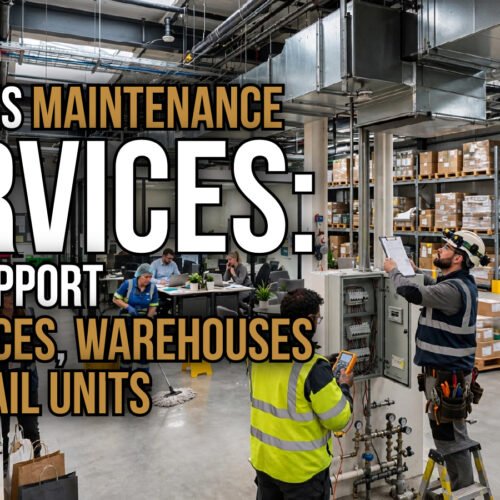


Businesses comparing planned maintenance services London providers usually want one clear outcome: a commercial site that can keep operating with fewer avoidable interruptions. Offices, retail units, warehouses, restaurants, hotels and mixed-use properties all depend on working lighting, washrooms, drainage, doors, heating, access points and building fabric.
Planned maintenance does not remove every emergency. However, it helps property teams organise inspections, routine repairs, servicing, contractor visits and records before every issue becomes a last-minute problem.
Gohaych Services supports commercial property teams with property management services that include planned preventative maintenance, reactive maintenance, emergency call-outs, professional inspections, fire-safety support, safety and security, electrical and plumbing, and scheduled upkeep programmes. Commercial landlords and facilities managers can also request a planned maintenance quotation with property type, service type and project details.
What Are Planned Maintenance Services in London?
Planned maintenance services London commercial properties use can include property condition reviews, asset registers, planned inspections, routine servicing, minor repairs, seasonal checks, contractor scheduling, defect reporting, repair recommendations, remedial work, completion records and follow-up inspections.
The exact scope depends on the property, contract and installed systems. For example, an office may prioritise lighting, washrooms and shared areas. Meanwhile, a warehouse may need closer attention around loading doors, drainage, external yards and plant rooms.
Why Do London Commercial Sites Need Planned Maintenance?
London commercial sites can face busy access routes, shared entrances, limited loading space, occupied premises, customer-facing trading hours, tenant coordination and building-management rules. Therefore, planned maintenance services London teams use should reflect the real operating conditions of the building.
Not every London property faces the same issues. However, restricted access, congestion, older building fabric, basement plant rooms, rooftop equipment and out-of-hours work can affect how contractors are scheduled and how repairs are approved.
Gohaych Services’ facilities-management guidance explains that commercial buildings need planned maintenance, clear reporting, contractor management, inspections and a response route when something goes wrong.
How Does Planned Preventative Maintenance London Support Work?
Planned preventative maintenance London support should turn building care into a clear process. First, the property team confirms the sites and areas covered. Next, it records maintainable assets and previous repair history.
A practical process can include:
- Confirm the properties and areas covered.
- Review the current building condition.
- Create an asset register.
- Review previous faults and emergency call-outs.
- Review manufacturer guidance.
- Identify specialist inspection requirements.
- Check landlord and tenant responsibilities.
- Prioritise important building systems.
- Set suitable maintenance intervals.
- Create a maintenance calendar.
- Assign contractors and responsible contacts.
- Plan access around business operations.
- Complete inspections and servicing.
- Record defects and recommended actions.
- Approve and schedule remedial work.
- Store completion evidence.
- Track recurring defects.
- Review and update the programme.
HSE guidance says maintenance should be planned carefully before work starts, ideally using manufacturer instructions, and should use competent people with suitable information, instruction and training.
When Does Planned Work Become Emergency Maintenance?
A planned task becomes urgent when the issue creates immediate or rapidly worsening disruption. For example, active water leaks, serious drainage failures, electrical faults requiring professional review, damaged entrances, failed access systems, storm-related damage or water-related ceiling damage may need prompt escalation.
Gohaych Services’ reactive maintenance service is designed for urgent situations where planned maintenance cannot wait, including electrical failures, power outages, burst pipes, water leaks, blocked drains, heating breakdowns and door, lock or access faults. Property teams can review the emergency property maintenance process before a fault becomes difficult to manage.
How Should Businesses Prepare for Emergency Property Issues?
A strong planned programme should include an emergency contact route, property address, site-access instructions, named decision-maker, repair approval limit, utility information, known building risks, contractor parking notes, tenant communication process, out-of-hours contacts, photographs and previous repair history.
This does not mean every urgent issue forms part of the planned-maintenance price. Therefore, facilities managers should prepare for unexpected commercial property repairs and define emergency escalation separately from routine planned visits.
What Can Commercial Maintenance Services Include?
Commercial maintenance services can include practical checks and repairs across the building fabric, services, access points and occupied areas. However, each planned maintenance services London agreement should define inclusions and exclusions clearly.
Building Fabric
Building fabric checks may include roofs, gutters, drainage, external walls, internal walls, ceilings, flooring, windows, doors, sealants, visible water damage and external surfaces.
These checks help facilities managers record visible issues and plan remedial repairs. However, structural concerns, concealed defects or high-access areas may need specialist review.
Electrical Systems
Electrical-related planned checks may cover visible equipment condition, distribution-equipment observations, lighting, emergency lighting, damaged fittings, reported faults, specialist testing where required and maintenance records.
However, general checks do not replace competent electrical inspection or certification. HSE explains that inspection frequency for work equipment should be risk-assessment based and should consider manufacturer recommendations, industry advice and experience.
Plumbing and Water Systems
Plumbing checks may include pipework, leaks, taps, toilets, washrooms, drainage, water-pressure concerns, plant rooms, visible water damage and reported faults.
Additionally, specialist water-hygiene duties may require separate advice. Therefore, the maintenance schedule should identify which issues need a routine contractor and which need competent specialist input.
Heating, Ventilation and Mechanical Systems
Heating and mechanical checks may include boilers, pumps, valves, controls, heating systems, ventilation, air-conditioning systems, seasonal preparation, service records and reported performance issues.
No single service interval suits every asset. Instead, the schedule should reflect the equipment, occupancy, operating hours, condition and manufacturer guidance.
Doors, Lighting and Access Assets
Doors, door closers, locks, gates, intercoms, access readers, roller shutters, external lighting and delivery entrances often affect daily operations. For example, a retail unit may need entry-door repairs before opening, while a warehouse may prioritise loading-door access.
These items should be part of planned maintenance services London site reviews when they affect access, tenant communication or business operations.
Fire-Related Building Assets
Fire-related maintenance may include fire-door condition observations, emergency-lighting defects, visible alarm faults, damaged signs, escape-route defects, maintenance records and follow-up repairs.
However, planned maintenance does not replace a fire risk assessment or specialist testing. GOV.UK states that the responsible person for business and other non-domestic premises must carry out and regularly review a fire risk assessment.
How Can Planned Maintenance Reduce Commercial Disruption?
Planned maintenance can help teams schedule work outside busy periods, group contractor visits, inform tenants or staff, arrange access, order parts before visits, track minor defects, identify repeat problems, prioritise repairs and review when replacement may be better than repeated repair.
However, it should not be sold as zero disruption. A London restaurant, office, shop or warehouse may still need urgent work when a fault affects building use unexpectedly.
How Should Maintenance Work Be Planned Around Trading Hours?
Maintenance around trading hours should consider customer-facing periods, quiet periods, overnight access, weekend work, tenant access, delivery schedules, noise, dust, water or power interruptions, contractor sign-in, work permits, building-manager approval and reopening checks.
Out-of-hours work may affect cost and availability. Therefore, businesses comparing planned maintenance services London providers should ask how the contractor plans access, reports disruption risks and handles building-management rules.
How Do Planned Maintenance Services Support Offices?
Office maintenance may include lighting, heating, ventilation, washrooms, staff kitchens, doors, flooring, shared areas, meeting rooms and access-related systems.
Additionally, offices often need clear communication with occupiers. A planned schedule can help office managers organise contractor access without disrupting meetings, staff routines or shared spaces.
How Do Planned Maintenance Services Support Retail Units?
Retail maintenance may include customer entrances, flooring, lighting, shutters, stock rooms, delivery doors, washrooms, back-of-house areas, public routes and trading-hour planning.
Because customers see these spaces daily, visible defects can affect presentation quickly. Therefore, retail managers should plan checks around opening hours and stock movement.
How Do Planned Maintenance Services Support Warehouses?
Warehouse maintenance may include roofs, gutters, drainage, loading areas, external yards, doors, gates, lighting, heating, plant rooms and contractor access.
However, specialist machinery may require a separate technical programme. For this reason, planned maintenance services London warehouse teams use should separate building maintenance from machinery servicing.
How Do Planned Maintenance Services Support Restaurants and Hotels?
Restaurants and hotels may need attention around plumbing, drainage, ventilation, washrooms, customer areas, kitchens where relevant, lighting, heating, bedrooms or public areas where relevant, out-of-hours scheduling and rapid escalation of disruptive faults.
However, food-safety systems and specialist kitchen equipment may require separate specialist advice. Therefore, the building maintenance London scope should be clearly defined before visits begin.
How Do Planned Maintenance Services Support Mixed-Use Properties?
Mixed-use properties may involve shared systems, common areas, commercial units, residential neighbours, access coordination, noise restrictions, service charges, landlord and tenant communication, plant rooms, shared entrances and different operating hours.
As a result, the planned programme should define areas of control. Otherwise, repairs can stall because nobody has agreed who approves work or pays for it.
How Should Multi-Site Businesses Organise PPM London Support?
PPM London support for multi-site operators should include standard asset registers, site-specific schedules, central reporting, contractor coordination, named site contacts, priority levels, repeat-fault reporting, budget tracking, escalation routes and central document storage.
Gohaych Services says it supports single sites through to multi-site portfolios, helping property managers coordinate maintenance, emergency support, inspections and scheduled works through a structured approach.
How Often Should Commercial Maintenance Checks Take Place?
No universal frequency applies. Timing may depend on asset type, manufacturer guidance, building use, operating hours, occupancy, existing condition, previous faults, environmental exposure, risk assessment, lease conditions, statutory duties, insurance requirements, seasonal factors and competent-person advice.
Therefore, planned maintenance services London schedules should avoid generic monthly, quarterly or annual assumptions. Instead, each frequency should be justified by the property and asset.
What Maintenance Records Should Facilities Managers Keep?
Facilities managers should keep a property register, asset register, planned schedule, contractor details, inspection dates, service dates, findings, photographs, defect priorities, recommended actions, quotations, approvals, work orders, completion dates, completion evidence, follow-up dates, next planned visits, outstanding actions, responsible persons and access notes.
Additionally, emergency call-out history helps the team identify recurring faults. HSE says work-equipment inspection records should be kept at least until the next inspection of that equipment where inspection is required.
How Should Maintenance Defects Be Prioritised?
A clear priority model helps avoid confusion.
Urgent
Issues requiring prompt professional review because they may significantly affect property use, operations or people at the site.
High Priority
Issues that could worsen, interrupt important systems or create larger repair needs.
Planned
Work suitable for completion within an agreed maintenance period.
Monitor
Lower-priority observations that need review during a later inspection.
However, competent specialists should assess technical or statutory risks.
Who Is Responsible for Commercial Building Maintenance?
Responsibility may sit with the property owner, commercial landlord, tenant, employer, occupier, facilities manager, property manager, managing agent, building manager, contractor, dutyholder or responsible person.
GOV.UK guidance for business tenants says most responsibilities depend on the lease, and the lease should say who is responsible for repairs and maintenance. Therefore, commercial property teams should review lease wording, areas of control, demised areas, common areas, service charges, management agreements and statutory duties.
What Affects Building Maintenance London Costs?
Building maintenance London costs can depend on property size, number of sites, building type, asset quantity, existing condition, site location, access restrictions, parking or loading, congestion, occupancy, operating hours, inspection frequency, specialist contractors, reporting detail, out-of-hours work, access equipment, parts, emergency support and remedial work.
Do not rely on generic prices. Instead, the quotation should define the site, schedule, reporting and exclusions.
What May Be Excluded From a Basic Planned Maintenance Agreement?
A basic agreement may exclude major replacement work, capital projects, structural engineering, specialist surveys, statutory examinations, fire risk assessments, asbestos surveys, lift examinations, major electrical upgrades, major plumbing replacement, specialist machinery and emergency call-outs outside the agreement.
It may also exclude scaffolding, access equipment, specialist parts, out-of-hours attendance and third-party damage. Actual exclusions depend on the quotation and contract.
How Should Businesses Compare Planned Maintenance Services London Providers?
Businesses should compare planned maintenance services London providers by relevant commercial property experience, confirmed London coverage, supported property types, planned maintenance capability, reactive-maintenance process, emergency escalation, asset-list detail, inspection depth, servicing inclusions, repair inclusions, visit frequency and reporting format.
They should also compare photographs, defect priorities, follow-up visits, contractor competence, specialist subcontractors, access equipment, parts, out-of-hours options, multi-site reporting, contract duration, price-review terms, cancellation terms and additional-work rates.
The lowest quote may cover a narrower service scope. Therefore, property teams should request a commercial property maintenance quote with enough building detail to compare like for like.
Questions to Ask a London Maintenance Provider
Before appointing a provider, ask:
- Which London areas do you currently cover?
- Which property types do you support?
- Which assets will appear in the schedule?
- Which assets remain excluded?
- Are visits inspection-only or do they include servicing?
- Are minor repairs included?
- How will defects be prioritised?
- Will reports include photographs?
- How quickly will reports be provided?
- Who approves additional repairs?
- Are specialist inspections included?
- How are urgent findings escalated?
- Is reactive support available?
- Are emergency call-outs included or separate?
- Are parts and materials included?
- Does the quote include access equipment?
- Can work happen outside trading hours?
- How are missed visits handled?
- Can reporting cover several sites?
- What information is needed for an accurate quote?
Common Planned Maintenance Mistakes
Common mistakes include using one generic schedule for every property, failing to create an asset register, using arbitrary inspection frequencies, ignoring manufacturer guidance, overlooking lease responsibilities and failing to define exclusions.
Other mistakes include having no urgent escalation process, weak reporting, no repair approvals, no completion evidence, ignoring repeat faults, failing to plan access, disrupting trading unnecessarily, choosing solely by price and assuming PPM removes every emergency.
Build the Maintenance Plan Around Your Commercial Site
London property teams should connect asset registers, planned visits, site access, inspection findings, defect priorities, quotations, work approvals, completion evidence, follow-up dates, emergency escalation and maintenance budgets.
At this stage, facilities managers can discuss your London commercial maintenance requirements with Gohaych Services. The enquiry should include property type, operating hours, existing issues, required reporting and whether reactive support should sit alongside planned visits.
Keep an Emergency Route Alongside Planned Maintenance
Planned work and emergency maintenance should remain connected but distinct. A planned visit may identify recurring drain issues, water ingress or access faults. However, an active leak or failed entrance may need urgent escalation before the next scheduled visit.
Gohaych Services describes reactive maintenance as immediate support when something fails without warning and requires urgent attention. Therefore, property teams should learn how planned and emergency maintenance work together and speak with Gohaych Services about planned and reactive support.
How Gohaych Services Supports Planned Maintenance in London
Gohaych Services can help London commercial property teams with planned preventative maintenance, tailored maintenance schedules, planned property inspections, scheduled visits, visible defect reporting, building-fabric maintenance, electrical and plumbing work, heating and mechanical coordination, fire-related maintenance support, door, lighting and access-related maintenance, reactive repairs, emergency property maintenance, contractor coordination, repair tracking and reporting where suitable.
However, the precise scope depends on property type, London location, number of sites, building use, installed systems, existing condition, operating hours, site access, required reporting, specialist needs and agreed quotation. To scope planned maintenance services London property teams may need, start your property-maintenance enquiry with clear site details.
Planned vs Reactive Maintenance Table
| Factor | Planned Maintenance | Reactive or Emergency Maintenance | What London Property Teams Should Check |
|---|---|---|---|
| Trigger | Schedule, condition or planned review | Fault, report or disruption | Define escalation rules |
| Timing | Booked in advance | Arranged after an issue appears | Keep both routes available |
| Access planning | Coordinated with occupiers | May need urgent access | Store access instructions |
| Contractor scheduling | Planned around site needs | Depends on urgency and availability | Confirm contacts early |
| Budgeting | Easier to forecast | Harder to predict | Separate routine and urgent budgets |
| Tenant communication | Can be planned | Often immediate | Keep templates ready |
| Operational disruption | Can be reduced through planning | May affect operations suddenly | Review business impact |
| Defect reporting | Built into inspections | Logged after failure | Track recurring issues |
| Repair approval | Can follow agreed limits | May need quick decisions | Name approval contacts |
| Records | Scheduled reports and evidence | Call-out notes and repair history | Store both records |
| Out-of-hours work | Planned if required | May happen unexpectedly | Check cost and access |
| Urgent escalation | Defined in the plan | Main response route | Review emergency maintenance planning for business premises |
Illustrative London Maintenance Schedule
Illustrative planning example only. Actual intervals must reflect the property, asset, condition, risks, manufacturer guidance and applicable requirements.
| Possible Frequency | Example Activities | Why It May Be Considered | Important Limitation |
| Weekly | User checks, access-route observations, visible defect notes | High-use areas can change quickly | Not a specialist inspection |
| Monthly | Lighting, washroom, door and common-area checks | Keeps records current | Depends on building use |
| Quarterly | Drainage, fabric and contractor review | Supports planned work | Access may limit checks |
| Six-monthly | Heating, ventilation or seasonal readiness review | Helps plan weather-related work | Manufacturer guidance may differ |
| Annually | Asset register and service-history review | Supports budget planning | Some assets need different timing |
| Seasonally | Roof, gutter, drainage and external checks | Weather can affect building fabric | Specialist access may be required |
| After a reported fault | Follow-up inspection and evidence capture | Confirms next action | Technical issues may need specialists |
| After major building work | Update asset register and plan | Keeps the schedule relevant | Compliance duties may change |
Planned Maintenance Services London Checklist
☐ London property location confirmed
☐ Current service coverage verified
☐ Property type recorded
☐ Building use recorded
☐ Trading hours recorded
☐ Tenant requirements reviewed
☐ Lease responsibilities reviewed
☐ Areas of control identified
☐ Asset register created
☐ Building-fabric assets listed
☐ Electrical assets listed
☐ Plumbing assets listed
☐ Heating and mechanical assets listed
☐ Fire-related assets listed
☐ Door and access assets listed
☐ Manufacturer guidance collected
☐ Previous reports collected
☐ Emergency call-out history reviewed
☐ Repeat faults identified
☐ Specialist inspections identified
☐ Proposed frequencies justified
☐ Maintenance calendar created
☐ Contractor responsibilities defined
☐ Site-access instructions recorded
☐ Parking or loading arrangements confirmed
☐ Out-of-hours requirements discussed
☐ Occupants informed
☐ Report format agreed
☐ Photograph requirements agreed
☐ Defect-priority process agreed
☐ Repair-approval process agreed
☐ Parts and materials clarified
☐ Access-equipment costs clarified
☐ Reactive support clarified
☐ Emergency call-out terms clarified
☐ Quotations stored
☐ Remedial actions tracked
☐ Completion evidence stored
☐ Follow-up dates recorded
☐ Programme review date agreed
☐ Cancellation terms checked
☐ Price-review terms checked
☐ Multi-site reporting agreed where relevant
☐ Escalation route confirmed
Frequently Asked Questions About Planned Maintenance Services in London
What are planned maintenance services in London?
Planned maintenance services London commercial properties use are scheduled inspections, servicing, repairs, reporting and follow-up processes designed around business premises. The scope may include offices, retail units, warehouses, restaurants, hotels, industrial properties and mixed-use buildings, depending on the site, assets and agreed contract.
What does planned commercial maintenance include?
Planned commercial maintenance may include building fabric, roofs, gutters, drainage, lighting, washrooms, doors, heating, ventilation, plumbing, access systems, fire-related maintenance actions, contractor visits and maintenance records. However, the exact scope depends on the property, asset register, lease responsibilities and quotation.
What is planned preventative maintenance London?
Planned preventative maintenance London support means scheduled checks and servicing for commercial properties in London. It helps facilities managers plan access, review visible defects, organise repairs and track recurring issues. However, it does not remove the need for reactive or emergency maintenance.
What does PPM London mean?
PPM London usually means planned preventative maintenance for London properties. For commercial sites, this can involve asset registers, condition inspections, maintenance calendars, contractor coordination, completion records and follow-up repairs. The right schedule depends on the property type, operating hours and installed systems.
Why do commercial properties need planned maintenance?
Commercial properties need planned maintenance because building faults can affect staff, tenants, customers, trading hours and site operations. Planned maintenance services London businesses use can help organise inspections, spot repeat issues, plan contractor access and keep clearer maintenance records.
What is the difference between planned and reactive maintenance?
Planned maintenance happens before an issue becomes urgent, while reactive maintenance responds after a fault appears. Commercial sites often need both. Planned work helps organise routine checks, while reactive support handles leaks, drainage failures, heating faults, access issues or other urgent disruption.
When does a property fault require emergency maintenance?
A property fault may require emergency maintenance when it creates immediate or rapidly worsening disruption. Examples may include active leaks, serious drainage failures, electrical faults requiring professional review, damaged entrances, failed access systems or storm-related building damage. For planning, review the emergency property maintenance process.
How often should planned maintenance visits take place?
Planned maintenance visit frequency depends on asset type, building use, operating hours, previous faults, manufacturer guidance, risk assessment, lease duties, insurance conditions and competent-person advice. No universal frequency suits every commercial property, so the schedule should be justified.
Can maintenance work happen outside trading hours?
Yes, maintenance can sometimes happen outside trading hours where the contractor, building manager and occupier agree access. However, out-of-hours work may affect cost, availability, noise controls, permits, security arrangements and reopening checks. Confirm these points before approving the schedule.
Which records should facilities managers keep?
Facilities managers should keep asset registers, maintenance schedules, inspection dates, findings, photographs, defect priorities, quotations, approvals, work orders, completion evidence, follow-up dates, next planned visits, emergency call-out history, access notes and responsible-person details.
Who is responsible for commercial building maintenance?
Responsibility depends on the lease, areas of control, asset ownership, common areas, demised areas, service-charge provisions, management agreements and statutory duties. A landlord, tenant, occupier, facilities manager or managing agent may hold different responsibilities. Legal advice may be needed where the lease is unclear.
What affects building maintenance London costs?
Building maintenance London costs may depend on property size, number of sites, building type, existing condition, asset quantity, access, parking, operating hours, inspection frequency, reporting detail, out-of-hours work, parts, access equipment and remedial repairs. Therefore, businesses should request a scope-based quotation.
What should a commercial maintenance quotation include?
A commercial maintenance quotation should define properties covered, assets included, exclusions, visit frequency, inspection depth, reporting format, photographs, repair approvals, emergency escalation, parts, access equipment, out-of-hours options, cancellation terms and additional-work rates.
Can one provider support planned and emergency repairs?
Yes, one provider may support both planned and emergency repairs if the agreed scope includes both routes. However, emergency call-outs may be priced or handled separately. Property teams should define planned visits, reactive support and urgent escalation before appointing a contractor.
Does planned maintenance prevent every breakdown?
No. Planned maintenance cannot prevent every breakdown or guarantee uninterrupted operation. However, planned maintenance services London commercial teams use can improve visibility, contractor planning, repair records and follow-up work. Unexpected faults can still require reactive or emergency support.
How can Gohaych Services support London commercial properties?
Gohaych Services can support London commercial property teams with planned preventative maintenance, inspections, reactive repairs, emergency property maintenance, electrical and plumbing support, fire-related maintenance support, building-fabric issues, contractor coordination and reporting where suitable. To begin, request a planned maintenance quotation with site details.
Conclusion
Planned maintenance services London commercial teams use can support daily operations by organising inspections, servicing, repairs, contractor visits, record keeping and follow-up work around the building. However, the programme should remain property-specific and should not replace a separate emergency route when urgent faults appear.
Gohaych Services can help London commercial property teams discuss planned and reactive requirements in one enquiry. To review your building, assets, access and reporting needs, request a tailored planned maintenance quotation before agreeing the scope.
Plan Maintenance Around Your London Commercial Property
Gohaych Services works with London landlords, facilities managers, managing agents and business owners who need planned maintenance services London commercial sites can align with real operating needs.
Share your property type, London location, number of sites, building use, operating hours, installed systems, existing defects, previous emergency issues, required reporting and preferred visit schedule. Then discuss your London commercial maintenance requirements so the team can review the scope and outline the next step.