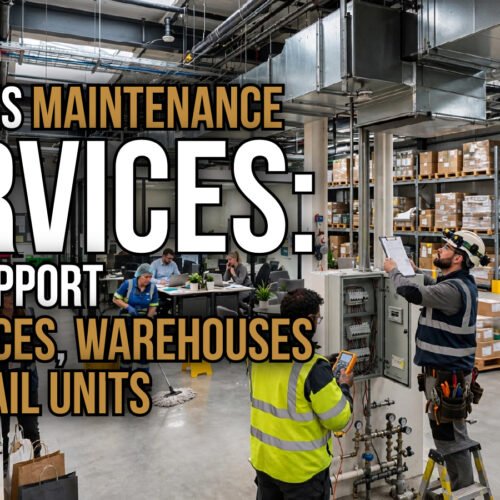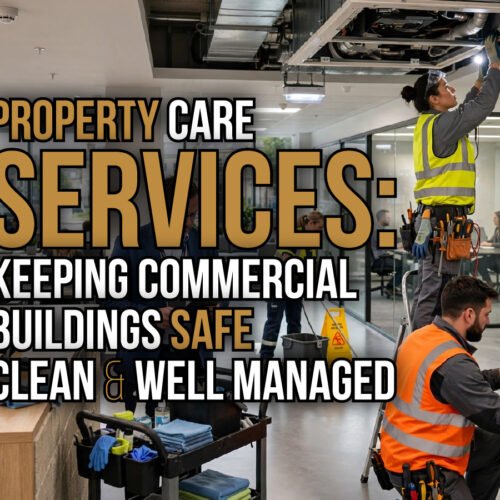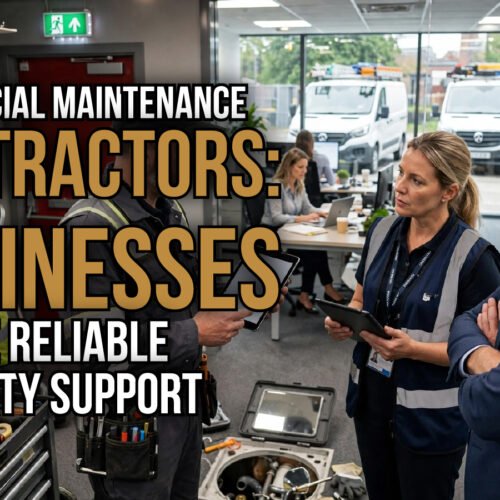

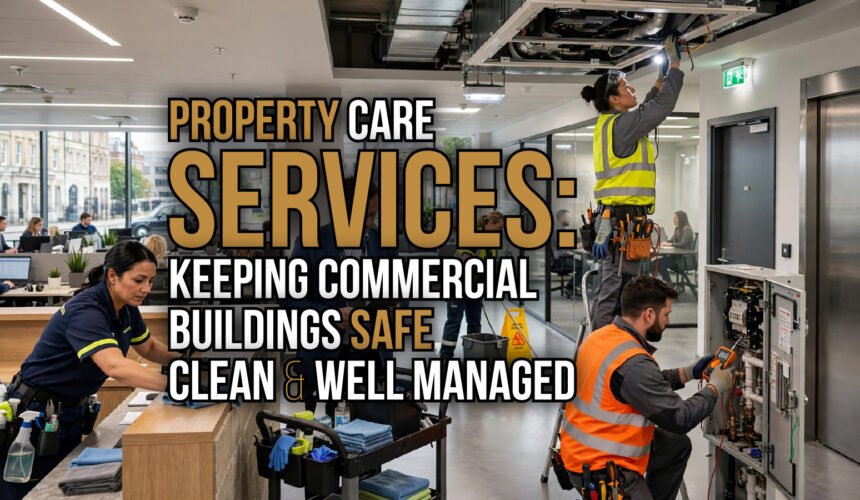
A retail unit needs cleaning and a small building repair before trading starts. An office has recurring plumbing issues, while a warehouse needs planned building maintenance and inspection follow-up.
These tasks look different, yet they all form part of wider property care services. Good commercial property care connects cleanliness, inspections, maintenance, repairs, prioritisation and reporting instead of treating every issue as an isolated job.
What Are Property Care Services?
Property care services support the day-to-day condition, cleanliness and maintenance of commercial buildings through planned upkeep, reactive repairs, inspections, cleaning, electrical and plumbing work, general building repairs and maintenance coordination. The exact scope depends on the property, operating hours, condition and agreed responsibilities.
In practice, property care services should support the whole working environment. They should help a business inspect, clean, maintain, repair, record and review property needs through one organised process.
What Does Commercial Property Care Include?
Commercial property care can include building inspections, planned maintenance, reactive repairs, cleaning, building-fabric work, electrical and plumbing maintenance, communal areas, external upkeep and reporting. However, the exact mix should match the premises rather than a generic package.
What Property Care Services Include
| Area | Typical Property-Care Requirement |
|---|---|
| Inspections | Review condition and outstanding issues |
| Planned maintenance | Schedule known upkeep |
| Reactive repairs | Address reported faults |
| Cleaning | Support cleanliness and presentation |
| Building fabric | Walls, ceilings, doors, floors and finishes |
| Electrical | Lighting and electrical repair coordination |
| Plumbing | Leaks, washrooms and plumbing repairs |
| External areas | Relevant exterior upkeep |
| Reporting | Record work, status and follow-up |
What Is Property Upkeep?
Property upkeep means the recurring work needed to maintain the condition, usability and presentation of a building. It can include cleaning, minor repairs, planned maintenance, inspections, finishes, building services and relevant external areas.
Because upkeep is continuous, property care services should not wait for every fault to become urgent. Instead, managers should combine routine attention with planned work and clear repair tracking.
What Are Premises Support Services?
Premises support services can combine practical building support such as maintenance, repairs, cleaning, inspections, contractor coordination, reporting and wider property services. The exact combination depends on how the commercial premises operates.
Property Care vs Property Management
Property care focuses mainly on physical condition, cleaning, repairs and upkeep. Property management can have a broader remit that may include contractors, tenants, finances, documentation and wider operational coordination.
| Factor | Property Care | Property Management |
|---|---|---|
| Primary focus | Physical building condition | Wider property operation |
| Repairs | Core activity | Often coordinated |
| Cleaning | May be included | May be managed |
| Planned maintenance | Core activity | Usually overseen |
| Contractor coordination | Often included | Common |
| Property administration | Limited | Broader |
| Reporting | Maintenance-focused | Wider management reporting |
| Overall role | Upkeep and condition | Broader management |
What Do Building Care Services Include?
Building care services can include building-fabric upkeep, general repairs, electrical and plumbing work, planned maintenance, inspections, cleaning, finishes and relevant external areas. They should support the condition of the premises as a working environment.
Our current Gohaych Services offering spans day-to-day maintenance and wider building requirements, including refurbishment, renovation, interior upgrades and exterior improvements where the agreed scope moves beyond routine property care services.
Building Fabric Care
Building fabric covers physical elements such as walls, ceilings, doors, windows, flooring, finishes and relevant exterior components. Routine visual checks can identify deterioration or repeat repair needs that deserve planned attention.
Property care services should record these issues rather than allow them to disappear between separate repair visits. This makes later review more useful.
Electrical Property Care
Electrical property care can include lighting issues, electrical repair needs and planned electrical work carried out by suitable professionals. Businesses should avoid unsafe DIY electrical intervention.
Within property care services, managers should record the issue, coordinate the appropriate contractor, arrange access and keep a completion record. Gohaych Services currently lists electrical work within its property support and construction offering.
Plumbing Property Care
Plumbing care can include leaks, washroom problems, plumbing faults and planned repair work. Recurring issues should be tracked because repeated repairs may indicate that further investigation is appropriate.
Cleaning as Part of Property Care
Commercial cleaning can complement maintenance by supporting communal areas, working environments and overall presentation. It should remain coordinated with maintenance visits where access or work areas overlap.
Gohaych Services currently provides cleaning support for commercial and residential properties. Therefore, cleaning can form one supporting part of broader property care services where the client includes it in scope.
Planned Property Care vs Reactive Repairs
Planned property care covers work scheduled around known maintenance, inspection and upkeep needs. Reactive repairs begin after a fault or issue appears.
Good property care services usually need both approaches.
| Factor | Planned Property Care | Reactive Repairs |
|---|---|---|
| Trigger | Known need or schedule | Reported fault |
| Timing | Planned | Arranged after issue |
| Purpose | Ongoing condition | Repair |
| Scheduling | More predictable | More variable |
| Reporting | Planned work history | Repair history |
| Budget visibility | Easier to plan | Less predictable |
What Should Planned Property Upkeep Cover?
Planned property upkeep may include routine inspections, recurring maintenance, known repairs, building condition, shared areas, finishes, plumbing, electrical work and relevant external elements.
Exact schedules depend on the property. Therefore, property care services should avoid copying fixed frequencies from another building unless they genuinely apply.
How Should Reactive Property Repairs Be Managed?
Reactive property repairs should move through a consistent process:
ISSUE REPORTED → REVIEW → PRIORITISE → AUTHORISE → ASSIGN → COMPLETE → RECORD → REVIEW
This gives property care services a clear path from first report to completion. In addition, it creates the records needed to identify repeat issues.
Why Property Inspections Matter
Property inspections can identify minor repairs, recurring issues, building-fabric deterioration, planned-maintenance requirements and areas that may need specialist review. They do not guarantee that future faults will be prevented.
Instead, inspections give property care services a better information base. Managers can then decide what needs routine repair, planned work or specialist input.
What Should a Routine Property Care Inspection Review?
A general property-care inspection may consider:
- internal finishes;
- doors and windows;
- ceilings and floors;
- visible plumbing issues;
- lighting;
- building fabric;
- communal areas;
- relevant external areas; and
- evidence of recurring repair issues.
Property Care Services for Offices
Property care services for offices can cover washrooms, lighting, plumbing, doors, communal areas, walls, ceilings, cleaning, planned repairs and general building upkeep. Scheduling may also need to fit working hours and occupant access.
For an office, good commercial property care should make it simple to report an issue, arrange access, track progress and review outstanding work without disrupting the entire workplace plan.
Property Care Services for Warehouses
Property care services for warehouses can include building fabric, lighting, plumbing, drainage where relevant, doors, shared facilities, external building areas, inspections and reactive repairs.
However, warehouse property care should distinguish building maintenance from machinery servicing. Equipment maintenance should only sit within scope when it is specifically included.
Building Care vs Equipment Maintenance in Warehouses
Building care services focus on the premises unless the agreement says otherwise. That may cover walls, doors, lighting, washrooms, drainage and external property elements.
By contrast, conveyors, production machinery or specialist operational equipment may require separate engineering support. Clear scope helps property care services avoid confusion between building and equipment responsibilities.
Property Care Services for Retail Units
Property care services for retail units can include lighting, walls, ceilings, floors, washrooms, doors, plumbing, electrical repairs, cleaning and general presentation.
Because retail premises serve customers during trading periods, non-urgent work may need planned access around opening hours, deliveries and contractor visits. This does not guarantee zero disruption, but it creates a clearer working arrangement.
Office vs Warehouse vs Retail Property Care
| Requirement | Office | Warehouse | Retail |
|---|---|---|---|
| Lighting | Common | Common | Common |
| Washrooms | Common | Common | Common |
| Plumbing | Relevant | Relevant | Relevant |
| Doors | Relevant | Important | Important |
| Building fabric | Relevant | Strong focus | Relevant |
| Cleaning | Common | Site-specific | Common |
| External areas | Site-specific | Often relevant | Site-specific |
| Scheduling | Around occupancy | Around operations | Around trading |
| Equipment servicing | Usually separate | Often separate | Usually separate |
What Does Good Commercial Property Care Look Like?
Good commercial property care combines:
INSPECT + MAINTAIN + CLEAN + REPAIR + RECORD + REVIEW
What Should Businesses Do About Recurring Property Problems?
Recurring problems should move through:
RECORD → IDENTIFY PATTERN → INVESTIGATE → DETERMINE TRADE OR SPECIALIST → COMPLETE WORK → REVIEW
Managers should avoid diagnosing technical causes without evidence. Instead, property care services should make repeat issues visible so an appropriate professional can decide the next step.
When Does a Property Need Specialist Support?
Routine property care may need specialist support when an issue goes beyond normal repairs. Examples can include persistent water ingress, specialist electrical work, structural concerns, major refurbishment or regulated specialist work.
Good property care services should recognise this boundary. The provider should then identify that a separately scoped specialist assessment or project may be required.
When Repeated Basement Repairs Need Specialist Attention
Repeated surface repairs may not be appropriate where persistent basement water ingress continues. In that situation, specialist investigation may be more suitable than repeating the same cosmetic repair.
For relevant properties, businesses can review specialist basement waterproofing when routine property care services are no longer the right level of intervention.
When Should Businesses Outsource Property Care?
Businesses may outsource property care when internal teams lack capacity, several trades need coordination, reactive work dominates or planned upkeep keeps slipping. Multi-site businesses may also want one maintenance contact and more consistent reporting.
For organisations considering external support, outsourced property maintenance explains how planned and reactive work can be coordinated externally.
Where several contractors and sites create fragmented administration, external property maintenance support can sit alongside the business’s own approval and budget controls.
Property Care Services for Multi-Site Businesses
Property care services for multi-site organisations need both central oversight and separate site records. Each building may have different priorities, operating hours, contractors and repair histories.
A practical model keeps one central contact while preserving site-specific maintenance plans. Consequently, portfolio reporting can show open work without losing local detail.
How Should Property Care Requests Be Prioritised?
Use a high-level structure such as:
URGENT OPERATIONAL ISSUE → HIGH-PRIORITY REPAIR → ROUTINE REPAIR → PLANNED MAINTENANCE → IMPROVEMENT PROJECT
Each business should define what these categories mean for its own buildings. Property care services should not attach invented universal response times.
Who Should Approve Property Care Work?
Businesses should define who can authorise routine repairs, when quotations are required and who approves larger work. Landlord, client or managing-agent approval may also apply depending on the property arrangement.
Clear authorisation helps property care services avoid uncertainty. It also gives contractors a clear decision route when work changes in scope.
What Should Property Care Reporting Include?
Property care reporting should show what was reported, who was assigned, what happened and what remains outstanding.
| Report Field | Why It Matters |
|---|---|
| Property/site | Identifies location |
| Issue | Records the problem |
| Date reported | Creates timeline |
| Priority | Shows agreed category |
| Assigned work | Defines next action |
| Contractor/trade | Identifies responsibility |
| Appointment | Shows scheduled visit |
| Status | Tracks progress |
| Work completed | Records action |
| Follow-up | Shows next step |
| Recurring issue | Highlights patterns |
| Supporting images | Adds context where appropriate |
Consistent reporting makes property care services easier to manage across individual sites or larger portfolios.
Why Property Maintenance Records Matter
Maintenance records support repair-history review, planned work, budgeting, handovers, contractor performance and broader property oversight.
Most importantly, records allow property care services to identify recurring issues. Without that history, similar faults may keep appearing as unrelated maintenance tickets.
How Gohaych Services Supports Commercial Property Care
At Gohaych Services, we provide practical property care across day-to-day maintenance and wider building requirements. Current services include reactive maintenance, emergency call-outs, planned preventative maintenance, inspections, commercial cleaning, electrical and plumbing work, property management and general building or renovation support.
For commercial properties, our property care services can be structured around the building type, operating hours, repair priorities and agreed maintenance scope. Where routine upkeep develops into a larger project, our wider refurbishment, interior and exterior improvement services can support a separately scoped next stage.
Property Care Services in Hounslow and London
Gohaych Services is based at 18 Neals Corner, 2 Bath Road, Hounslow, Middlesex, TW3 3HJ. Current first-party information positions the business around London property support and wider UK services.
Local property care services should still match each building’s actual operating requirements. A Hounslow office, warehouse or retail premises may need a different balance of cleaning, repairs, inspections and planned work.
Need Ongoing Support for Your Commercial Property?
If your business is reviewing property care services, prepare the property type, location, operating hours, cleaning requirements, current issues, recurring repairs, planned maintenance, required trades, number of sites and reporting needs.
You can discuss your property care requirements with Gohaych Services using that information.