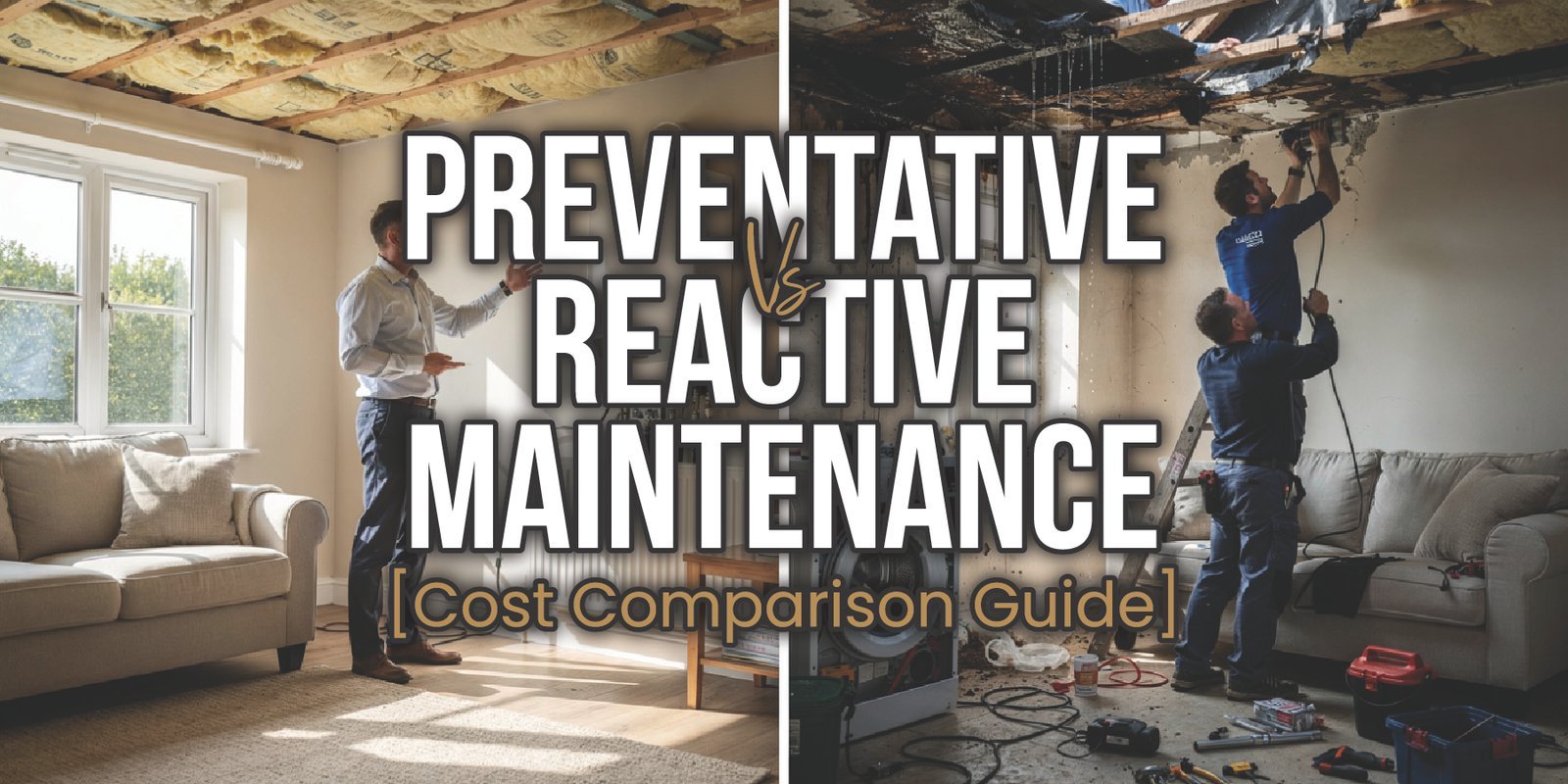
Property owners often spend more when they wait for something to break. A small leak becomes ceiling damage. A blocked gutter turns into damp. A tired boiler fails during cold weather. Therefore, understanding preventative maintenance vs reactive repairs can help UK landlords, homeowners, property managers, estate agents, facilities managers, and commercial property owners control long-term maintenance costs.
Reactive repairs may feel cheaper at first because you only spend money when a problem appears. However, that approach can lead to higher callout charges, tenant complaints, emergency disruption, avoidable damage, and long-term cost pressure. In contrast, preventative maintenance helps property owners plan inspections, spot problems early, schedule contractors properly, and protect property value.
The best approach is not always one or the other. In real UK properties, landlords and managers need both. However, when you compare preventative maintenance vs reactive maintenance over time, planned upkeep usually gives better control, fewer emergencies, and more predictable budgets.
This guide gives a practical maintenance cost comparison for rental homes, HMOs, flats, terraced houses, semi-detached homes, commercial units, buy-to-let properties, older UK buildings, managed property portfolios, offices, retail premises, and landlord properties.
What Does Preventative Maintenance vs Reactive Mean?
Preventative maintenance vs reactive maintenance compares two different ways of managing property repairs.
Preventative maintenance means checking, servicing, and maintaining parts of a property before they fail. This may include boiler servicing, roof inspections, gutter cleaning, drainage checks, damp reviews, electrical inspections, plumbing checks, door and window maintenance, and seasonal property reviews.
Reactive maintenance means repairing something after it breaks. For example, a landlord may call a plumber after a burst pipe, hire a roofer after water enters the ceiling, or contact an electrician after a fault causes power disruption.
In simple terms:
- Preventative maintenance plans ahead.
- Reactive maintenance responds after the problem appears.
Both matter. However, preventative maintenance vs reactive planning becomes important because the timing of repairs affects cost, tenant satisfaction, contractor availability, and long-term property condition.
For property owners who want fewer urgent callouts, a planned maintenance strategy can help reduce emergency repair problems and support more predictable upkeep.
Preventative Maintenance vs Reactive: Key Differences
The key difference between preventative maintenance vs reactive property care is control. Preventative maintenance gives owners more control over timing, cost, contractors, and repair quality. Reactive maintenance often gives the problem more control over the owner.
Preventative maintenance focuses on planning
Preventative maintenance includes regular inspections, servicing, cleaning, testing, and small repairs. It helps owners identify early warning signs before they become urgent.
For example, checking gutters before autumn rain may prevent water overflow and damp. Servicing a boiler before winter may reduce breakdown risk. Inspecting roof tiles after storms may stop minor damage becoming a major leak.
Reactive maintenance focuses on response
Reactive maintenance happens after failure. Sometimes, this cannot be avoided. A pipe may burst unexpectedly. A storm may damage a roof. A lock may break suddenly. However, relying only on reactive repairs can create repeated disruption.
Preventative maintenance reduces surprises
Because property owners check systems regularly, they can plan repairs before they become emergencies. Therefore, preventative maintenance often improves budget predictability.
Reactive maintenance can increase costs
Reactive repairs may involve emergency callout charges, rushed contractor selection, temporary fixes, tenant disruption, and further damage. As a result, reactive repairs can cost more than early maintenance.
This is why preventative maintenance vs reactive decisions should consider the full cost, not just the first invoice.
Maintenance Cost Comparison: Which Option Costs Less?
A proper maintenance cost comparison should look beyond the immediate repair price. Property owners should consider inspection costs, emergency charges, contractor availability, damage caused by delays, tenant complaints, and long-term property value.
Planned inspection costs
Preventative maintenance usually includes planned inspection costs. These may feel like extra spending, but they help detect problems early.
For example, regular property maintenance checks may identify a small roof issue before water enters the building. A planned plumbing inspection may find a slow leak before flooring damage appears.
Although inspections cost money, they often cost less than major emergency repairs.
Emergency repair costs
Reactive repairs often cost more because they happen under pressure. Contractors may charge higher rates for urgent callouts, evening visits, weekend work, or immediate attendance.
For example, a blocked drain during working hours may cost less than an emergency drainage callout during a weekend.
Contractor callout charges
When comparing preventative maintenance vs reactive, callout charges matter. Planned contractors can schedule visits efficiently. Emergency contractors may charge more because the work needs immediate attention.
Tenant disruption
In rental homes, HMOs, and managed property portfolios, tenant disruption has a cost. Heating failure, leaks, damp, broken doors, or electrical faults can damage tenant satisfaction and increase complaints.
Preventative maintenance can reduce disruption because owners can schedule work before systems fail.
Property damage
Reactive repairs can allow damage to spread. A small leak may damage plaster, paint, flooring, electrics, and furniture. Therefore, the final cost may include more than the original repair.
Repeat repairs
Temporary reactive fixes can create repeat problems. If the cause remains unresolved, owners may pay several times for the same issue.
Long-term asset condition
Preventative maintenance supports long-term asset condition. Boilers, roofs, drains, gutters, windows, doors, and ventilation systems usually perform better with regular care.
Compliance-related risks
Landlords and commercial property owners must consider legal and safety responsibilities. Poor maintenance can increase compliance risks, especially with heating, electrics, damp, access, and safety-related repairs.
Property value impact
Well-maintained properties usually hold value better. In contrast, repeated neglect can reduce appeal, tenant satisfaction, and long-term asset performance.
Budget predictability
Preventative maintenance makes costs easier to plan. Reactive maintenance creates budget shocks.
Overall, this maintenance cost comparison shows that preventative maintenance usually costs less over time because it reduces emergency callouts, repeat damage, tenant disruption, and rushed decision-making.
Preventative vs Reactive Maintenance Comparison Table
| Factor | Preventative Maintenance | Reactive Maintenance |
|---|---|---|
| Cost control | Easier to budget and plan | Costs can rise quickly during emergencies |
| Repair timing | Scheduled before failure | Happens after something breaks |
| Emergency risk | Lower because issues get checked early | Higher because problems often appear suddenly |
| Tenant impact | Less disruption when planned properly | More complaints and inconvenience |
| Contractor availability | Easier to choose trusted contractors | Often rushed due to urgency |
| Property value | Supports long-term condition | Can reduce condition if problems repeat |
| Long-term damage | Helps prevent avoidable damage | Can allow damage to spread |
| Best use case | Routine upkeep, inspections, servicing, long-term planning | Sudden breakdowns, storms, urgent failures, unexpected damage |
This table makes the preventative maintenance vs reactive choice clearer. Reactive maintenance will always exist, but planned maintenance usually gives better long-term control.
When Preventative Maintenance Makes More Sense
Preventative maintenance makes more sense when the issue is predictable, repeatable, seasonal, or linked to property ageing.
Use preventative maintenance for:
- Boiler servicing
- Roof and gutter inspections
- Drainage checks
- Damp and mould prevention
- Electrical inspections
- Plumbing checks
- Window and door maintenance
- Ventilation reviews
- External wall checks
- Seasonal property inspections
- HMO and rental property checks
- Commercial unit maintenance
- Office and retail premises upkeep
For older UK buildings, preventative maintenance matters even more because ageing materials can fail gradually. Terraced houses, converted flats, HMOs, and older rental homes may need regular checks around damp, roofing, pipework, ventilation, and heating.
Landlords and property managers can use preventative maintenance in the UK to create a more reliable maintenance process and reduce emergency repair problems.
When comparing preventative maintenance vs reactive, preventative care usually wins for recurring issues, seasonal risks, and properties with known maintenance pressure.
When Reactive Maintenance Cannot Be Avoided
Reactive maintenance is not always a mistake. Some issues happen suddenly, even in well-maintained properties.
Reactive maintenance may be unavoidable for:
- Storm damage
- Sudden burst pipes
- Accidental damage
- Broken locks
- Unexpected boiler faults
- Electrical failures
- Flooding
- Damage caused by tenants or customers
- Emergency drainage problems
- Breakages in commercial premises
In these cases, the key is speed and quality. Property owners should act quickly, contact the right contractor, document the issue, and review the cause after the repair.
However, reactive repairs should not become the main maintenance strategy. If the same issue returns repeatedly, the property needs a planned inspection, better materials, or an upgrade.
That is why preventative maintenance vs reactive should not become a one-time decision. It should guide how owners manage the whole property over time.
How Preventative Maintenance Protects Property Value
Preventative maintenance helps landlords, homeowners, and property managers reduce urgent repairs, avoid repeated issues, improve tenant satisfaction, and protect property value.
It reduces urgent repairs
Regular checks can identify early problems before they become emergencies. This helps owners avoid last-minute callouts and expensive disruption.
It improves tenant satisfaction
Tenants want a property that works properly. Heating, plumbing, doors, windows, drainage, and ventilation all affect day-to-day comfort.
It supports better contractor planning
When work is not urgent, owners can compare contractors, review quotes, and choose better timing.
It reduces avoidable damage
Small issues can spread when ignored. Preventative maintenance helps stop that.
It protects long-term value
A well-maintained property usually performs better during valuations, tenant viewings, sales, and portfolio reviews.
For managed portfolios, a regular property maintenance checks schedule can help standardise upkeep across several properties.
Preventative Maintenance vs Reactive Checklist
Use this checklist to review your current maintenance approach.
Property condition
- Do you inspect roofs, gutters, drains, and external areas regularly?
- Do you check plumbing before leaks become serious?
- Do you service heating systems before winter?
- Do you monitor damp and ventilation?
- Do you review older property features?
Cost control
- Do you have a maintenance budget?
- Do you track emergency callout costs?
- Do you compare planned costs against reactive repair costs?
- Do you record repeat issues?
- Do you review contractor performance?
Tenants and occupiers
- Do tenants know how to report problems?
- Do you respond quickly to urgent issues?
- Do you communicate repair timelines clearly?
- Do you follow up after repairs?
- Do you track tenant complaints linked to maintenance?
Contractor planning
- Do you have reliable contractors available?
- Do you avoid choosing only by lowest price?
- Do you plan seasonal checks early?
- Do you document completed work?
- Do you review warranties or guarantees?
Long-term improvement
- Do you use smart property improvements to reduce repeat issues?
- Do you follow a planned maintenance strategy?
- Do you know which repairs keep returning?
- Do you upgrade old features when repairs no longer make sense?
- Do you need to request a maintenance quote?
If several answers are unclear, your property may rely too heavily on reactive maintenance.
Common Maintenance Cost Mistakes Property Owners Should Avoid
Waiting until problems become urgent
Waiting usually increases cost. Leaks, damp, drainage issues, and roof problems often worsen when ignored.
Ignoring small leaks or damp patches
Small damp patches can signal bigger issues behind walls, ceilings, or floors. Investigate early.
Choosing temporary fixes
Temporary fixes can help in an emergency, but they should not replace proper repairs.
Skipping seasonal checks
Seasonal checks help properties prepare for winter, rain, storms, and changing occupancy needs.
Not documenting repairs
Without records, owners struggle to track repeat issues, contractor performance, and long-term costs.
Using cheap materials that fail quickly
Low-quality materials may reduce the first invoice but increase future repair costs.
Ignoring contractor reliability
The cheapest contractor is not always the best choice. Review communication, quality, speed, and reliability.
Not planning a maintenance budget
Without a budget, every repair feels unexpected. Planned maintenance gives better financial control.
Forgetting follow-up inspections
After repairs, inspect the area again. This helps confirm the issue has not returned.
Failing to upgrade old property features
If an old feature keeps failing, repeated repair may cost more than replacement. Review property upgrade trends and practical long-term improvements before paying for the same repair again.
How Property Upgrades Reduce Future Maintenance Costs
Property upgrades can reduce future maintenance costs when old features keep failing or outdated systems create repeat issues.
Examples include:
- Replacing old pipework
- Upgrading heating systems
- Improving insulation
- Installing better ventilation
- Updating windows and doors
- Improving drainage
- Repairing or upgrading roofing
- Replacing worn flooring
- Improving exterior surfaces
- Modernising kitchens and bathrooms
- Upgrading access points and locks
For example, if a rental property keeps facing damp problems, better ventilation and insulation may reduce future complaints. If a commercial unit has repeated drainage issues, a planned drainage upgrade may reduce disruption. If an older buy-to-let property has frequent heating failures, a heating system upgrade may improve tenant satisfaction and lower repeat repair pressure.
This is where modern property upgrade ideas can support long-term planning. Instead of paying repeatedly for the same problem, owners can invest in upgrades that improve building performance and reduce maintenance pressure.
When comparing preventative maintenance vs reactive, upgrades often sit alongside preventative care. They help reduce future repair demand and support long-term property value.
People Also Ask
Is preventative maintenance cheaper than reactive maintenance?
Preventative maintenance is usually cheaper over time because it reduces emergency callouts, repeat repairs, tenant disruption, avoidable damage, and rushed contractor costs.
What is the difference between preventative maintenance and reactive maintenance?
Preventative maintenance means planned inspections, servicing, and small repairs before failure. Reactive maintenance means fixing problems after something breaks or stops working.
When is reactive maintenance necessary?
Reactive maintenance is necessary when unexpected issues happen, such as burst pipes, storm damage, broken locks, sudden electrical faults, flooding, or accidental damage.
How can landlords reduce maintenance costs?
Landlords can reduce maintenance costs by scheduling inspections, servicing heating systems, checking roofs and gutters, documenting repairs, using reliable contractors, and upgrading old features that keep failing.
What should a maintenance cost comparison include?
A maintenance cost comparison should include inspection costs, emergency callouts, contractor charges, tenant disruption, property damage, repeat repairs, compliance risks, property value, and budget predictability.
Get Property Maintenance Support
Want to reduce unexpected repair costs and plan maintenance properly? Request a quote from Gohaych Services today and get professional property maintenance support.
Whether you manage rental homes, HMOs, flats, commercial units, offices, retail premises, buy-to-let properties, or a wider property portfolio, Gohaych Services can help you review your current maintenance approach and build a more practical plan.
If you want fewer urgent repairs and better long-term cost control, speak to Gohaych Services and get a property maintenance quote today.
Conclusion
The choice between preventative maintenance vs reactive repairs affects cost, tenant satisfaction, contractor planning, emergency disruption, and long-term property condition. Reactive maintenance will always have a place because unexpected issues can happen. However, relying only on reactive repairs often creates higher costs and more disruption.
A practical maintenance cost comparison shows that preventative maintenance usually gives property owners better control. Planned inspections, seasonal checks, reliable contractors, good documentation, and smart upgrades can reduce emergency callouts, repeat issues, and avoidable damage.
For landlords, homeowners, property managers, facilities managers, estate agents, commercial property owners, and buy-to-let investors, the message is clear. Use preventative care wherever possible, respond quickly when reactive repairs are unavoidable, and review old property features before they keep costing money.
If your property maintenance feels too reactive, now is the right time to review your approach and plan smarter support with Gohaych Services.