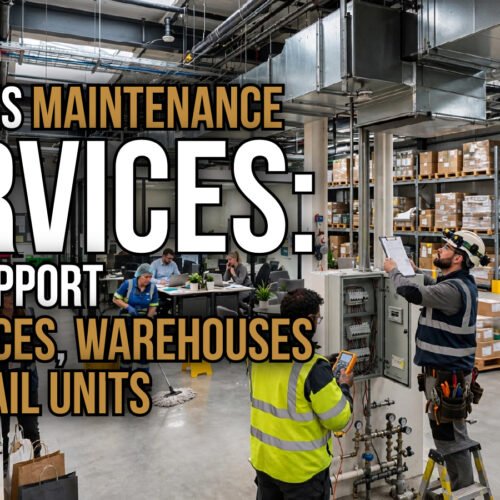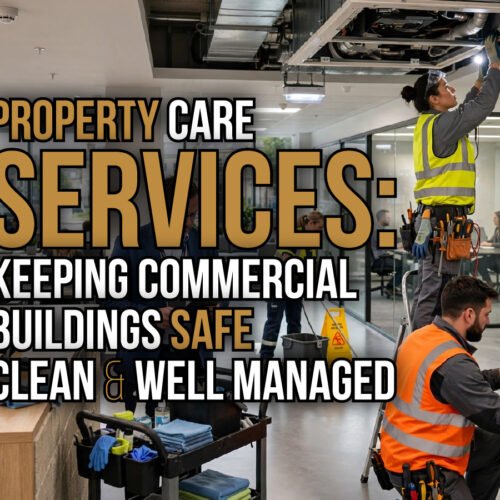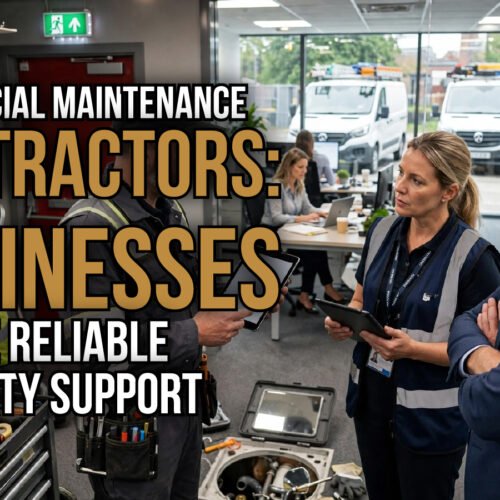

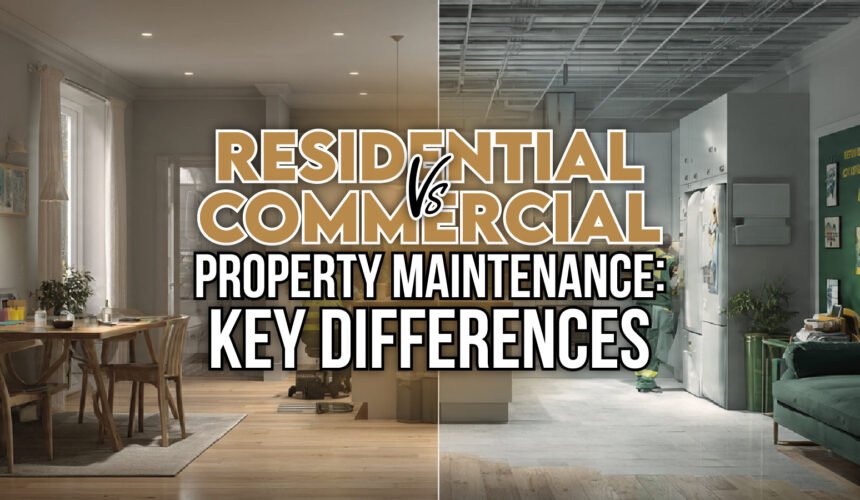
Treating a flat and a retail unit like they need the same maintenance strategy is one of the most expensive mistakes property owners make.
It happens all the time. A landlord uses a domestic mindset on a commercial unit and runs straight into fire, asbestos, or Legionella compliance problems. A business owner delays commercial-grade maintenance and suddenly faces downtime, complaints, liability exposure, and repair bills that hit far harder than expected. Investors with mixed portfolios often get stuck in the middle, unclear on where residential duties end and commercial obligations begin.
That is exactly why residential vs commercial property maintenance matters so much.
In this post, you’ll get a clear, complete breakdown of exactly how residential and commercial property maintenance differ across costs, compliance, frequency, legal obligations, and professional standards, so you know precisely what your property needs.
Because once you understand the difference, you stop guessing. And that saves serious money and serious legal headaches.
Why the Difference Between Residential and Commercial Property Maintenance Is So Critical
These are not just two different building categories.
They operate under different legal frameworks, different risk profiles, different occupancy patterns, and different maintenance demands. RICS’ planned preventative maintenance guidance explicitly notes that PPM surveys are commonly used for commercial assets, while they are not commonly undertaken for the majority of residential properties. That alone tells you something important: commercial property is usually managed with a far more formal maintenance structure.
Here are the 3 core reasons this distinction matters.
1. Legal and compliance obligations are dramatically different
Residential landlords in England face duties around gas safety, electrical safety, alarms, fitness for human habitation, and minimum energy efficiency. Commercial dutyholders, by contrast, may need to manage fire risk assessments, asbestos, Legionella controls, workplace health and safety, and service-charge-backed maintenance obligations under leases.
2. The cost and frequency of maintenance are fundamentally different
Commercial sites usually have more plant, more specialist systems, more people using the space, and less tolerance for downtime. Think HVAC, emergency lighting, fire systems, lifts, access control, loading bays, kitchens, washrooms, and shared infrastructure. Residential properties are simpler. Commercial buildings are operational ecosystems. RICS and RICS service-charge standards both point to the broader servicing and operating burden in commercial property.
3. The consequences of getting it wrong are far more severe in commercial settings
A missed boiler service in a house is a problem. A missed life-safety or compliance issue in a commercial building can mean business interruption, staff risk, public liability exposure, insurer scrutiny, reputational damage, or enforcement action. HSE’s guidance makes clear that employers and those in control of premises must assess and manage risks to employees and others.
A precise “commercial is 2–4x more per square foot than residential” benchmark was not available in the sources I reviewed. What the authoritative sources do show is that commercial maintenance usually involves substantially broader operating and compliance costs, formal PPM, and recoverable service-charge structures that do not apply in the same way to standard residential stock. That means understanding these differences isn’t optional. It’s the foundation of responsible property ownership.
What Is Residential Property Maintenance? (And What It Actually Covers)
Residential property maintenance covers homes, flats, HMOs, buy-to-lets, and student accommodation.
The goal is simple: keep the property safe, habitable, efficient, and legally compliant while protecting rental income and long-term value.
Routine Residential Maintenance
This is the day-to-day and season-to-season work that stops small defects becoming expensive ones.
It includes boiler servicing, gutter clearing, lock and window checks, damp inspections, roof checks from ground level, sealant checks, drainage checks, and testing alarms. In practice, that means weekly visual checks, monthly tasks, and annual professional servicing for critical systems. That cadence aligns with both landlord safety guidance and standard preventative maintenance logic.
Legal Obligations for Residential Landlords
This is where many landlords slip.
In England, private landlords must ensure gas appliances and flues are checked every 12 months by a Gas Safe engineer. Electrical installations must be inspected and tested at least every 5 years by a qualified person. Smoke alarms are required on every storey used as living accommodation, and carbon monoxide alarms are required in rooms with fixed combustion appliances. Domestic rented property in England and Wales is also generally subject to a minimum EPC band E requirement. On top of that, the Homes (Fitness for Human Habitation) Act 2018 requires rented homes to be fit for human habitation at the start of, and throughout, the tenancy.
That is not light-touch compliance.
That is a real maintenance framework.
Residential Maintenance Cost Benchmarks
A common rule of thumb is to budget roughly 1–3% of property value per year for maintenance on residential stock. That figure is best treated as a planning heuristic, not a statutory rule. What matters more is the direction of travel: planned maintenance costs less than reactive maintenance, and deferred maintenance erodes both value and net yield. RICS’ PPM guidance is built around identifying immediate reactive needs alongside proactive repair and replacement planning for owned assets.
Here’s the practical version:
-
A planned boiler service is modest.
-
An emergency winter breakdown is not.
-
A gutter clean is cheap.
-
Damp remediation and redecorating after water ingress are not.
Who Is Responsible for What in Residential?
Usually, landlords remain responsible for the structure, exterior, installations for water, gas, electricity, sanitation, heating, and hot water. Tenants are generally expected to use the home in a tenant-like way, test alarms regularly, report problems promptly, and handle everyday cleanliness. Gov.uk’s private rented sector guidance explicitly tells tenants to test smoke and carbon monoxide alarms at least monthly and report repairs so the landlord can act.
The grey areas are where disputes start.
Garden upkeep, minor consumables, appliance responsibilities, and decorative damage should be made crystal clear in the tenancy agreement. Ambiguity creates arguments. Clarity prevents them.
What Is Commercial Property Maintenance? (And Why It’s a Different Beast Entirely)
Commercial property maintenance covers offices, retail units, warehouses, industrial sites, mixed-use developments, restaurants, and hotels.
And this is where maintenance stops being mostly domestic asset care and starts becoming operational risk management.
Routine Commercial Maintenance
Commercial maintenance involves systems residential landlords often never deal with at all:
-
HVAC and ventilation
-
emergency lighting
-
fire alarms and suppression systems
-
lifts and escalators
-
access control
-
loading bays
-
car parks
-
drainage networks
-
washrooms
-
sometimes commercial kitchens and specialist plant
In high-footfall buildings, some checks happen daily. Others run weekly, monthly, quarterly, and annually. Commercial systems also fail faster because the intensity of use is higher, the occupant load is higher, and downtime directly affects trading, staffing, and customer experience. RICS’ PPM guidance frames commercial property maintenance around planned inspection, proactive repair, and lifecycle investment because buildings need to keep performing as intended.
Legal and Compliance Obligations for Commercial
This is where the gap between residential and commercial gets very wide.
Commercial dutyholders may need to manage and document:
-
fire risk assessment duties and regular review under fire safety law
-
asbestos duty to manage in non-domestic premises, especially where buildings were built or refurbished before 2000
-
Legionella risk assessment and controls under HSE guidance and ACOP L8
-
Health and Safety at Work etc. Act 1974 duties to employees and others affected by the undertaking
-
insurance conditions linked to public access, employers’ liability, and safe premises
-
formal planned preventative maintenance schedules as best practice and often as a practical necessity
HSE states that if a building was built or refurbished before 2000, asbestos may be present and must be managed in non-domestic premises. HSE also states that employers and those in control of premises must assess and manage Legionella risk. And the Health and Safety at Work etc. Act 1974 remains the primary legislation covering occupational health and safety in Great Britain.
That is why commercial maintenance is not just “more maintenance.”
It is more regulated maintenance.
Commercial Maintenance Cost Benchmarks
Commercial owners often budget around 2–5% of property value annually for maintenance, depending on asset class, age, services, lease structure, and operating intensity. Again, that’s a market budgeting rule of thumb rather than a statutory benchmark. What the evidence strongly supports is that commercial properties carry broader servicing and operating obligations, and reactive strategies usually cost more overall because they create disruption, callout premiums, and potential business interruption.
For that reason, smart operators lean heavily into PPM.
If you want a deeper look at that structure, see what commercial property maintenance plans include and why they matter.
Lease Obligations and Service Charges
This is another major difference.
With commercial property, the lease can shift maintenance responsibility dramatically. Under a full repairing and insuring (FRI) lease, the tenant can take on extensive repair and maintenance obligations. In multi-let buildings, service charges often recover the cost of maintaining common parts, plant, fabric, and shared services. RICS’ commercial service charge standard explains that service charges are designed to recover the costs of servicing and operating a property in line with lease obligations.
Residential property usually does not work like that.
Commercial property often does.
Head-to-Head Comparison: Residential vs Commercial Property Maintenance
1. Maintenance Frequency
Residential: monthly and annual cycles cover most tasks, with light weekly checks.
Commercial: daily, weekly, monthly, quarterly, and annual cycles are often essential because of higher occupancy and operational pressure.
2. Legal Compliance Requirements
Residential: gas safety, EICR, smoke alarms, carbon monoxide alarms, EPC, fitness for habitation.
Commercial: fire risk, asbestos management, Legionella controls, workplace safety duties, and often formal inspection logs.
3. Cost Per Square Foot
Residential: lower and more predictable because systems are simpler.
Commercial: higher and more variable because buildings are more complex and carry more operating infrastructure. RICS and commercial service charge guidance support the wider scope of costs in commercial property, even where a universal cross-sector per-square-foot ratio is not stated.
4. Contractor Specialisation Required
Residential: a general maintenance contractor can handle most jobs.
Commercial: specialist contractors are often needed for HVAC, lifts, fire systems, structured electrical work, kitchens, access systems, and compliance-heavy inspections.
5. Consequence of Maintenance Failure
Residential: tenant dissatisfaction, complaints, repair costs, claims, and slower reletting.
Commercial: business interruption, safety exposure, reputational damage, lease disputes, and in some cases regulatory action.
6. Planned vs Reactive Maintenance Split
Residential: many owners still operate reactively.
Commercial: best practice strongly favors planned maintenance because uptime, compliance, and predictability matter far more. RICS’ PPM framework exists precisely to move owners toward proactive lifecycle planning.
7. Insurance Implications
Residential: landlord insurance expects the property to be maintained and safe.
Commercial: public liability, employers’ liability, and business interruption exposure can all be worsened by poor maintenance standards or poor records. HSE’s framework around duties to employees and others is directly relevant here.
8. Tenant Relationship Impact
Residential: maintenance quality affects renewals, rent growth, and complaints.
Commercial: maintenance quality affects lease renewal, rent review leverage, tenant retention, and the tenant’s ability to operate its business properly.
How Poor Maintenance Affects Tenant Retention in Both Property Types
Tenant turnover is one of the most expensive outcomes of poor maintenance.
In residential property, ignored repairs push good tenants out. When that happens, you do not just lose rent. You can also lose time, incur reletting costs, pay for cleaning and redecoration, and absorb more wear between tenancies. Goodlord’s latest rental data shows the average monthly rent in England was £1,203 in February 2026, and its reporting on voids shows how even relatively short gaps between tenancies materially hit income. In higher-rent markets, that can quickly move into the £1,500 to £3,000+ per month range.
In commercial property, the stakes are usually higher.
When maintenance affects operations, brand perception, staff comfort, customer experience, or compliance confidence, businesses leave. And commercial void periods can be brutal because the rent is larger, the fit-out is more bespoke, and the downtime often lasts longer.
Most importantly, proactive maintenance signals professionalism.
It tells tenants you respect the asset and the people using it. That matters in both sectors. For more on that relationship, read how property management helps tenants stay longer and reduce turnover.
Choosing the Right Maintenance Approach for Your Property Type
This is where strategy beats guesswork.
If you own residential property
-
Build a seasonal maintenance calendar
-
Put compliance certificates first
-
Use a trusted local contractor for routine and emergency cover
-
Keep records of inspections, repairs, and certificates
-
Review the property before winter and after heavy-rain seasons
If you own commercial property
-
Start with a Planned Preventative Maintenance schedule
-
Use specialists for compliance-critical systems
-
Budget realistically for lifecycle costs
-
Track every inspection, service, repair, and certificate
-
Treat downtime risk as a cost, not just the repair invoice
If you own both
Do not lump them together.
Treat them as separate maintenance programmes with separate compliance pathways, contractor requirements, budgets, and reporting structures. Residential habits should never bleed into commercial obligations. That is how owners get caught out.
For many mixed-portfolio owners, the smartest move is a professional maintenance partner who can manage both to the right standard under one coordinated system.
Why Professional Property Maintenance Is the Smartest Investment You’ll Make
Here is the real payoff.
Professional property maintenance is not just about fixing things faster. It is about running your asset properly.
1. Compliance stays under control
You stop missing certificate dates, inspection cycles, and legal duties. That reduces stress and lowers exposure.
2. Costs become more predictable
Planned work usually beats expensive emergency callouts, secondary damage, and rushed contractor rates. RICS’ PPM standard is built around that idea.
3. Tenant retention improves
Fast, professional maintenance keeps better tenants longer in both residential and commercial settings.
4. Property value is protected
Well-maintained properties usually support better rents, stronger marketability, and fewer nasty surprises during valuation, survey, or sale.
5. You get your time back
Instead of chasing contractors, certificates, follow-ups, and callouts, you manage the portfolio at a higher level.
6. Accountability becomes simple
One provider. One plan. One reporting trail. Less confusion.
That is why professional maintenance is not a cost centre for smart owners.
It is a control system.
And if you want that control without handling every moving part yourself, get a free property maintenance quote for your residential or commercial property.
CONCLUSION
Residential and commercial properties are not just different addresses.
They are different assets with different risks, different compliance duties, and different maintenance strategies.
Get that distinction wrong and the cost shows up fast: compliance failures, tenant loss, rising repair bills, avoidable downtime, and declining asset value. Get it right and you protect income, protect reputation, and protect the long-term performance of the property.
That is the real lesson in residential vs commercial property maintenance.
The smartest property owners do not just maintain buildings. They run the right system for the right asset.
And once you know exactly what your property needs, the next step is simple: get a free quote.