
Most property owners underestimate this brutal reality: over 60% of major property repair costs come from ignored maintenance.
That small drip under your sink? It turns into structural damage.
That boiler you skipped servicing? It fails in the middle of winter.
That clogged gutter? It destroys an entire ceiling.
A £200 fix becomes a £4,000 emergency—fast.
Tenants complain. Property value drops. Legal risks creep in. And suddenly, your “investment” starts bleeding money.
So, how often should property maintenance be done to avoid all this?
Here’s the truth: maintenance isn’t random—it’s systematic.
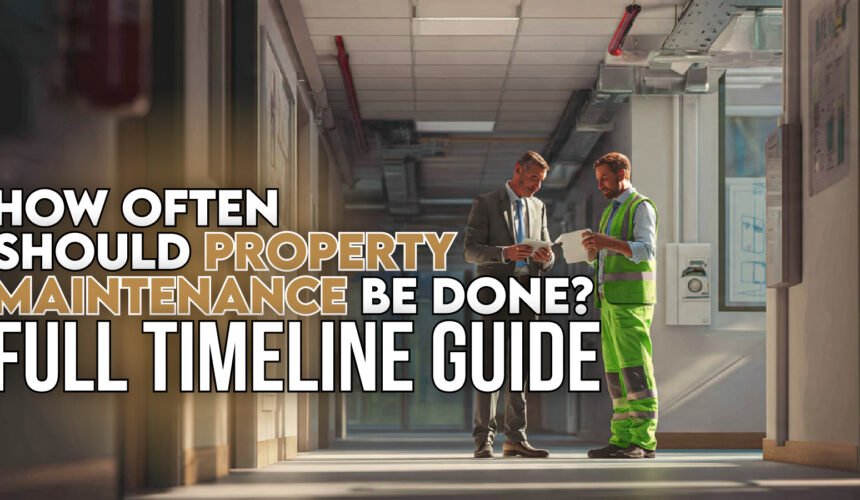
In this guide, you’ll get a complete property maintenance timeline—broken down into weekly, monthly, quarterly, bi-annual, and annual tasks—so you never miss a critical job again.
And once you see it laid out? You’ll realise this isn’t just upkeep.
It’s asset protection.
Why Property Maintenance Frequency Matters More Than Most Owners Realise (Property Maintenance Schedule)
Let’s make one thing clear.
Maintenance delayed = costs multiplied.
According to industry data from Building Owners and Managers Association (BOMA), every £1 spent on preventative maintenance saves £4–£8 in emergency repairs.
That’s not a small margin.
That’s the difference between profit and loss.
The 3 Types of Property Owners
Most property owners fall into one of these categories:
1. The Reactive Owner
They fix things only when they break.
- Highest long-term costs
- Constant emergencies
- Frustrated tenants
- Insurance risks
2. The Inconsistent Owner
They do maintenance—but without a system.
- Some problems caught early
- Others missed completely
- Costs unpredictable
- Stress always present
3. The Proactive Owner (Where You Need to Be)
They follow a structured property maintenance schedule.
- Lowest repair costs
- Highest property value
- Fewer emergencies
- Better tenant retention
Be honest.
If you’re reading this, you’re likely in category 1 or 2.
The goal? Move to category 3—fast.
Because the longer you wait, the more expensive it gets.
The Complete Property Maintenance Timeline — Task by Task
This is your blueprint.
Not guesswork. Not “when you remember.”
A structured property maintenance timeline designed to protect your property year-round.
Weekly Property Maintenance Tasks
These are quick checks. Low effort. High impact.
- Check drainage blockages
Prevents overflow, flooding, and structural damage. - Test smoke and CO alarms
Life safety. Legal protection. Non-negotiable. - Inspect communal areas (landlords)
Avoid liability claims from hazards. - Look for damp patches or leaks
Catch problems before they spread. - Clean extractor fans and vents
Prevent mould buildup and air quality issues. - Check locks, doors, windows
Security + tenant satisfaction.
👉 Skip this? Small issues quietly escalate into expensive repairs.
Monthly Property Maintenance Tasks
This is where real prevention begins.
- Clean gutters and downpipes
Especially critical in autumn—prevents water damage. - Test RCDs / circuit breakers
Electrical safety. Fire prevention. - Check boiler pressure
Avoid system failure during peak usage. - Inspect roof from ground level
Spot missing tiles early. - Check window seals and caulking
Prevent heat loss and water ingress. - Test emergency lighting (HMOs/commercial)
Compliance and safety. - Flush unused taps
Prevent Legionella risk.
👉 Skip this? You move from maintenance… to damage control.
Quarterly Property Maintenance Tasks
Now we step into deeper inspections.
- Deep clean and inspect gutters
Identify cracks, sagging, or leaks. - Service HVAC filters and ventilation
Improves efficiency and air quality. - Check attic/loft for pests or damp
Silent damage starts here. - Inspect brickwork and pointing
Structural integrity check. - Test water shut-off valves
Critical in emergencies. - Check garden drainage
Prevents foundation issues. - Inspect decking and fencing
Stops rot and deterioration.
👉 Skip this? You risk structural issues that are far more expensive to fix later.
Bi-Annual Property Maintenance Tasks (Every 6 Months)
This is serious maintenance territory.
- Full boiler service
Prevent breakdowns and extend lifespan. - Chimney sweep (if applicable)
Fire safety + efficiency. - Roof inspection (closer look)
Flashings, joints, wear and tear. - Service fire safety equipment
Legal compliance. - Inspect plumbing under sinks/toilets
Catch hidden leaks. - Electrical visual inspection
Identify early faults. - Re-caulk wet areas
Prevent water damage.
👉 Skip this? You’re gambling with high-cost failures.
Annual Property Maintenance Tasks
This is your full property audit.
- Gas Safety Certificate (CP12)
Mandatory for landlords. No exceptions. - EICR (every 5 years, annual visual checks)
Electrical safety compliance. - Professional roof inspection
Prevent major structural repairs. - Damp and timber survey (older homes)
Identify hidden decay. - Repoint brickwork if needed
Protect structural integrity. - Drainage system inspection
Avoid flooding risks. - Full property condition report
Track value and issues. - Review insurance coverage
Ensure compliance and protection.
👉 Skip this? You expose yourself to legal, financial, and structural risk.
For a full breakdown, explore this complete routine maintenance checklist for residential property owners:
https://gohaychservices.co.uk/routine-maintenance-checklist-for-residential-properties-every-owner-needs/
Property Maintenance Timeline for Landlords vs. Homeowners — Key Differences
Not all property owners play by the same rules.
For Landlords: It’s Legal Compliance
You’re not just maintaining property—you’re meeting legal obligations.
- Gas Safety Certificate (CP12) — mandatory annually
- EICR every 5 years — legal requirement
- Legionella risk assessment
- EPC compliance
- Fire safety regulations (especially HMOs)
Fail here? You risk fines, lawsuits, and invalid insurance.
For Homeowners: It’s Asset Protection
You focus on:
- Maintaining property value
- Meeting insurance conditions
- Satisfying mortgage lender requirements
Different rules. Same outcome:
Neglect costs you.
The True Cost of Skipping Your Property Maintenance Schedule
Let’s break it down.
The skipped cost vs. the emergency cost
- Gutter cleaning skipped (£80)
→ Damp wall repair (£2,500) - Boiler service skipped (£90)
→ Full replacement (£3,000) - Roof inspection skipped (£150)
→ Roof repair (£8,000) - Electrical check skipped (£200)
→ Fire damage + legal liability
According to RICS, 67% of major property repair costs come from deferred maintenance.
Let that sink in.
Most of these costs are avoidable.
If you want to understand the financial impact deeper, read this guide on how preventative property maintenance saves you money over time:
https://gohaychservices.co.uk/how-preventative-property-maintenance-saves-you-money-over-time/
How to Build Your Property Maintenance Schedule and Actually Stick to It
Here’s where most people fail.
They don’t lack knowledge.
They lack a system.
The 5-Step System
-
Create a maintenance calendar
Weekly → Monthly → Quarterly → Annual. -
Assign responsibility
You, contractor, or maintenance provider. -
Set recurring reminders
No memory reliance. -
Track everything
Dates, costs, issues, contractors. -
Review yearly (January)
Update as property ages.
Here’s the truth:
Properties that grow in value have systems.
Properties that decline rely on memory.
When to Bring in a Professional Property Maintenance Service
DIY works—until it doesn’t.
Here are your signals:
-
You own multiple properties
-
You’re a landlord with legal obligations
-
You’ve had preventable emergency repairs
-
Costs keep rising
-
You’re spending weekends managing issues
-
You’re preparing for sale or tenancy
At this point, maintenance becomes operational.
Not optional.
That’s where professionals step in.
If you’re ready to stop reacting and start controlling your property performance, get a free property maintenance quote today:
https://gohaychservices.co.uk/get-a-quote/
CONCLUSION
Property maintenance isn’t about fixing problems.
It’s about preventing them.
It’s about protecting your investment, your tenants, and your peace of mind.
Now you know exactly how often should property maintenance be done—and more importantly, why it matters.
This timeline is the difference between a property that grows in value… and one that quietly drains your finances.
The best time to start your maintenance system was last year.
The second best time?
Today.
Take action now:
https://gohaychservices.co.uk/get-a-quote/