
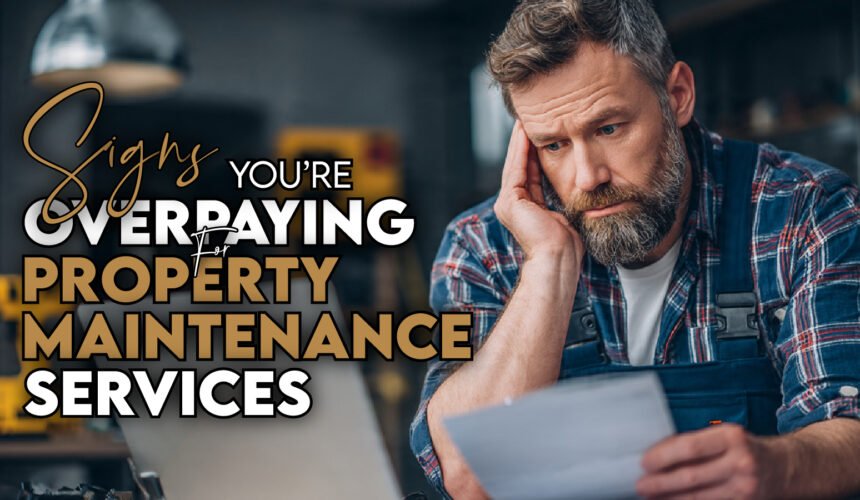
Property maintenance is one of the biggest ongoing costs for landlords, property managers, block managers, estate agents, letting agents, and owners of multi-unit buildings. Repairs, callouts, inspections, planned maintenance, emergency work, contractor visits, and material costs can quickly add up.
However, high maintenance spending does not always mean better service.
Many property owners across the UK overpay for maintenance because pricing is unclear, invoices lack detail, contractors keep returning for the same issue, or providers focus on quick fixes instead of long-term solutions. In some cases, landlords accept rising costs simply because they do not have the time to compare service quality, question invoices, or review maintenance performance properly.
The real problem is not maintenance cost alone. It is paying too much for poor communication, repeated repairs, slow responses, vague reporting, and weak accountability.
This guide explains the key signs you may be overpaying for property maintenance services, how to compare service quality against price, and what UK property owners can do to reduce unnecessary costs without compromising standards.
Why Property Maintenance Costs Can Become Uncontrolled
Property maintenance costs often rise gradually. A small callout here, an extra repair there, a repeated issue next month, and a few vague invoices can slowly turn into a major expense.
This is especially common when property owners manage several rental units, flats, commercial spaces, HMOs, apartment blocks, or mixed-use properties. The more units you manage, the harder it becomes to track every repair, every contractor visit, and every invoice.
Costs become harder to control when:
- Pricing is unclear
- Callout fees repeat too often
- Repairs do not solve the root problem
- Contractors provide poor updates
- Invoices lack detail
- Emergency work replaces planned maintenance
- Preventative checks do not happen
- Maintenance issues return repeatedly
- No one tracks repair history
- There is no service schedule
- Property managers do not compare value against results
A good property maintenance partner should help you control costs, not create confusion.
1. Pricing Is Unclear From the Start
One of the clearest signs you may be overpaying for property maintenance is unclear pricing. If you do not understand how a provider charges, it becomes difficult to judge whether the cost is fair.
Some companies quote low headline prices but add extra charges later. Others charge vague hourly rates without explaining labour, materials, travel, emergency rates, or minimum callout fees.
What Unclear Pricing Looks Like
Warning signs include:
- No written pricing structure
- Unclear callout charges
- Different prices for similar jobs
- No explanation of hourly rates
- Hidden admin fees
- Unexpected travel charges
- Emergency fees that were not explained
- Labour costs that do not match the work completed
- Material mark-ups with no breakdown
If you regularly receive invoices that surprise you, the pricing structure may not be transparent enough.
How to Fix It
Ask your maintenance provider to explain their pricing in writing. You should understand callout fees, hourly rates, emergency charges, material costs, minimum charges, and payment terms before work begins.
Clear pricing helps landlords and property managers compare providers properly and avoid unnecessary overspending.
2. You Keep Paying Repeat Callout Charges
Repeat callout charges can become expensive, especially when the same issue keeps returning.
A contractor may attend the property, apply a quick fix, leave, and then return a few weeks later because the problem was never properly resolved. Each visit may generate another callout charge, labour fee, and material cost.
Common Repeat Callout Problems
Repeat callouts often happen with:
- Leaks
- Boiler issues
- Electrical faults
- Door and lock problems
- Drainage issues
- Damp and mould complaints
- Roof leaks
- Blocked gutters
- Communal lighting faults
- Heating complaints
- Plumbing problems
If you keep paying for the same issue, you may not be paying for proper maintenance. You may be paying for temporary patchwork.
How to Reduce Repeat Callouts
A good provider should investigate the cause of recurring problems. For example, repeated damp complaints may need ventilation improvements, leak checks, insulation review, or tenant usage guidance. A recurring boiler fault may need a proper diagnosis rather than repeated resets.
The right question is not only “How much did this visit cost?” It is also “Did this visit prevent the issue from coming back?”
3. Invoices Are Vague or Hard to Understand
A vague invoice makes it difficult to know what you paid for. If invoices only say “maintenance work”, “repair visit”, or “general labour”, you cannot properly assess value.
Detailed invoices matter because they create accountability. They help you track repairs, compare costs, understand materials, and monitor recurring issues across properties.
Signs of Poor Invoice Detail
You should be cautious if invoices do not show:
- Date of visit
- Property address or unit number
- Work completed
- Labour time
- Material details
- Callout fee
- Photos where relevant
- Contractor notes
- VAT where applicable
- Follow-up recommendations
For landlords, letting agents, and block managers, poor invoice detail can also make it harder to explain costs to owners, tenants, leaseholders, or internal finance teams.
What Good Invoicing Should Include
A professional invoice should clearly show what the contractor did, what materials they used, how long the work took, and whether any further action is needed.
This level of detail helps you decide whether the charge is fair.
4. Communication Is Poor
Poor communication often leads to higher maintenance costs. When contractors fail to update you properly, small issues can become larger problems.
For example, a tenant may report a leak. The provider attends late, gives no clear update, and the leak continues. By the time someone follows up, the damage may have spread to flooring, plaster, or neighbouring units.
Poor Communication Warning Signs
You may be overpaying if your provider:
- Does not confirm attendance times
- Gives unclear updates
- Does not explain what they found
- Fails to send photos
- Does not confirm completion
- Ignores follow-up questions
- Leaves tenants or site managers uninformed
- Does not warn you about future risks
- Only communicates when sending invoices
Communication is part of the service. If you pay professional maintenance rates, you should receive professional updates.
How Better Communication Saves Money
Clear updates help property owners make faster decisions. They also reduce duplicate visits, tenant complaints, missed access, and unnecessary delays.
A provider that communicates well can prevent small maintenance issues from becoming expensive repairs.
5. Response Times Are Too Slow
Slow response times can increase costs, especially when issues involve water, electrics, heating, access, security, or tenant safety.
Some maintenance tasks are not urgent. Others need fast action to prevent further damage.
When Slow Response Becomes Expensive
Delays can increase costs when dealing with:
- Active leaks
- No heating or hot water
- Electrical faults
- Broken locks
- Roof damage
- Drainage blockages
- Mould or damp complaints
- Communal area hazards
- Fire safety issues
- Broken lighting in shared areas
If your provider responds slowly but still charges premium rates, you may not be receiving good value.
What to Expect From a Reliable Provider
A reliable maintenance company should help you separate emergency, urgent, and routine work. They should also communicate expected response times clearly.
For example, a dripping tap may not need the same response as a major leak. A broken communal light in an apartment block may need faster attention than a minor decorative repair.
Good prioritisation protects both budgets and property condition.
6. Temporary Fixes Replace Proper Repairs
Temporary fixes can be useful in emergencies, but they should not become the normal approach.
If your maintenance provider repeatedly patches issues without solving the cause, you may end up paying more over time.
Examples of Temporary Fixes
Temporary fixes may include:
- Sealing a leak without investigating the source
- Resetting a boiler without diagnosing the fault
- Painting over damp marks
- Clearing a blockage without checking drainage issues
- Replacing a lock without checking door alignment
- Patching cracked plaster without checking movement
- Repairing gutter leaks without clearing the system properly
These quick fixes may reduce the immediate problem, but they often fail to prevent future costs.
What Proper Repairs Should Do
A proper repair should address the cause wherever possible. The contractor should explain what caused the issue, what they fixed, and whether further work may be needed.
If every repair feels like a short-term patch, your maintenance costs may continue to rise.
7. There Is No Preventative Maintenance Plan
Preventative maintenance helps property owners reduce emergency repairs, protect property condition, and control long-term costs.
Without a maintenance plan, issues often appear only when something breaks. This reactive approach usually costs more because emergency repairs are more expensive and damage may already have spread.
What Preventative Maintenance Can Include
Preventative maintenance may include:
- Regular inspections
- Gutter cleaning
- Roof checks
- Boiler servicing
- Heating checks
- Plumbing inspections
- Electrical safety checks
- Communal area checks
- Fire safety checks
- Door and lock maintenance
- Damp and ventilation reviews
- Drainage checks
- Exterior maintenance
Why Preventative Maintenance Saves Money
Planned checks help identify small issues early. A minor gutter problem can become a roof leak. Poor ventilation can become a mould complaint. A small plumbing issue can become water damage.
When maintenance only happens after something goes wrong, costs become harder to control.
8. Material Costs Seem Inflated
Material costs can vary, but they should still make sense.
If a maintenance provider regularly charges high prices for basic materials without explanation, you may be overpaying. This is especially important when managing multiple properties, where small mark-ups across many jobs can become a major cost.
Warning Signs Around Material Costs
Be cautious if:
- Materials appear much higher than expected
- Invoices do not list material details
- Brand or product quality is unclear
- The provider refuses to explain costs
- Similar jobs have very different material charges
- You pay premium prices for basic replacements
- There is no evidence of what was installed
How to Review Material Charges
Ask for material breakdowns on invoices. For larger jobs, request product specifications before approval.
You do not need to challenge every small item, but you should have enough detail to understand whether costs are reasonable.
9. There Is No Service Schedule
A service schedule keeps maintenance organised. Without one, property owners often respond to problems only when tenants complain or something breaks.
A clear schedule helps ensure important tasks happen at the right time.
What a Service Schedule Should Cover
A property maintenance schedule may include:
- Monthly communal checks
- Quarterly inspections
- Annual gas servicing
- Electrical testing schedules
- Fire safety checks
- Gutter and roof checks
- Heating system reviews
- Seasonal maintenance
- Exterior inspections
- Planned decoration cycles
- Lift or access system checks where relevant
Why No Schedule Can Cost More
Without a schedule, tasks get missed. Missed tasks can lead to emergency repairs, tenant complaints, legal risk, and higher long-term costs.
For landlords and property managers, scheduling is not just about maintenance. It also supports compliance, tenant satisfaction, and property value.
10. Contractors Lack Accountability
Good maintenance requires accountability. If no one takes responsibility for quality, timing, reporting, or follow-up, costs can rise quickly.
Poor accountability often appears when a provider uses multiple subcontractors without proper coordination, or when nobody reviews completed work.
Signs of Poor Contractor Accountability
Warning signs include:
- Missed appointments
- No job completion notes
- No photos
- Poor-quality repairs
- Repeated visits for the same issue
- No named contact
- No follow-up after complaints
- No inspection records
- Contractors blaming each other
- No clear responsibility for delays
How Accountability Reduces Costs
Accountability improves quality. When contractors know someone will review their work, they are more likely to complete repairs properly.
Property owners should expect clear job records, completion updates, and a process for handling issues that return.
11. Maintenance Issues Keep Returning
Recurring maintenance issues are one of the strongest signs that you may be overpaying.
If the same repair keeps appearing on your monthly costs, something is wrong. Either the cause has not been identified, the work quality is poor, or the provider has not recommended a proper long-term solution.
Examples of Recurring Issues
Common recurring problems include:
- Mould returning after decoration
- Leaks coming back after sealing
- Doors sticking again after adjustment
- Boilers failing repeatedly
- Drains blocking regularly
- Communal lights failing often
- Roof leaks reappearing after rain
- Tenants reporting the same repair again
What You Should Expect Instead
A good maintenance provider should track repeat issues and recommend proper next steps. Sometimes that means a larger repair now to avoid repeated smaller costs later.
Lower short-term spend is not always cheaper if the issue keeps returning.
12. You Receive No Reporting or Inspection Records
Reporting is essential when managing property maintenance, especially across multiple units or buildings.
Without reports, you cannot easily see what work was done, which properties cost the most, what issues repeat, or whether the provider delivers value.
Useful Maintenance Reports May Include
A good provider may offer:
- Job logs
- Inspection reports
- Before and after photos
- Repair history by property
- Cost summaries
- Emergency callout records
- Recurring issue reports
- Contractor notes
- Compliance reminders
- Planned maintenance recommendations
Why Reporting Matters
Reports help you control costs because they turn maintenance from guesswork into evidence-based decision-making.
For block managers, landlords, and property investors, reporting also helps explain costs to stakeholders and plan future budgets.
13. High Costs Across Multi-Unit Buildings
Maintenance costs can become much harder to control in multi-unit buildings. A small issue across one flat may be manageable. However, repeated repairs across several flats, communal areas, entrances, stairwells, roofs, drains, and shared services can become expensive quickly.
Multi-unit buildings need organised maintenance because they involve more people, more access requirements, more shared spaces, and more recurring issues.
Common Multi-Unit Maintenance Cost Problems
Costs often rise because of:
- Repeated callouts across different units
- Poor communal area maintenance
- No planned inspection schedule
- Weak reporting by unit
- Slow response to shared issues
- Poor contractor coordination
- Emergency repairs replacing planned works
- Lack of preventative maintenance
- Confusion between tenant, landlord, and communal responsibilities
For property owners and managers dealing with blocks, HMOs, apartment buildings, or mixed-use sites, organised maintenance is essential. Gohaych Services explains this in more detail in its guide to property maintenance for multi-unit buildings, including how structured support can improve maintenance control and service quality.
Why Multi-Unit Maintenance Needs Stronger Systems
When several people use the same building, minor issues can affect many occupants. A broken communal light, blocked drain, entry system fault, or recurring leak can lead to complaints, higher costs, and reputational damage.
A better maintenance provider should help you manage multi-unit properties with planning, reporting, clear response times, and cost visibility.
Fair Maintenance Pricing vs Overpaying
The cheapest maintenance service is not always the best. The most expensive service is not always the highest quality. Property owners need to compare price against clarity, reliability, response times, repair quality, reporting, and long-term value.
| Area | Fair Maintenance Pricing | Overpaying |
|---|---|---|
| Pricing | Clear rates and written terms | Vague or changing charges |
| Invoices | Detailed job breakdowns | Generic invoice descriptions |
| Callouts | Used when needed | Repeated for the same issue |
| Repairs | Fix the root cause where possible | Temporary fixes keep returning |
| Communication | Clear updates and completion notes | Poor updates and slow replies |
| Response Times | Prioritised by urgency | Delays even for serious issues |
| Materials | Transparent and reasonable | Inflated or unexplained costs |
| Scheduling | Planned maintenance included | Reactive repairs only |
| Reporting | Job logs and inspection records | No useful records |
| Accountability | Clear responsibility | Contractors blame others |
| Value | Costs support property condition | Costs rise without better results |
Fair pricing does not mean paying the lowest amount. It means paying a reasonable cost for a reliable service that protects your property, tenants, and long-term budget.
Property Maintenance Cost Warning Signs
Use this checklist to review whether you may be overpaying for property maintenance services.
Pricing and Invoices
- Are callout charges clear?
- Do invoices explain the work completed?
- Are labour and materials listed properly?
- Do similar jobs cost similar amounts?
- Are emergency charges explained before work starts?
Repair Quality
- Do the same problems keep returning?
- Are contractors fixing causes rather than symptoms?
- Do repairs last?
- Are before and after photos provided?
- Does the provider recommend long-term solutions when needed?
Communication
- Does the provider respond quickly?
- Do they confirm attendance times?
- Do they update you after visits?
- Do tenants or site managers receive clear information?
- Do you have a named contact?
Preventative Maintenance
- Is there a planned maintenance schedule?
- Are inspections completed regularly?
- Are seasonal checks carried out?
- Are risks identified early?
- Does the provider help you avoid emergency repairs?
Reporting and Accountability
- Do you receive inspection records?
- Can you track costs by property or unit?
- Are recurring issues flagged?
- Are contractors held accountable?
- Is there a clear process for complaints or poor workmanship?
If several answers are “no”, you may not be receiving the value you should expect from your maintenance provider.
Common Mistakes Landlords and Property Managers Make When Choosing Maintenance Providers
Choosing the wrong maintenance provider can lead to higher costs, more stress, and weaker property performance.
Mistake 1: Choosing the Cheapest Provider Only
A low price may look attractive, but it can become expensive if work quality is poor or issues keep returning.
Better Fix
Compare price, response times, reporting, repair quality, reviews, experience, and communication.
Mistake 2: Accepting Vague Invoices
If invoices lack detail, you cannot properly review costs or challenge poor value.
Better Fix
Ask for itemised invoices with labour, materials, job notes, property details, and follow-up recommendations.
Mistake 3: Ignoring Preventative Maintenance
Some landlords avoid planned maintenance to save money. However, this often leads to larger emergency repairs later.
Better Fix
Create a planned maintenance schedule for inspections, servicing, communal areas, drainage, gutters, roofs, and seasonal checks.
Mistake 4: Not Tracking Repeat Repairs
Repeat repairs can quietly drain your budget.
Better Fix
Track repair history by property, unit, and issue type. If the same issue returns, ask for a root-cause solution.
Mistake 5: Not Setting Response Time Expectations
Without clear response expectations, urgent issues may wait too long.
Better Fix
Agree response categories for emergency, urgent, and routine maintenance.
Mistake 6: Using Too Many Uncoordinated Contractors
Multiple contractors can work well if someone manages them properly. Without coordination, communication becomes messy and accountability weakens.
Better Fix
Use a provider or management process that coordinates jobs, records updates, and tracks quality.
Mistake 7: Comparing Cost Without Comparing Service
A provider may charge less but give poor updates, weak reporting, or repeated temporary repairs.
Better Fix
Judge value by results, not just price. Good maintenance should reduce long-term problems, not just send cheaper invoices.
Practical Examples by Property Type
Different property types create different maintenance cost risks. Here are practical examples for common UK property owners and managers.
Flats
Flats often involve internal repairs, communal areas, leasehold rules, access arrangements, and shared services.
Cost Risk
Repeated access issues, unclear responsibility between landlord and building management, and poor communication can increase costs.
Better Approach
Keep clear repair records, confirm responsibility before work starts, and use contractors who understand flat access and shared building requirements.
HMOs
HMOs face heavy use because several tenants share facilities. Kitchens, bathrooms, doors, locks, heating, and communal areas often need regular attention.
Cost Risk
Small issues can become frequent if the property lacks preventative maintenance.
Better Approach
Schedule regular inspections, track recurring problems, and use durable materials suitable for high-use environments.
Rental Properties
Rental properties need responsive maintenance because tenant satisfaction, compliance, and property condition all matter.
Cost Risk
Slow repairs can lead to complaints, worsening damage, and potential tenancy issues.
Better Approach
Use clear reporting, fast response times, and planned checks between tenancies.
Apartment Blocks
Apartment blocks involve communal lighting, entrances, stairwells, lifts, drainage, roofing, external areas, and shared safety responsibilities.
Cost Risk
Unplanned emergency repairs across shared areas can become expensive.
Better Approach
Use a planned service schedule, inspection reports, and clear maintenance records for communal spaces.
Commercial Units
Commercial units need reliable maintenance because repairs can affect business operations, access, customers, and tenants.
Cost Risk
Slow response times can disrupt trading or create disputes with occupiers.
Better Approach
Prioritise urgent repairs, document responsibilities in lease terms, and keep strong communication with occupiers.
Multi-Unit Buildings
Multi-unit buildings need structured maintenance across units, communal areas, shared systems, and external spaces.
Cost Risk
Without reporting and coordination, owners may pay repeatedly for isolated repairs without identifying building-wide issues.
Better Approach
Track repairs by unit and issue type, review recurring costs, and use a maintenance provider that can manage planned and reactive work together.
How to Compare Service Quality Against Price
To know whether you are overpaying, you need to look beyond the invoice total.
A fair maintenance provider should give you a good balance of cost, speed, quality, communication, and long-term value.
Questions to Ask
Ask yourself:
- Are repairs completed properly the first time?
- Do I receive clear updates?
- Do invoices make sense?
- Do costs feel predictable?
- Are emergency repairs reducing over time?
- Does the provider suggest preventative action?
- Are tenants or occupants satisfied with response times?
- Can I track maintenance history?
- Do I understand what I am paying for?
If costs are high but communication, quality, and reporting are weak, you may be overpaying.
How Gohaych Services Supports Better Property Maintenance
Gohaych Services helps property owners, landlords, investors, agents, and managers approach maintenance with more structure, clarity, and practical support.
Effective property maintenance should not feel chaotic. It should help protect property condition, control costs, support tenants or occupants, and reduce avoidable emergency repairs.
The right maintenance approach can support:
- Clearer communication
- Better cost control
- Faster issue handling
- More organised reporting
- Preventative maintenance planning
- Stronger contractor accountability
- Practical support for multi-unit properties
- Fewer repeat issues
- Better long-term property condition
For landlords, block managers, letting agents, and property investors, working with a reliable maintenance partner can make daily property management easier and more predictable.
Conclusion: Paying More Does Not Always Mean Better Maintenance
Property maintenance will always involve cost, but property owners should not pay high prices for poor communication, vague invoices, repeated callouts, temporary fixes, and weak reporting.
If you regularly see the same maintenance problems, unclear charges, slow responses, inflated material costs, or no inspection records, you may be overpaying for the service you receive.
The best maintenance providers do more than react to problems. They communicate clearly, provide transparent pricing, track repairs, recommend preventative work, and help property owners protect long-term value.
Whether you manage a rental property, HMO, apartment block, commercial unit, or multi-unit building, better maintenance control can reduce stress, improve service quality, and protect your budget.
If you want a more practical and organised approach to property maintenance, Gohaych Services can help.
Contact Gohaych Services today to discuss property maintenance support for your rental property, block, commercial unit, or multi-unit building.
FAQs
How do I know if I am overpaying for property maintenance?
You may be overpaying if invoices are vague, callout charges repeat often, repairs do not last, material costs seem inflated, communication is poor, and there is no maintenance schedule or reporting. The key issue is not only price, but whether the service delivers clear value.
What should property maintenance services include?
Property maintenance services may include repairs, emergency callouts, plumbing, electrical work, decorating, communal area maintenance, inspections, preventative maintenance, compliance support, reporting, and contractor coordination. The exact service should depend on the property type and owner requirements.
How can landlords reduce maintenance costs?
Landlords can reduce maintenance costs by using preventative maintenance, tracking repeat repairs, requesting detailed invoices, comparing providers, planning inspections, using durable materials, and fixing root causes instead of paying repeatedly for temporary repairs.
Why does preventative maintenance save money?
Preventative maintenance saves money by identifying small issues before they become expensive problems. Regular checks for roofs, gutters, plumbing, heating, electrics, ventilation, and communal areas can reduce emergency repairs and protect long-term property condition.
How do I choose a property maintenance company?
Choose a property maintenance company based on transparent pricing, clear communication, reliable response times, detailed invoices, repair quality, reporting, relevant property experience, and accountability. Avoid choosing based on the cheapest price alone.